
You work, you play, you haul, and you bog. You do it all because your Can-Am Defender lets you do it all.
But that means you’re going to beat the heck out of your favorite side-by-side, and pretty soon it’ll have more in common with that extra pair of decade-old muckin’ boots in the garage than with a UTV.
So make sure you familiarize yourself with these common Can-Am Defender problems and how to fix them. A little TLC will keep your Defender running like new for years to come.
More and more people are using their Defenders as a one-size-fits-all utility machine. That just makes it more important than ever to be aware of your Defender’s weak points.
Weak points like differential engagement and steering play can make your life and every ride harder.
Other issues, like a blown drive belt or axle failure, can totally sideline you until you can get some parts.
These types of issues are separate from the normal maintenance you should be doing periodically to keep your Defender in good shape. For easy upkeep, check out our simplified Can-Am Maintenance schedules.
Let’s move on to the big, unexpected issues that can ruin your day.
Unless you have a Defender X MR model, your Defender is rocking a Visco-Lok front differential.
Visco-Lok has… a reputation. It’s relatively slow to engage in the best of times, but when you pop it into 4WD and your front wheels never stop spinning, you’ve got an engagement problem.
It’s supposed to work by allowing one wheel to spin for a bit, which engages a clutch pack in the diff and locks the front axles together. A locked front axle boosts traction so you can get moving again, at which point the diff will unlock.
If that lock is inconsistent or disengages while you’re still stuck, it’s time to fix it.
In our humble opinion, you should implement an upgrade at the first sign of trouble with a Visco-Lok.
To that end, we highly recommend upgrading to our pin locker front differential. It replaces the clutch pack with an electronically actuated locker. If you get stuck and need more traction, just flip the switch on your dash and your diff locks. Just make sure you flip it off when you get unstuck.
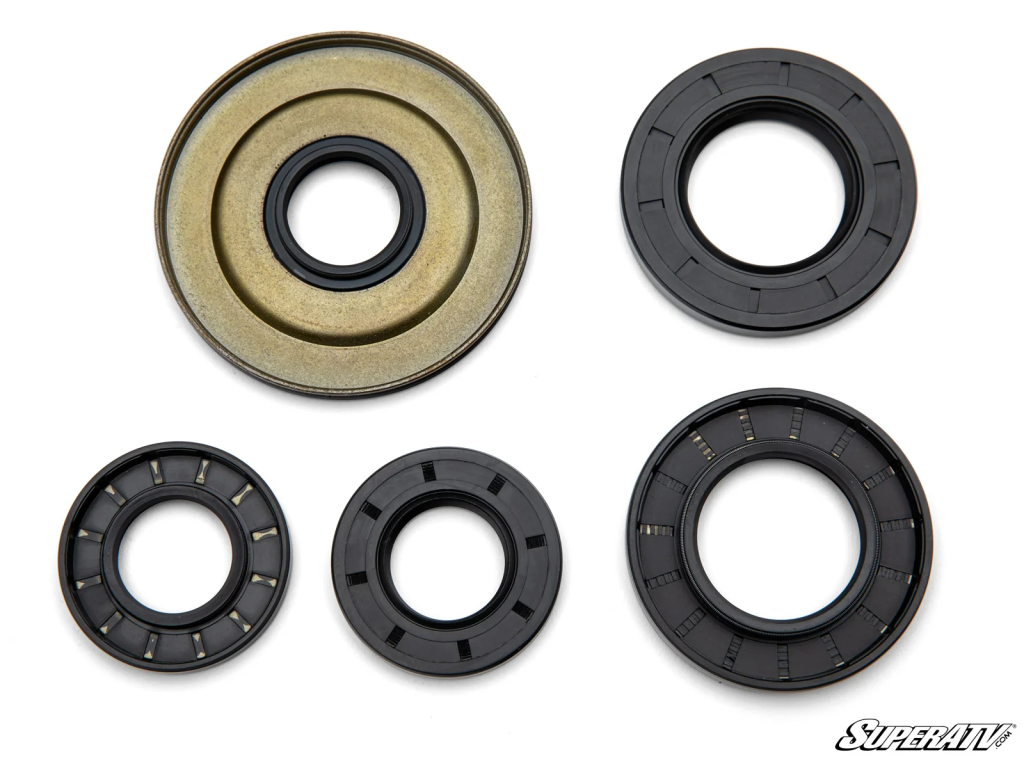
If you’re not looking for an upgrade, make sure you change your differential fluid. If there’s water or other contamination in the oil, replace your differential seals.
Make sure you keep up with fluid changes going forward too.
Steering wheel play is very annoying. It can feel like a dead zone in your steering—you turn the wheel, and nothing happens for a few degrees of the turn.
You don’t want this for a number of reasons. It makes your whole machine less responsive, which can be a big issue if you need to react quickly. It’s also a pain to work with. It’ll wear you out and make you less confident in your Defender.
Finally, it can lead to other damage not directly related to the play itself. What starts as a bad bushing could turn into a bent tie rod, a broken tie rod end, and a messed-up suspension.
Once again, we’re big advocates of upgrading the parts that are letting you down instead of replacing them with stock equivalents.
Grab a set of heavy-duty tie rods that include upgraded tie rod ends, like our RackBoss 2.0 tie rods.
If the play is in the rack itself, you’ll need a whole new rack, like our RackBoss 2.0 rack and pinion.
If the problem is localized to your tie rod ends, you can save some money by just swapping those out.

If you put enough time behind the wheel of your Defender, you are guaranteed to wear out your CVT belt eventually. But there are factors that can make it wear out even quicker too, like bad clutch alignment, water intrusion, or big upgrades that demand more torque through your transmission.
You can tell your drive belt is on its last leg in a number of ways. Here are the common signs:
These are all signs of a belt that’s slipping. And once a belt starts slipping, it’s going to keep slipping until it breaks or can’t deliver the power you need.
The first thing you should do if you suspect a belt problem is inspect the belt itself.
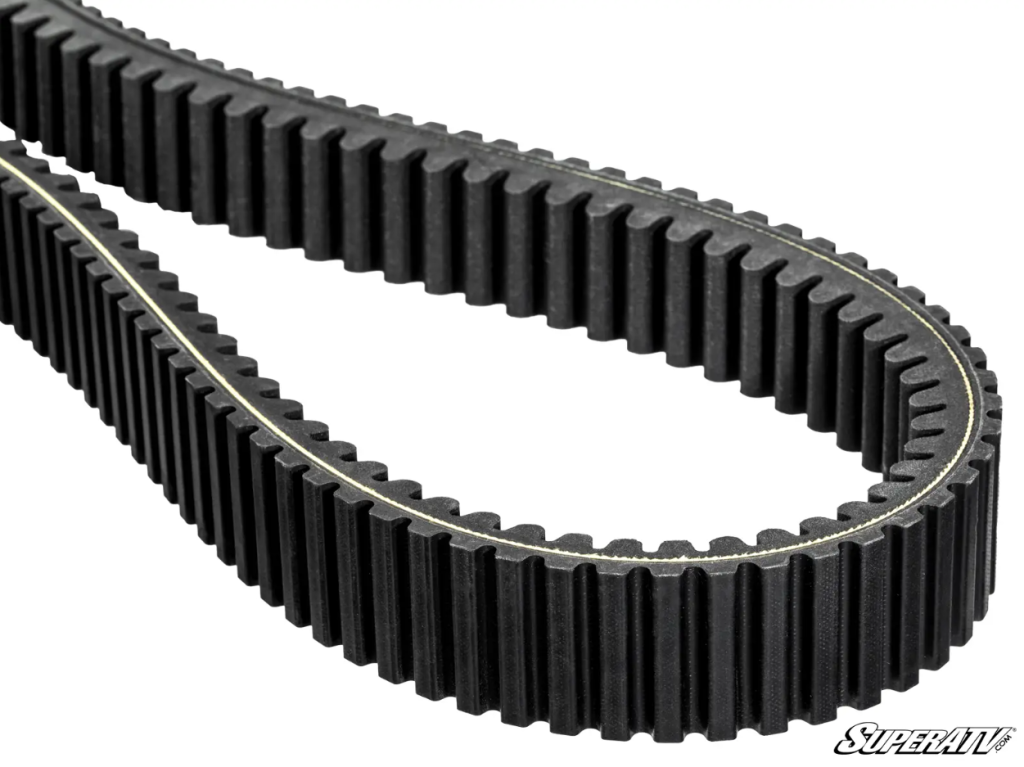
If your belt is bad, grab a new one that’s tailored for your ride style. Our heavy-duty Defender drive belts kick ass, by the way.
If you have an especially big and powerful setup, you need a clutch kit like our Rev1 Clutch Kit to use that power properly and keep your belt in one piece.
An electrical issue can feel like your Defender’s haunted. You’ll notice a switch stop working, or a headlight go wonky, or a whole system like 4WD stop working. An issue with the wiring could even kill your battery, or a bad battery could be the issue.
These issues can crop up for a number of reasons. Anything from a blown fuse to a failing component can compromise your Defender. Here’s how to fix it up.
First things first: check your fuses. Use the fuse diagram in your owner’s manual to pinpoint the fuse responsible for whatever component or system isn’t working. It’s so easy to replace a blown fuse that a child could do it (with proper adult supervision, of course).
If the problem persists, you’ll need to check the wire harness for damage or shorts.
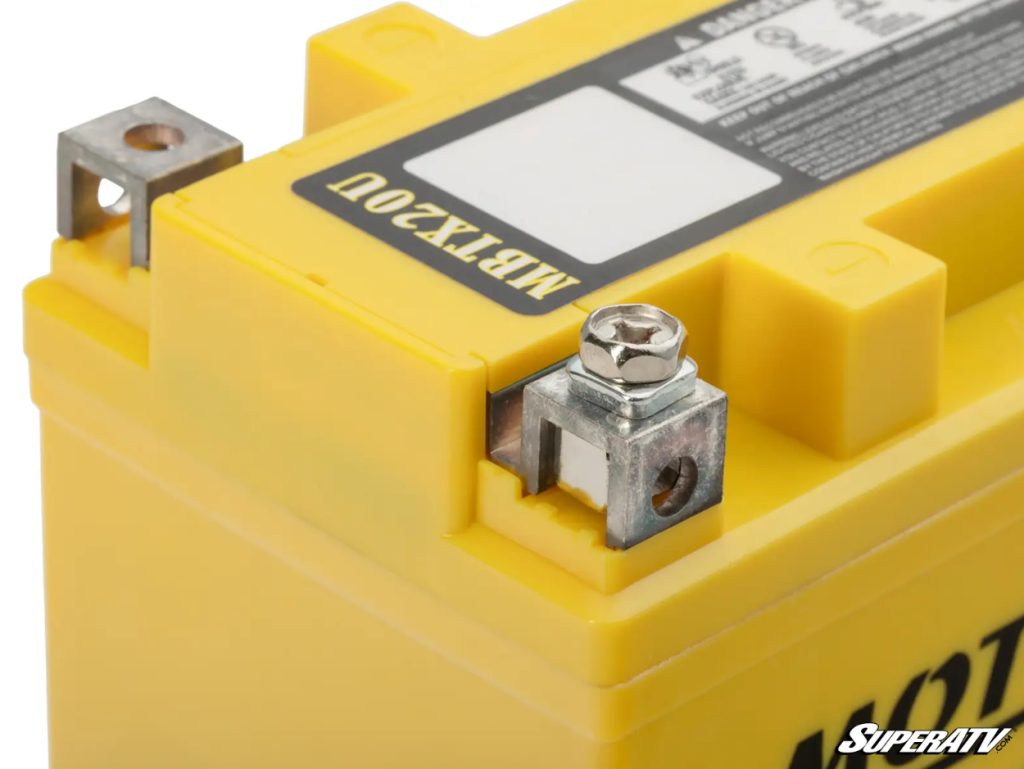
Next, you should check the state of your battery. If it’s more than 3 years old, you should probably replace it with a new battery.
If your battery is in good condition, you’ll have to check your stator, voltage regulator, and ignition switch.
You’re not going to get far with a busted axle or drive shaft.
If you’ve snapped an axle, it’ll be obvious. But listen for a popping noise from your axles, especially on hard turns, that can indicate an axle that’s about to break. Your front axles are the most vulnerable, and you can avoid damaging them by avoiding full turns to the left or right in tricky terrain. You especially want to avoid full turns in reverse or when a wheel is in the air.
A worn-out drive shaft can be harder to spot. Bad U-joints in the drive shaft will cause a lot of vibration through the machine and can also make popping sounds. Vibration can also be caused by badly aligned prop shafts after it’s been lifted.
If you bust an OEM axle, don’t stick with stock. It’s the perfect time to upgrade to Rhino 2.0 Axles. They have higher articulation (so the full-turn problem is much less of a problem), bigger components, and end-to-end chromoly construction. Plus, an 18-month warranty.
If you spot prop shaft problems early, you should be able to take care of them without replacing the whole shaft. You can replace the U-joints themselves to get like-new performance.
If you only noticed the problem after lifting your Defender or upgrading your suspension, then check your driveline angle to make sure it’s correct too.
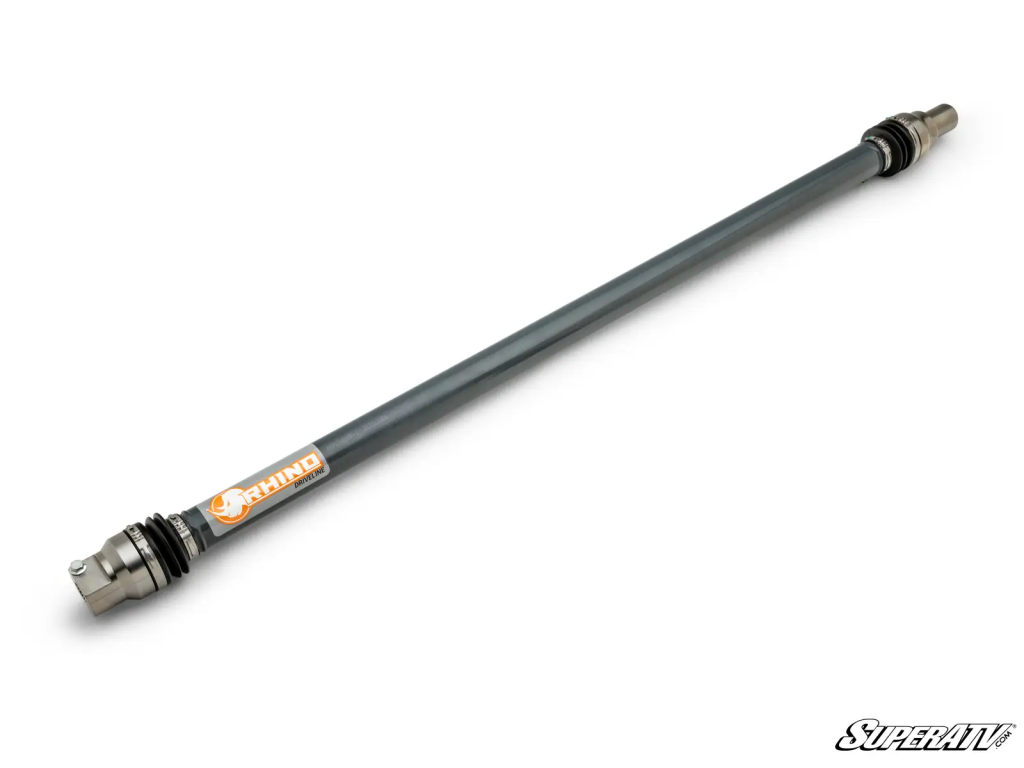
If your prop shaft is shot, upgrade to a Rhino Driveline Prop Shaft that can really take the heat.
Hard work is hard on suspension—and cutting loose on the weekend is even worse. Bad wear items can lead to clunking. If you’ve got serious suspension issues, you might notice uneven tire wear or poor handling.
When you notice any problems, you want to fix them fast. Bad bushings and ball joints can lead to damage to your frame or spindle too.
The most common source of clunks is your bushings or ball joints. We’ve got replacement UHMW bushings and heavy-duty ball joints that will last a whole lot longer than stock.
UHMW bushings wear less and self-lubricate as they’re used. They last years longer than stock bushings—if they ever wear out at all.
Our adjustable heavy-duty ball joints are stronger than stock out of the box, but the biggest advantage is the ability to grease and tighten them periodically. They’ll feel like brand new bushings for years.
If your A-arms are bent, wallowed out, or rusted, it’s time for an upgrade. Our high-clearance and offset A-arms will elevate your Defender’s performance and strength for work and play.

There’s nothing worse than getting thrown into limp mode without knowing why. How are you even supposed to get back to the trailer with a speed limit that gives a slug a run for its money?
That’s why you’ve got to look out for mud and debris building up on your radiator.
And don’t ignore the idiot lights on your dash either! Low coolant, high temps, and other warnings could mean your Defender’s about to quit.
The first thing you should do is routinely clean out your radiator fins. Spray down your radiator to remove dirt, mud, and anything else you can find.
Check your coolant level (when your engine is cool!) too. If it’s low, you could have a leak in the radiator or hoses. Check your thermostat to make sure it’s not stuck too.
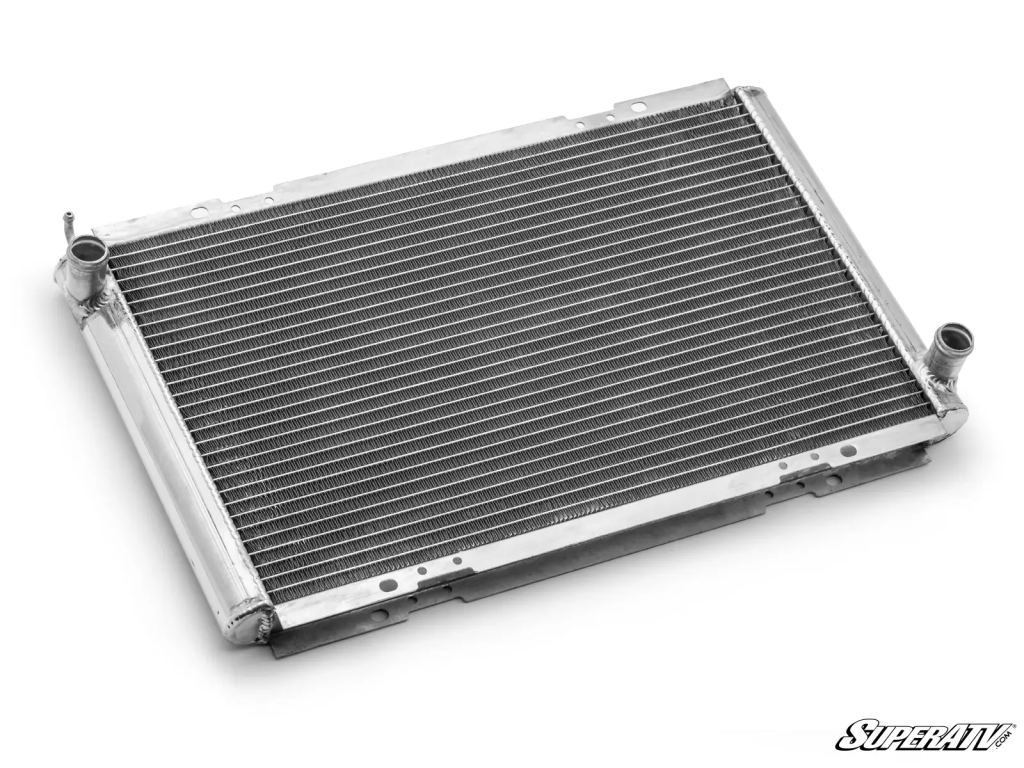
If you have a damaged radiator, replace it with our replacement Defender radiator to save you some money.
Keep ahead of the most common Can-Am Defender problems. It’ll keep your weekends action-packed and your weekdays productive. And you’ll save tons of money if you keep your UTV from falling apart.
If you want to beef up your machine to make sure it won’t get beat down, check out our Can-Am Defender parts and accessories and get geared up.



7 Comments
I have a Can Am Defender top speed was 20plus now only 12mph whatrs wrong seat belt on?
Hey Earl,
It’s probably the seat belt or a speed limiter. On a Can-Am Defender, if the seat belt isn’t clicked in, the machine goes into limp mode and only goes about 12 mph. Buckle the seat belt all the way, then turn the key off and back on. If it’s still slow, check if it’s in work or eco mode or see if there’s a warning light on the dash.
Every year we have had our Can Am we have had major problems wireing harness,fuel pump,power sterering. We are old never had in the rough kept inside . So very disappointed
I have a 2025 Defender that has 1300 miles. I’m getting a buzzing noise not vibration at 40-42 miles per hour in 2wd.
Dealer thinks just the new tire noise?? Road only and I haven’t had it on the trails yet.
Any thoughts. No noise lower speeds or higher then 42.
Hey Doug,
That’s unlikely to be just new tire noise—being that speed-specific points more to something like a driveline or tire balance issue. I’d push the dealer to check it more closely, especially on a nearly new vehicle.
My 2022 defender Hd9 dies at highway speed but only after coming to operating temperature. I have changed fuel pump assembly and cleaned map sensor with no change. What should I check next?
Hey Will,
Since you’ve already replaced the fuel pump and cleaned the MAP sensor, I’d check the spark plugs/ignition coils, fuel pressure, and crankshaft position sensor next. Since it only dies once it’s up to operating temp, a sensor or ignition component could be failing as it gets hot. I’d also scan it for stored fault codes, even if the check-engine light isn’t staying on.