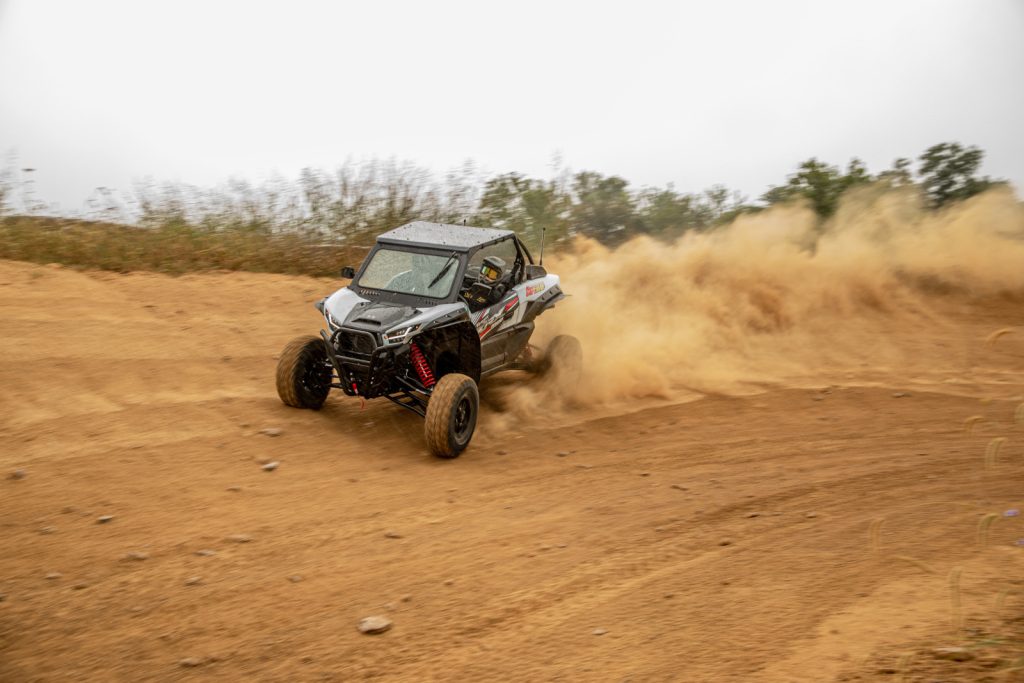
It’s a naturally-aspirated showdown between two of the toughest non-turbo sport models in the UTV industry.
Let’s get this out of the way first: both of these machines are great. But one is probably still better for your riding style than the other. Ultimately, the winner of this showdown will be decided by you, not us.
We all love to look at horsepower and displacement to tell the difference between machines, but when it comes to the KRX versus the RZR XP 1000, it doesn’t tell the whole story:
They look almost identical on paper. In reality, the RZR XP 1000 is geared higher than the KRX. The result is a marginally faster RZR that can hit a top speed close to 80 MPH in ideal conditions compared to the KRX’s top speed of around 70 MPH.
But that also means the KRX is a better crawler and has more low-speed control for technical spots.
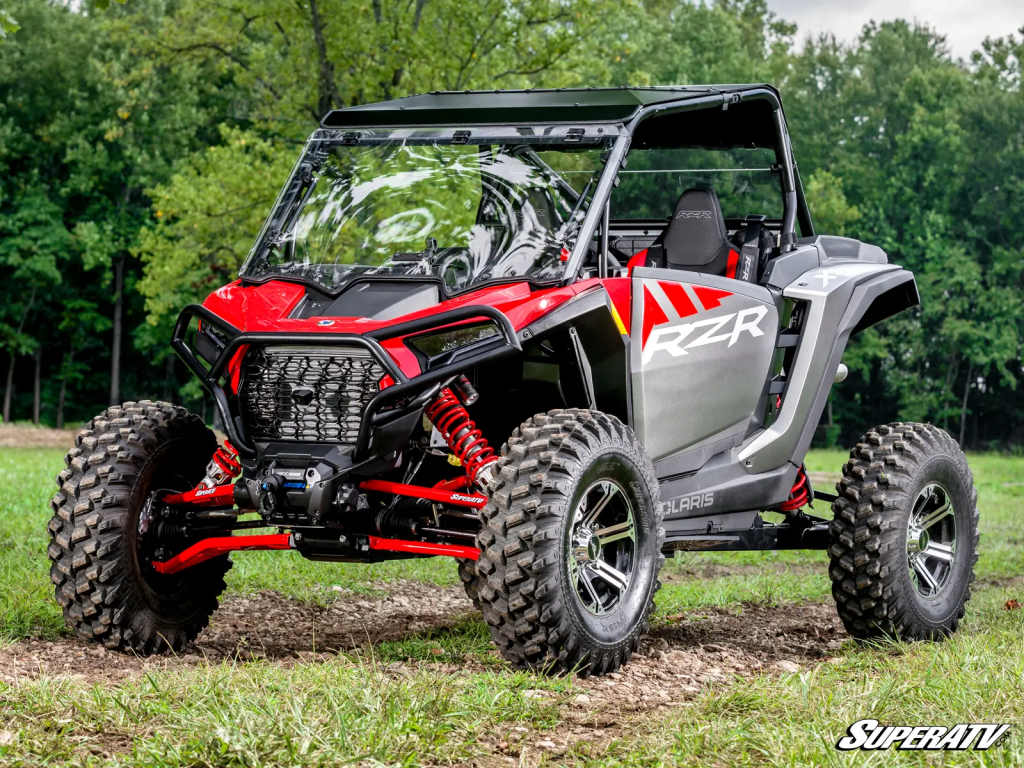
The differences between the KRX 1000 and RZR XP 1000 become even more obvious when you look at the suspension and dimensions.
That extra wheel travel on the KRX 1000 really favors slower, more technical riding compared to the RZR. It’s the same kind of riding that its power curve benefits as well.
When it comes to shock performance, both machines come well‑equipped from the factory. The KRX’s larger Showa shocks emphasize stability, load control, and sustained articulation, while the RZR XP’s Walker Evans setup favors quicker response and trail agility.
The KRX is a bigger, wider, heavier platform than the RZR XP. That alone makes it better for crawling and off-camber riding. It’s extremely stable and capable in really tough conditions.
On the other hand, the RZR’s weight and dimensions mean it’s much more nimble and fast—perfect for control on high-speed trails.
Durability is a hugely important factor for any UTV. These machines are a big investment and you’re supposed to take them through rough, unpredictable terrain.
So how well can your investment protect itself?
Let’s look at factory strength on the KRX 1000 versus the RZR XP 1000.
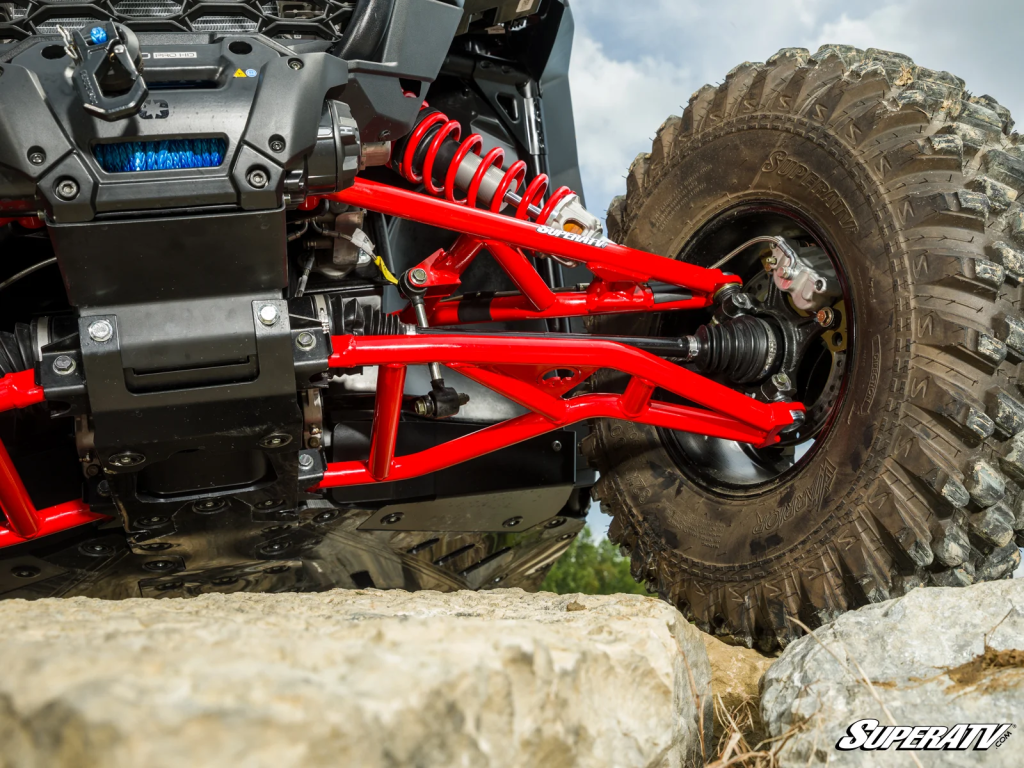
Now we can see where all the extra weight on the KRX 1000 comes from. Between its tougher frame, thicker A-arms, and steel skid plate, it’s clear the KRX is built to take a beating. Compared to the RZR XP, it’s built like a tank.
But that makes the differences even clearer—fast rides are for the RZR XP 1000, technical rides are for the KRX 1000.
Either way, you might want to consider adding a skid plate to your RZR XP 1000 and a front bumper to your KRX 1000 to complete their protection setups.
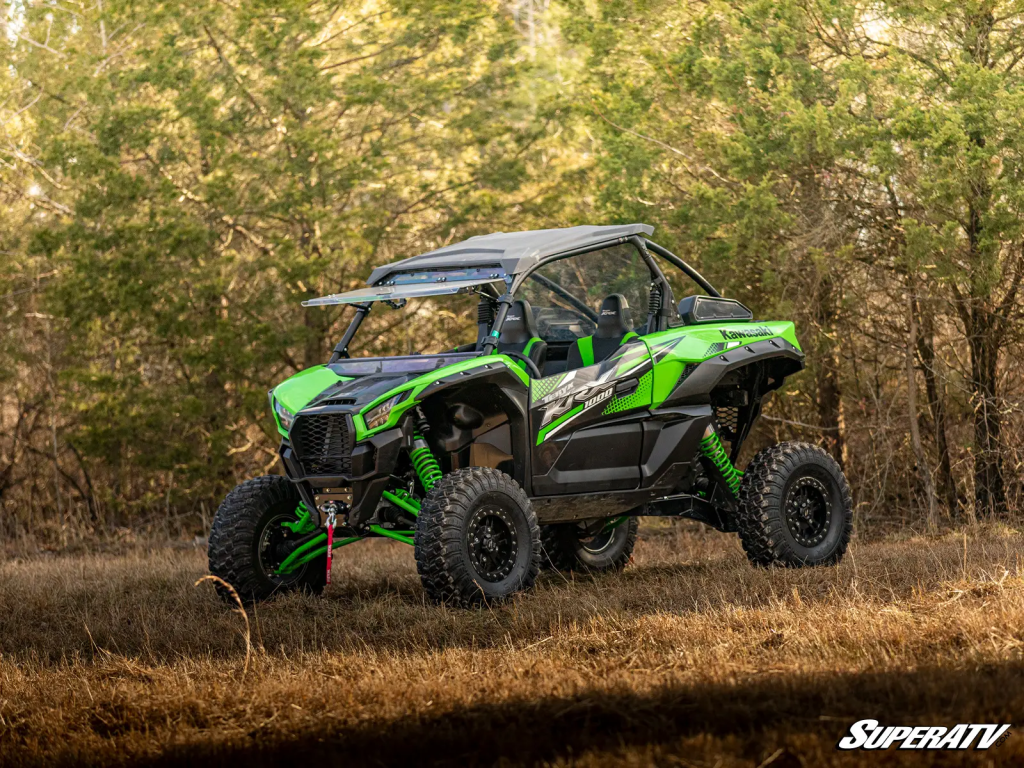
The front diff and features can make a big difference in the way a UTV performs and how you interact with the trails you’re on.
Again, the difference is clear. Manual mechanical lockers make sense for riders in technical terrain or rocks who know when they should lock their front diff and when they shouldn’t.
On the other hand, the RZR’s limited-slip front diff is a set-it-and-forget-it solution. Hit a tough part of the trail, flip it to 4WD, and let the diff decide when it needs to lock. Combine that with the worry-free navigation and communication of the Ride Command display, and you just have a whole lot less to think about when you’re behind the wheel.
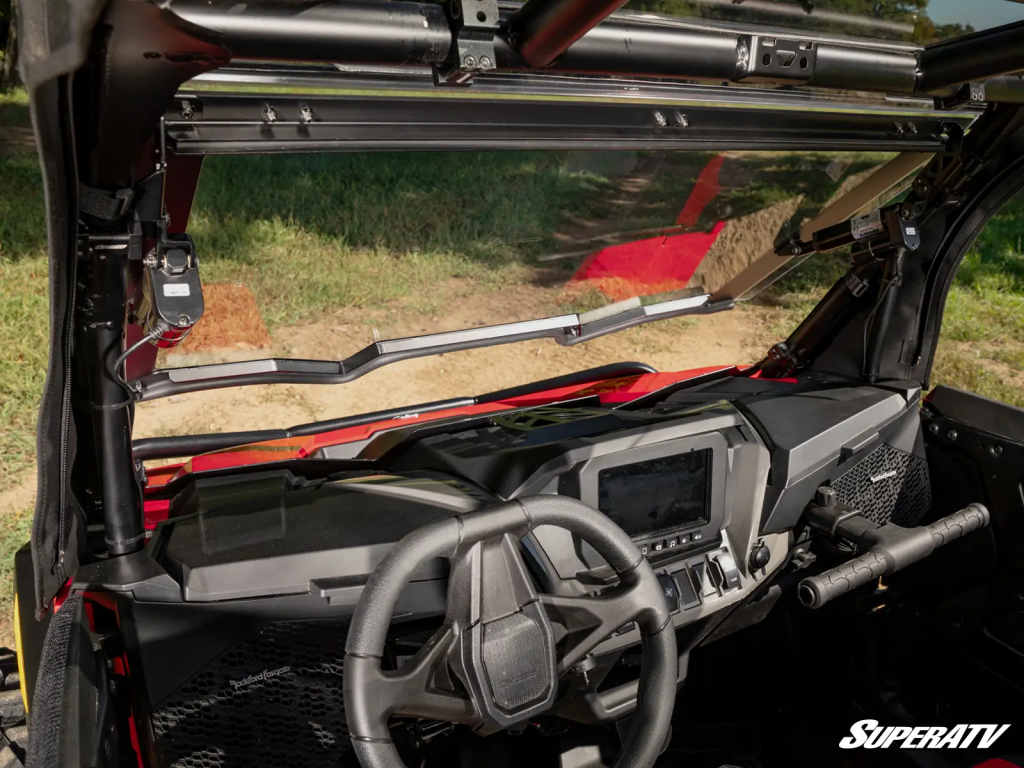
One thing that makes any UTV better is the amount of aftermarket support it has.
The great thing about SuperATV is that we make sure to offer best-in-class parts and accessories for a huge variety of machines.
Here’s just a sample of our most popular upgrades for the Kawasaki Teryx KRX 1000 and Polaris RZR XP 1000:
It should be obvious by now:
If you want a beefy machine that’s ready for technical trails and rock crawling right off the factory floor, you want a Kawasaki KRX 1000.
If you want a more general-purpose machine designed for high-speed trails, long cruises, and easy-to-use features, you need a RZR XP 1000.
And remember, no matter what machine you ride, you can upgrade and customize it to fit almost any riding style with parts and accessories from SuperATV.
Check out Our Other Comparisons:

