We’re all about blazing our own trail, and we know that getting lost can be fun sometimes—as long as the weather is decent and there’s plenty of fuel on hand. But if there isn’t, getting lost can turn from an unplanned adventure into a nightmare pretty quickly.
There are a few precautions you can take to make sure you don’t get lost in the wilderness while doing what you love. Having an accurate and reliable GPS for your ATV or UTV is one of those things.
GPS stands for Global Positioning System. It’s made up of a network of approximately 30 satellites orbiting the Earth. GPS was originally designed for US Military use but has evolved into an everyday tool used by people all over the world, military or not.
When you’re off-roading, GPS works through a process called trilateration. Essentially, it picks up signals from at least three satellites, which create ovals around your general location. Your exact position is pinpointed where those ovals overlap, giving you accurate tracking even in tough terrain. It might sound a bit complicated, but today’s GPS systems are super easy to use, making them a game-changer for off-road navigation.
So, are they worth the investment? Absolutely.
If you regularly venture to new ride spots that are out of your familiarity zone, the answer is easy. Yes, you should be traveling with some sort of GPS for ATVs or UTVs. Even if you don’t use it every time you’re behind the wheel, it only makes sense to have a back-up plan in case you lose your way or find yourself in the middle of an emergency.
But what about riders who stick to their own property, or the same familiar ride spot? Don’t pass on a GPS just because the chances of you getting lost are slim to none! Tracking your location isn’t the only perk of a GPS. Modern systems are pre-loaded with trails and can help you find new places to explore or scenic overlooks that you may never discover otherwise.
A GPS system can also be used as a communication tool, which can come in handy if you ride in a group. Some systems come with built-in communication functionality, allowing you to communicate with other riders nearby. There are some that even show you where your buddies are located on a map.
That leads us to the next question:: What is the best GPS for UTV trail riding?
Off-road GPS systems are built for more than just simple navigation—they’re designed to handle the rough conditions of outdoor adventures. Unlike the GPS you’d use in your car, these units are tough, waterproof, shock-resistant, and weatherproof, so they can take on anything off-roading throws at them.
What really sets them apart is that they come preloaded with topographical maps, popular trails, and detailed terrain data, rather than just roads and highways. This makes them perfect for trail riding. They also tend to have better accuracy and stronger signals, so you’re less likely to lose track of your location, even in remote areas with no cell service.
Aside from knowing you need a system that’s specifically designed for off-roading, there are lots of other features you get to choose from when shopping for a GPS.
The first decision that will help you narrow down your choices is whether you want something handheld or dash mounted. Off-road GPS systems come in many forms, giving you the option to get one that’s portable or permanent. Opting for a dash-mounted one will require a bit of installation, but we’ll talk more about that later.

If you’re looking at a system that is touch screen (and most modern units are), consider getting one that’s compatible with gloves. Many GPS touch screens will work with gloved hands, which is a plus when riding. Nobody wants to stop and remove their gloves just to use their GPS.
As far as screen size goes, that depends on your preference and machine size. GPS screen sizes range from smaller than 3” in handheld models to 7” or larger.
If you have a quad or smaller side-by-side, you might want to look at systems with a smaller screen for the simple fact that they take up less space. If you do choose a smaller GPS for your ATV, make sure it has a high screen resolution. Having to squint or lean over just to make out what’s on the screen is no fun, and also not very safe when driving.
Once you’ve determined the type and size of system you want, take a look at your mounting options. Some units come with a mount but if yours doesn’t, it’s not hard to find one.
If you have a side-by-side, you can buy a mount that either secures to your dash or attaches to the cage. And for quad riders, it’s as simple as buying a handlebar mount to keep your GPS screen front and center.

If you’re in the market for a mount, Ram Mounts has tons of universal options to choose from. It doesn’t matter what kind of device you’re mounting (handheld unit, touch screen unit, tablet, or cell phone) or where you’re mounting it—Ram Mounts has plenty of heavy-duty options, ranging from $40 to $75.
Some GPS models feature built-in cameras. Why would you want a camera when riding, you might ask? There are a couple of reasons why this could come in handy.
You’ll see that certain systems come with a back-up camera, which are just plain practical. Being able to see what’s behind you is nice, especially when navigating unfamiliar territory.
In addition to a back-up camera, your GPS might also have a camera installed in the tablet itself. These cameras can record what’s up ahead, from standard photos to panoramic shots to full-length videos. It’s a super convenient way to record your adventures and document your trip for others to see.
When comparing different models, battery life is something you want to look at—especially if you frequently go on long rides. Many GPS systems are powered by a lithium ion battery but can also be charged in a standard wall outlet while you’re not riding.
The number of pre-loaded trail maps you’ll find on a GPS will vary. Some questions to ask when narrowing down your options are: How many trail routes does it come with? How do you update it? Does it use an external memory card?
We suggest getting a GPS whose maps don’t only show trails. Being able to find nearby campsites, fuel stations, restaurants, and restrooms can be invaluable when exploring new ride spots.
Last but definitely not least, take a look at each GPS system’s emergency capabilities. Most models offer some type of communication and/or rescue capabilities. Make sure the GPS you have will allow you to call for help if things should turn south. It would also be helpful to get something that gives weather updates.
Now that you know what you’re looking for in an off-road GPS unit, let’s take a look at some of the most popular systems on the market right now.
We’ll highlight both handheld and dash-mounted options, and we’ll also hit every price point. So whether you only want to drop a couple hundred bucks or you’re committed to buying a pricier model, we’ve got some recommendations for you.
Here are our top picks when it comes to a GPS for your UTV or ATV.

The Garmin Tread® XL Overland Edition is one of the best GPS units for ATV trail riding. With its large 10” screen and preloaded maps of North America, it’s easy to plan and track your route. Built tough with a glove-friendly touchscreen, long battery life, and InReach messaging, it keeps you connected even in the wild. The Tread app syncs your routes and notifications. Plus, you can add Group Ride Radio, which lets you stay in touch with up to 20 riders.

The Garmin Tread XL Baja Chase Edition keeps your team’s chase car connected with a 10” ultra-bright display and InReach technology for real-time tracking, course details, and custom pace notes. Built for rugged terrain and extreme weather, it’s one of the best GPS units for off-road racing, with a portable mount for easy use between side-by-sides.

The Garmin Tread XL Baja Race Edition is built for speed, keeping you and your team connected throughout the race. Track your vehicle’s real-time location, access course details, and add custom pace notes for potential hazards. Plus, the track recorder logs splits and lap times, helping you pinpoint areas to improve and shave off precious seconds.

The Garmin Tread Powersports Navigator—SxS Edition keeps you and your crew connected with an 8” screen and preloaded maps of North America. Group Ride Radio lets you communicate with up to 20 riders, while the rugged, IP67-rated design ensures durability in tough conditions. With 6-hour battery life and Tread app connectivity for weather updates and smart notifications, you’ll always stay on track.

The Garmin Tread 2—6″ Powersport Navigator is designed for tough off-roading, offering a glove-friendly touchscreen and rugged build. It provides fast, turn-by-turn navigation with detailed maps like OpenStreetMap and U.S. Forest Service trails, plus high-def elevation maps and satellite imagery. With additional features like snowmobile trail info and Outdoor Maps+ access for premium options like avalanche reports, this GPS ensures you’re prepared for any adventure.

This rugged Garmin handheld offers precise navigation with multi-band frequency support and expanded GNSS satellite coverage. The 2.6” sunlight-readable color display and preloaded TopoActive maps ensure easy navigation. It’s powered by AA batteries, lasts up to 16 hours in GPS mode, and is waterproof with an IPX7 rating. With built-in sensors, 16GB of memory, and the ability to add maps, it’s the perfect companion for outdoor adventures.
*All prices are accurate as of December 2024.
There are two UTV manufacturers that offer a built-in GPS for UTVs. Here are the deets on Polaris and Yamaha’s navigation software.
Some newer Polaris machines come equipped with Ride Command, the manufacturer’s in-vehicle instrumentation and mapping system. Some features you’ll get with Ride Command (in addition to navigation) include on-screen gauges, a glove-touch weatherproof screen, and route planning.
Ride Command also has a Group Ride feature that allows you to communicate with other riders in your group and see their speed and location.

Certain Yamaha models come with the exclusive Adventure Pro system, powered by Magellan. You get all of the standard GPS functions along with online adventure planning, social sharing, and a front and rear camera.
One cool feature about Adventure Pro is that it’s integrated into a removable tablet. There’s also a Timing Mode feature that allows you to record courses and compare lap times—it’s maybe not the most helpful when exploring trails, but a pretty cool thing to have if you’re a racer.
Personally, we think a reliable GPS for your ATV or UTV is a must when riding. It’s convenient, it can help you find new trails, and it’s there in case of an emergency. But they might not be for everyone.
So if you’re not a GPS person, what are your off-road navigation options?
We get that it’s hard to invest in another piece of technology when you have a perfectly good cell phone or tablet sitting at home. The good news: there are apps that let you pre-load maps to work in dead zones. It’s convenient, but not without its drawbacks.
Phones and tablets aren’t built for the rugged demands of off-road terrain. They’re vulnerable to tough conditions like rocky rides or bad weather. Off-road GPS systems, on the other hand, are designed to function off the grid, offering better reliability in emergencies when you need to call for help.
A roll chart is a small scroll of paper that gives detailed directions. It doesn’t show a drawn-out map, but rather a list of steps and directions. Roll charts are used a lot in racing or group rides to detail a specific course. They give information that you won’t find on a GPS, like “Slow down and watch for a big dip at mile 37.”
Roll charts are good to have for distinct events or courses (like the TransAmerica Trail) or as a backup, but we don’t recommend using one as your primary means of navigation. The step-by-step directions will probably get you to your destination with no problem, but a roll chart won’t be much help if you miss a step or become lost.
A third option is to use a good, old-fashioned paper trail map. Using a paper map requires a little more work—it’s not going to tell you how many miles you have to the next turn, and it won’t update in case of road or trail closures. But keeping a map of your area in your vehicle could come in handy if your GPS fails. After all, technology isn’t 100% reliable. If the battery dies or your unit stops working, knowing how to navigate with a paper map can help you find your way back home.
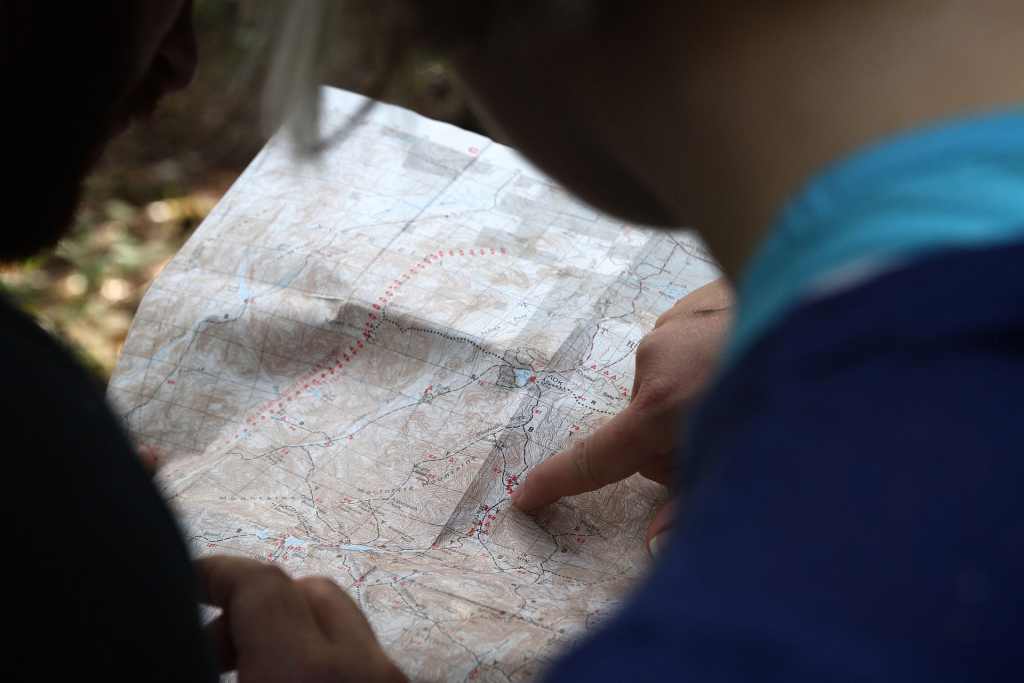
Off-road navigation isn’t a “one size fits all” deal. Handheld vs. dash mounted, modern-day technology vs. an old-fashioned map—what works for one rider won’t necessarily be everyone’s cup of tea.
The important thing is that you have something in your machine that will help you find your way home if you veer off course. If that something happens to be a reliable GPS system that can also take pictures, record your favorite routes, and help you call for help in case of an emergency, even better!
What are you doing to make sure your next ride goes as planned?


2 Comments
I am interested in a gps for our side by side. One of my big interests is easy to operate, Im older and not very computer savy. We go places alone and need some sort of navigation system. Would appreciate your help in setting something that would work for us.
Hey Clayton, for pure ease of use, you can’t beat a Garmin. Check out either the Overlander or the Tread (https://www.superatv.com/garmin-tread-powersport-navigator-with-group-ride-radio-1). We have more Tread options coming soon too.
If the price is too much to bear, alternative options like an iPad with software like Gaia can get what you need for much cheaper, but they’re not as easy to use.