
Brakes are brakes, right? Wrong! The brake pads on your ATV or UTV can have a huge impact on your safety, stopping capabilities, ride comfort, and general confidence during your rides. If you’ve ever ridden with cheap or worn-out brake pads, you’ll recognize the problems right away—longer stop distances, reduced effectiveness due to brake fade, issues stopping in hot, muddy, or wet conditions, and overall poor performance when you need stopping power the most.
If your pads are worn down or not the quality you deserve, upgrading can pay huge dividends. In fact, if you ride tough trails or love powering through the deepest mud holes you can find, brake pads are some of the best, and easiest, improvements you can make to your machine. Better brake pads are longer lasting—even in the muck and heat of consistent use—while improving your ability to keep your machine under control and giving you the confidence you need to ride at your best. But what brake pads should you get? Well, we’re glad you asked.
When picking replacement brake pads, there are plenty of factors to consider, such as their performance specs, durability, cost, and fitment. Plus, you’ll need to keep in mind the best pads for how and where you ride. OEM replacement pads, for example, could be ideal for those who aren’t looking for a performance edge or the wildest of wild rides. On the other hand, premium aftermarket upgrades are almost a must for anyone looking to take on the toughest terrain or be on the podium after a race.
For high-performance, highly durable brake pads, it doesn’t get better than sintered brake pads. Made of a hybrid material that fuses metallic particles with ceramic or other materials, these pads are built to take on the toughest rides and most difficult terrain. Sintered brake pads provide unmatched toughness and strength when compared to other brake pads and they last longer than other material options.
Quality sintered brake pads, like those offered by SuperATV, provide the best braking performance possible and are the best choice for most UTV and ATV riders. However, sintered pads are a bit louder than other options. For many, it’s worth the trade-off, but if you use your rig for golf course maintenance, they may not be the best choice. Sintered pads, due to their strength, can also wear on your rotors a bit faster than other brake pads, although this is a relatively minor issue for anyone looking for top-of-the-line performance.
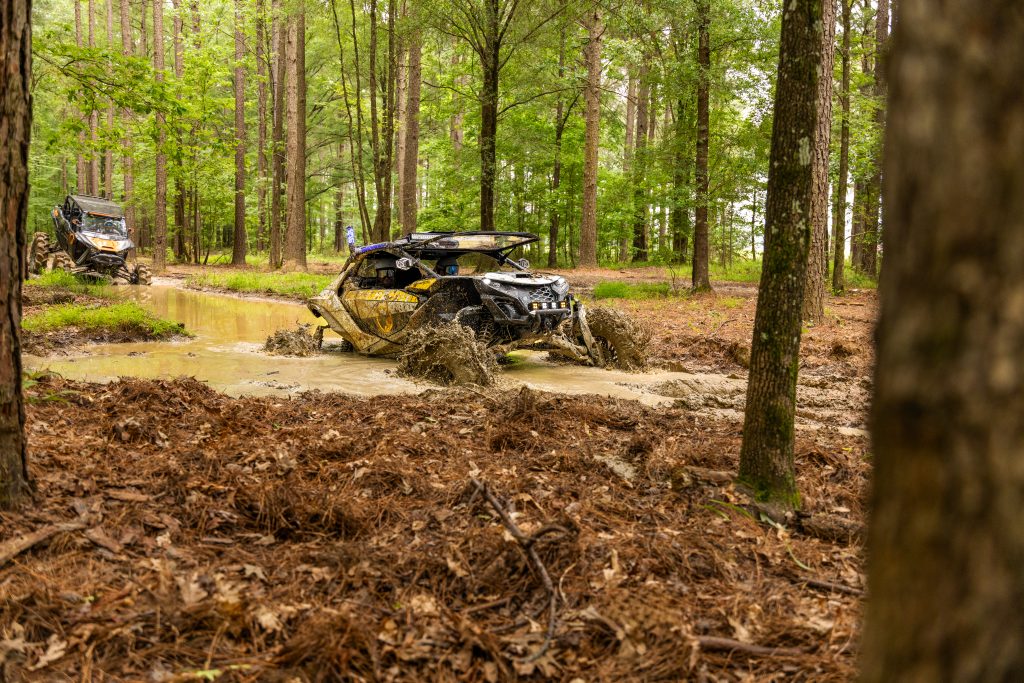
If you’re going to be powering through mud and water, high-performance sintered break pads are a must. Photo by SuperATV.
Semi-metallic brake pads are made of a composite mix of metals, alloys, and fillers. While they don’t offer the same level of performance as sintered pads, they’re no slouches. Semi-metallic pads are decently durable, can perform in hot and cold weather, and can do pretty well over most terrain—they’re also quieter than sintered pads.
However, if you are planning lots of time in mud or water, semi-metallic pads won’t perform nearly as well as sintered pads, despite being nearly the same price (or sometimes more). They also produce dust that can coat your rotor, reducing brake performance. Glazing can also be an issue with semi-metallic pads, especially if you’re hammering on them on hills or brake too hard, too often. This process will cause the brake pad surface to become smooth and glasslike, dramatically reducing your stopping power. Even with these potential issues, many riders prefer semi-metallic pads for general use, especially if you aren’t looking to take on the swampiest or most challenging rides.
Organic brake pads are the cheapest option, but be warned—you get what you pay for. These pads are made of non-metallic fibers that are compressed and fused, and while they’re in good shape they are responsive and quiet to use. If you just use your machine for gentle trail riding, maintenance around buildings, or slow transportation over easy ground, organic pads are a perfectly fine, and very affordable, option.
The issues arise with consistent or prolonged use, as organic pads break down much faster than sintered or semi-metallic, leaving dust all over your rotors. Glazing is also more prevalent with organic brake pads since they really can’t stand up to the heat from heavy use. Moisture is also bad for organic brake pads, so if you ride in the rain, through a stream, or in the mud, they’ll be in rough shape.
No matter how well you look after your brake pads, at some point you’re going to need to replace them. Staying on a regular schedule is a great plan, but there may be times that excessive wear, the elements, more rides than usual, or general tough riding conditions can require a brake pad change. Some signs that it is probably time to stop waiting and replace your brake pads include:
Check out our in-depth guide to learn more about the signs that your brake pads, or any other part of your braking system, may need replacing.
By now, there should be no denying the importance of high-quality brake pads for your ATV or UTV. Choosing pads that enhance your performance and safety, while also being durable enough to handle however you ride, is the key. Whether you’re looking to upgrade from OEM pads or it’s just time for a regular replacement, check out SuperATV’s selection of brake pads made for most popular ATV and UTV models. If you have more questions about brake pads or want some more help choosing the right type for your machine, reach out to our team or drop a comment down below. We want to hear from you!

