Heading into the desert in the driver’s seat of your ATV or UTV can feel like you’re entering the final frontier. It’s an alluring prospect—with nothing ahead of you but the rocks, dust, scrub, and the horizon, the next few hours of riding have endless possibilities.
If you want to make sure one of those possibilities is having a good day, you need to take some precautions before you hit the trail. Here are five common desert issues and how to prepare your machine to help avoid trouble.
1. Mechanical Failures from Heat and Dust
Deserts are uniquely suited to bombard your vehicle with heat and dust. Here’s how you can prepare your ATV or UTV for the desert’s most troublesome elements, and what to do if they get the best of you anyway.
Before you go: Check your engine oil and coolant according to your owner’s manual. Visually inspect your radiator for bent fins and debris, and check your hoses and airbox for damage.
Check your filter: Check your air filter to see if it’s clogged or overly dirty. Follow the directions in your owner’s manual for replacement or cleaning.
For all maintenance, follow the manufacturer’s severe-use maintenance schedule for desert conditions.
On the trail: Pay attention to the symptoms of an overheating vehicle. A temperature warning on the dash, the appearance of steam, or sudden power loss are all good reasons to stop safely and assess the situation. Always follow the overheating procedure found in your vehicle’s owner’s manual. And NEVER open a radiator cap on a vehicle that hasn’t completely cooled down.
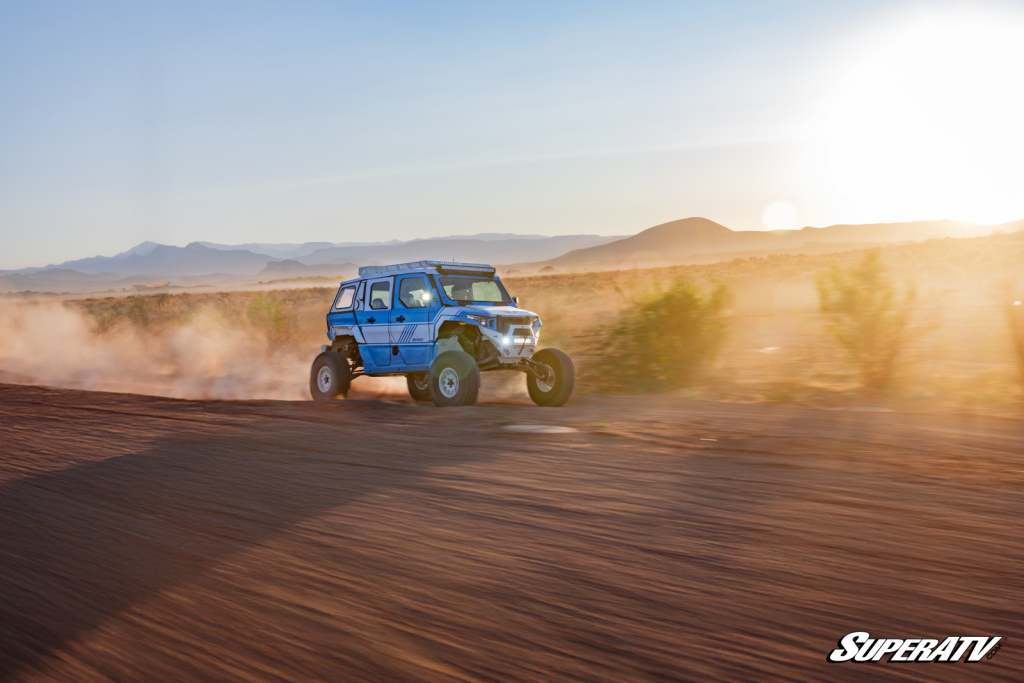
The heat and dust in the desert can wear on all kinds of components in your machine. Photo by SuperATV
2. Tire and Suspension Problems
Tire issues can turn your ride into a trudge back to the trailer. And broken suspension can cause every bump to knock you around. Here’s what to watch out for.
Use the right tires: You need to make sure your tires match your route. Are you spending all day in sand? Then you want sand tires. If you’re spending half the day in sand and half the day in mixed terrain, you’d be better suited with all-terrain tires. If your route is all rocks (or the only challenging sections are rocky), you might want rock tires. We’ve got all-terrain tires and rock tires that will go the distance.
Measure cold tire pressure before you go: Make sure your tire pressure matches the recommended pressure for the tires you’re using. It goes without saying that if you have one tire with a much lower pressure than the rest, it could have a leak. Check your owner’s manual for proper tire pressure and maintenance guidance.
Prepare for tire issues: Pack a tire gauge, portable air compressor, and an appropriate repair kit, like tire plugs. Tire plugs can’t solve every issue. If you have sidewall damage or an unseated bead, it’s often better to use a spare or get towed back to the trailer.
Inspect suspension: Look for leaking shocks, torn CV boots, and loose steering or suspension components. Any suspension issues should be repaired before you head into the desert. Some owner’s manuals also include guidance on how to adjust shocks, which we recommend you do to match your terrain.
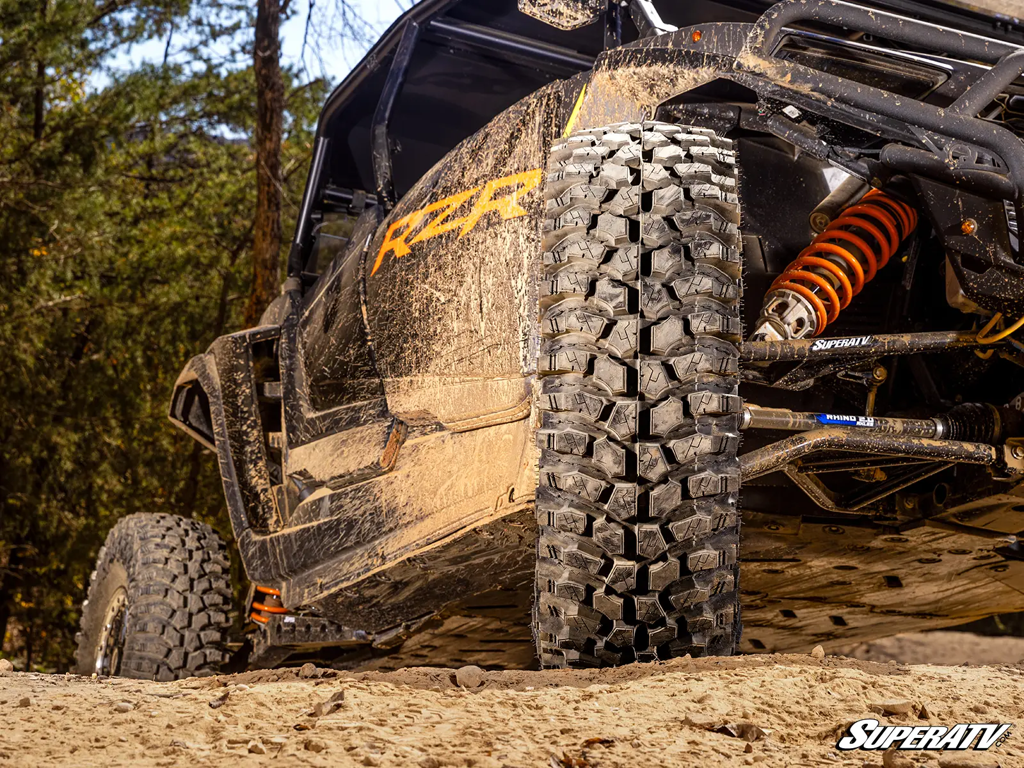
Cliffhanger Tires are built for rocky terrain. With big shoulder lugs, siped surfaces, and a durable rubber compound, you can count on them to get you through rocky desert terrain. Photo by SuperATV
3. Navigation, Communication, and Getting Lost
Pro tip: don’t get lost. The desert’s big, and it’s not designed for extended stays without some serious provisions. Here’s what you can do to make the odds of getting lost a little less likely.
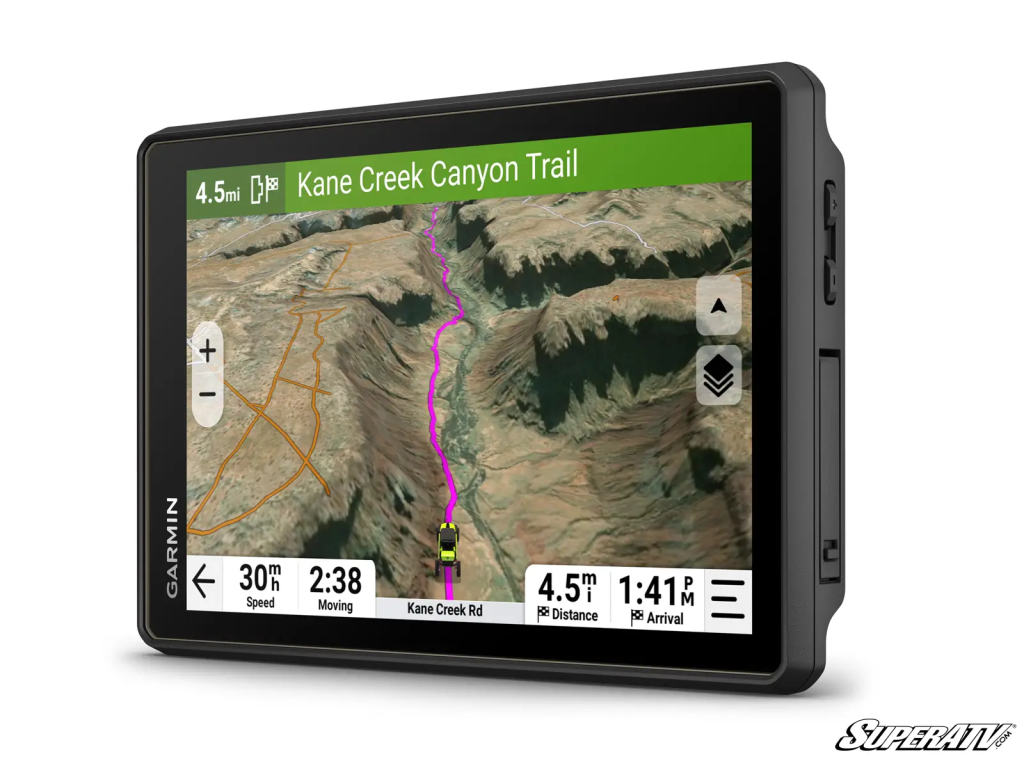
Before losing service: Download offline maps and test them in airplane mode. Mark important locations like the camp, the trailhead, and junctions. Need a GPS? Check out these Garmin Tread GPS devices.
Plan for separation: Make sure everyone in your group knows what to do if they get separated. Check in with each other regularly. Make sure everyone knows where they should be and when. Leave all your plans with someone at home who knows when you should be in contact again.
Know your gear: Bring radios, like these Rugged Radios or Cardo communicators, to stay in contact with the other riders in your area (and make sure you hold the appropriate FCC licenses before transmitting on business-band frequencies). You can use a satellite communicator like Garmin’s InReach Mini 2 with a satellite subscription if you need to contact loved ones or emergency services.
Check the forecast: Check forecasts and trail closures. Be especially aware of any flash flood warnings.
When you don’t have cell service, you should still have satellite service. Bring a GPS with you and use downloaded maps to avoid getting lost. Photo by SuperATV
4. Fuel, Water, and Getting Stranded
Here’s another pro tip: don’t run out of gas in the desert. But that’s not the only critical supply you need to make sure you have with you. Here’s what you should pay attention to.
Fuel: Start full, and monitor consumption early. Figure out where your turnaround point should be—you should be able to get back to your trailer with plenty of gas to spare. Use purpose-built gasoline containers and secure them to your machine according to the instructions of the specific containers you buy.
Water and food: The general baseline for water provisioning is one gallon of water per person per day. It’s a good idea to bring extra for any unexpected delays too. And water doesn’t do you any good if you don’t drink it. So make sure you take breaks to drink water and eat some good food! We’ve got coolers and cargo boxes to make it easier to bring cool drinks and food too.
Watch out for heat illness: Pay attention to yourself and those with you. Watch for symptoms of heat exhaustion, heat stroke, and other heat-related illnesses.
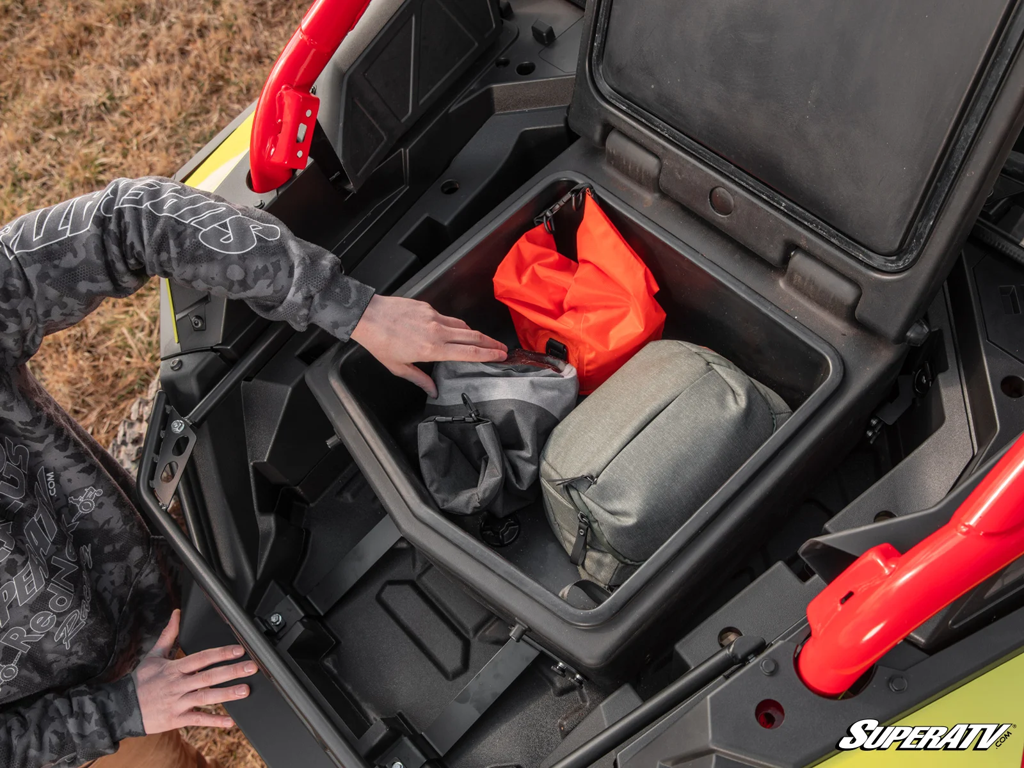
A cooler keeps your drinks cool and your gear protected from dust and dirt. Photo by SuperATV
5. Poor Visibility, Blind Dunes, and Collisions
Dust and dunes seriously affect visibility and sightlines. If you want to try to avoid side-by-side or ATV accidents, you need to be aware of your limitations and what you can do about it.
Riding through dust: If you’re in a line of vehicles kicking up dust, increase your following distance until you can see far enough ahead to stop in time for obstacles. Use amber lights at night to help see better in dusty conditions.
Riding in dunes: Dunes are formed by wind, and the windward side is usually an easy slope, whereas the leeward side is usually a steep drop-off. It’s better to assume that there’s a drop-off beyond the crest of every dune you see. Make use of spotters at the tops of dunes to track other riders in the area and learn the area’s terrain before you start cresting dunes. No blind launches!
Run flags: Flags help you be more visible over dunes, and they’re required at most dunes. Check for destination-specific requirements.
Safety: Follow all the safety requirements provided in your owner’s manual and printed on the stickers in your cab. They’re more than just a good idea!
Be Prepared Before You Go
Remember: inspect your machine, pack the gear and supplies you need, and communicate clearly with fellow riders and trusted people at home. The desert’s gorgeous and inviting, and if you follow this advice, you can avoid some of the biggest pitfalls.
For all your desert-riding gear, head over to SuperATV. We’ve got tons of upgrades and parts for a huge variety of vehicles.
Disclaimer: This article was written by an employee of SuperATV. The views, opinions, and recommendations expressed in this blog are the writer’s own and do not necessarily reflect those of SuperATV. This content is provided for informational purposes only and is not intended as safety advice or official technical guidance. Modifying vehicles and using aftermarket parts can impact performance and safety. Readers are responsible for ensuring proper installation, compatibility, and safe operation. SuperATV makes no representations or warranties regarding the accuracy or completeness of this information and assumes no liability for any actions taken based on it.