A long time ago, ATVs were king (some say they still are). That led to thousands of miles of trails that were developed specifically for ATVs. Land managers set 50 inches as the standard width to accommodate ATVs and dirtbikes while minimizing the overall impact of the trails.
That’s why 50-inch trail UTVs are such a good choice for riders today.
They’re all about packing as much power into a 50-inch-wide suspension setup as they can, and two of the best are the Can-Am Maverick Trail 1000 and the Polaris RZR Trail.
They’re both great for tight trails, but which one should go in your garage?
The Can‑Am Maverick Trail 1000 and Polaris RZR Trail boast similar power, clutches, and differentials. But just like any real‑world UTV comparison, the on-paper specs don’t tell the whole story.
Both machines have great power delivery that offers quick acceleration without wheelspin thanks to their factory clutch configurations and gearing. You might feel a little more acceleration off the line with a RZR Trail, but they both feel great on trails.
They both top out around 60 MPH for their top speed, but with their narrow suspension, you shouldn’t find yourself going that fast very often.
The biggest difference comes down to their front differentials. The Visco-Lok front diff is a limited-slip differential that uses a clutch pack to lock the diff when one wheel starts to free spin. But it doesn’t lock instantly and can kill your momentum.
Polaris’ diff, on the other hand, locks almost instantly to minimize slippage and keep you moving forward. The Polaris version also engages with a large axle stub, which makes their axles stronger at the diff.
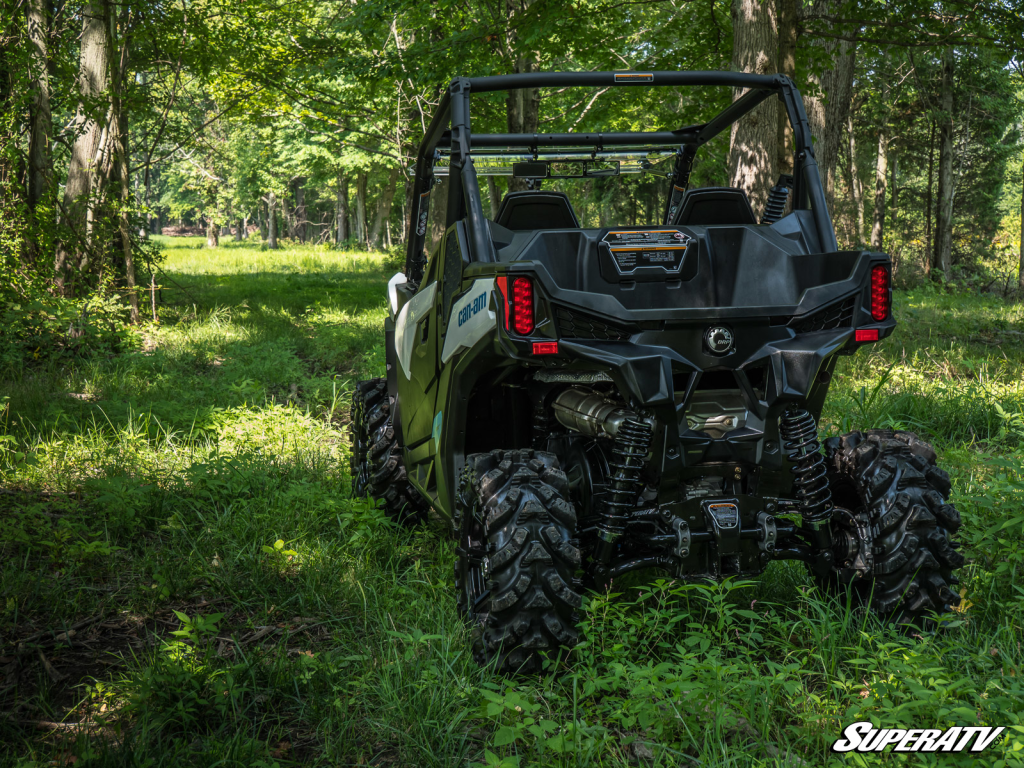
The Maverick Trail 1000 and the RZR Trail share similar dimensions thanks to their 50-inch trail requirement. The biggest difference comes from wheelbase.
Both machines use fully independent front and rear suspension, which is essential for maintaining traction and comfort on roots, rocks, and trail chatter.
Both platforms offer preload adjustment as their only shock tweak. Apart from that one point of adjustment, you’re stuck with the ride feel you get out of the box. There are tons of excellent aftermarket suspension upgrades, though
That longer wheelbase on the Maverick Trail gives it tons of stability over chattery sections and on hill climbs. It helps get the most out of its modest 10” ground clearance. The shorter‑wheelbase RZR Trail rotates more easily and feels more nimble. They have their own characteristics—it’s up to you to decide which one you value more.
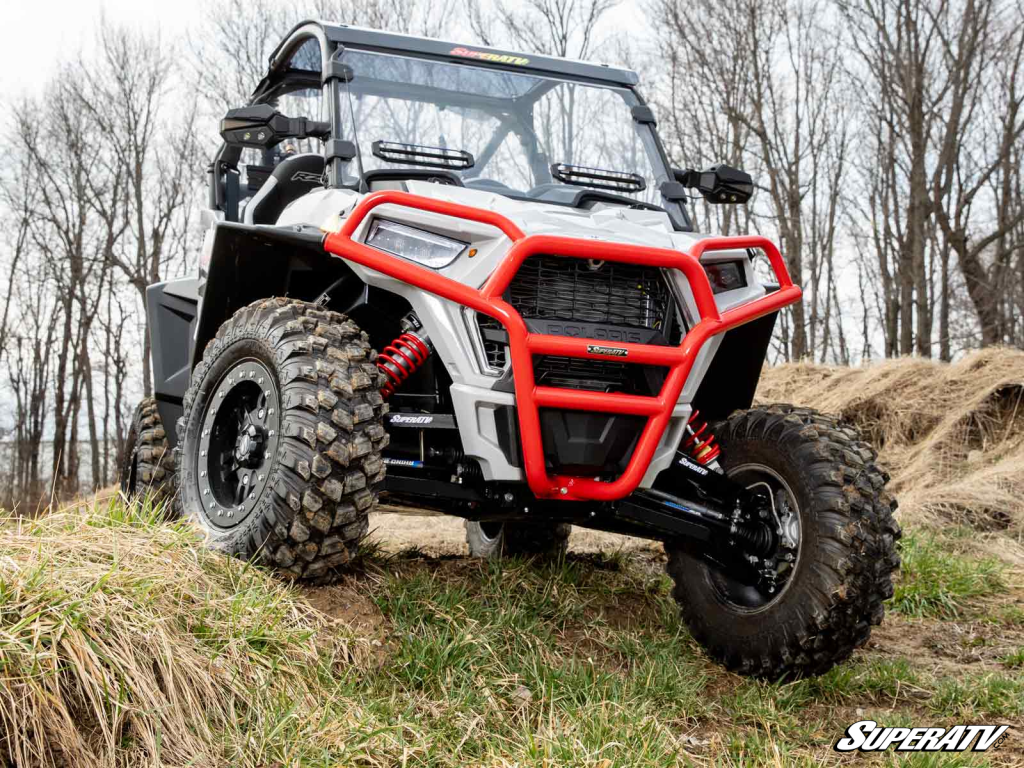
Durability matters—especially when you’re squeezing through tight trails with rocks, roots, and ledges just inches away from your machine.
Both Can‑Am and Polaris build their Trail machines on stout tubular chassis designs with factory skid protection that’s suitable for everyday riding. Stock control arms, CV guards, and skids hold up well to normal trail use.
That said, serious riders will benefit from upgrades like SuperATVs reinforced RZR Trail skid plate or Maverick Trail skid plate. Bumpers and upgraded A-arms can make a big difference too.
The fit and finish are great on both machines. Panels are solid, the cab is comfy, and they’re surprisingly roomy despite their smaller design.
The way a UTV manages traction can make a big difference in tricky conditions.
Both machines come with half doors and power steering standard for a premium feel out of the box. The Maverick Trail gives extra emphasis to protection with a front bumper and HMW skid plate. Considering the aftermarket options available to both, that shouldn’t sway your opinion too much.
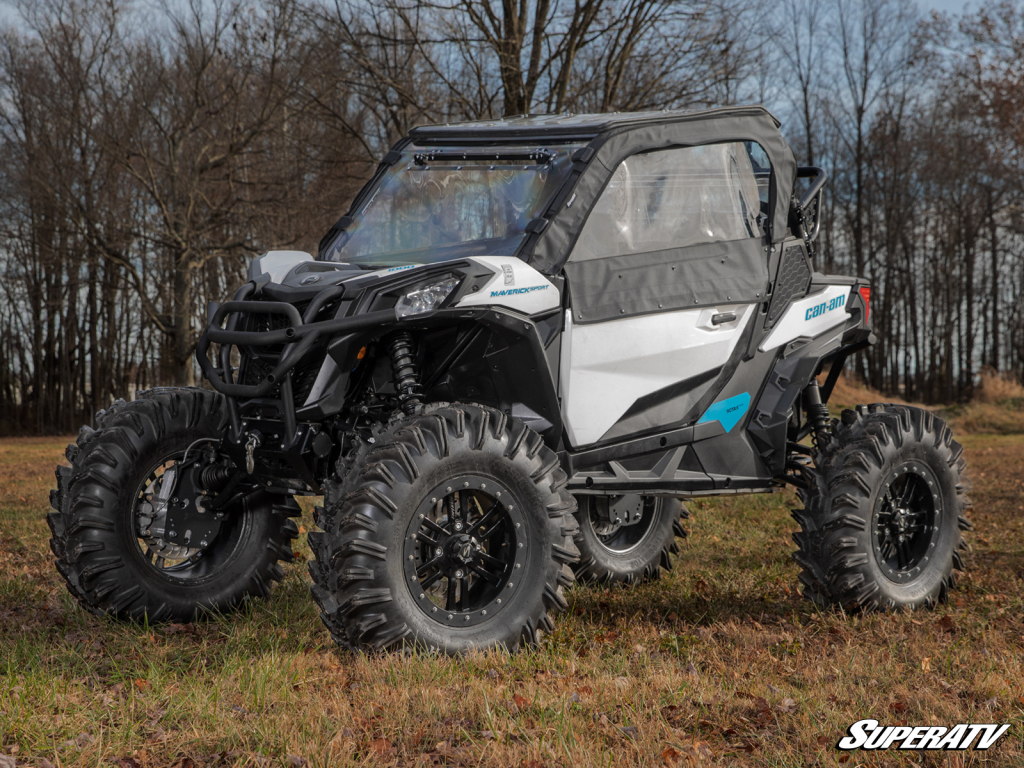
One thing both machines have in common is excellent aftermarket support. Whether you ride a Maverick Trail 1000 or a RZR Trail, you can tune, protect, and personalize your UTV to match your riding style.
Check out these upgrades from SuperATV.
With the right upgrades, either machine can be transformed to handle anything from more aggressive trails to bad weather. But keep in mind that big lifts and portals can make your machine wider than 50 inches.
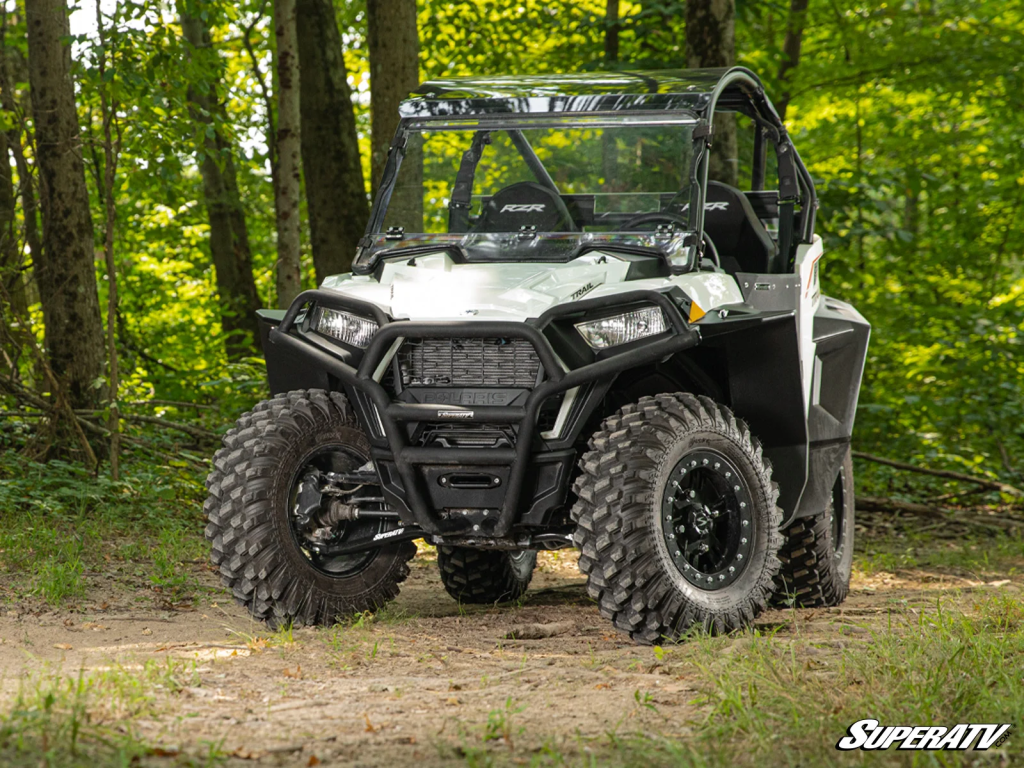
At this point, the choice should be getting clearer.
Both machines hit the 50-inch target with serious capability. The Maverick Trail favors stability and durability, while the RZR Trail delivers agility and responsiveness.
No matter which side you choose in the Can‑Am Maverick Trail vs Polaris RZR Trail debate, the right upgrades can tailor either machine to your terrain.
Thousands of miles of 50-inch trails wait to be explored by you. All you have to do is pick your machine.
Check out Our Other Comparisons:

