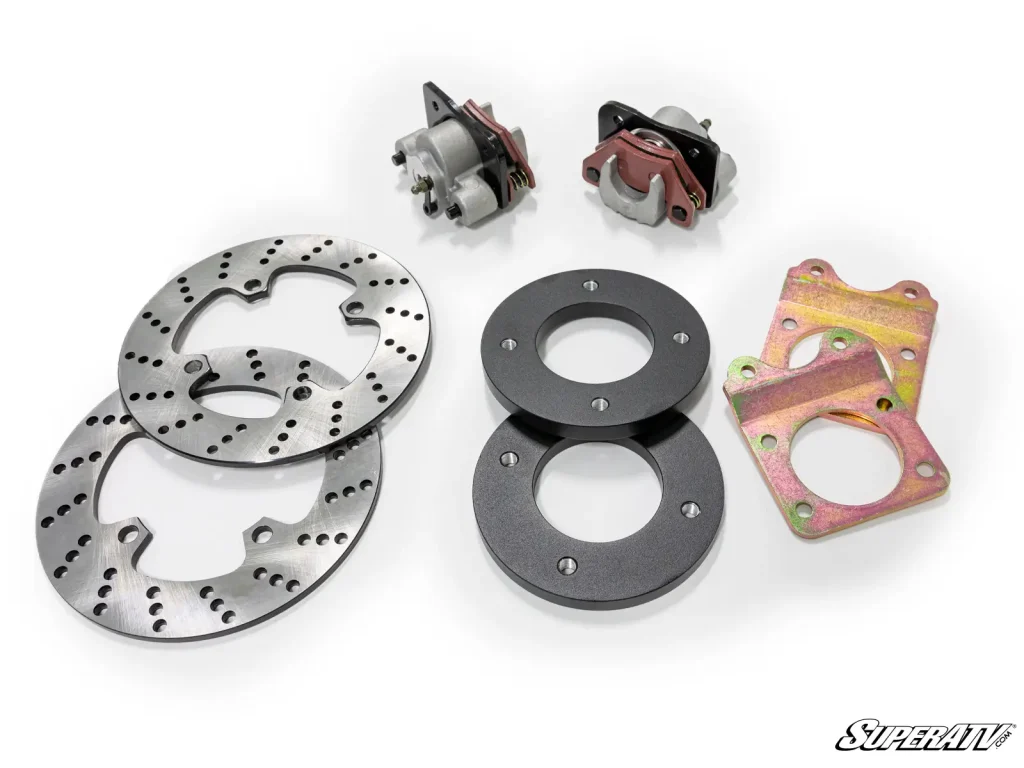
Eventually everyone has to stop. A good set of brakes not only keeps you from slamming into obstacles or your buddies, they boost the overall performance of your rig. Reliable, high-quality brakes will augment your steering and handling, overall safety, and your confidence as you ride. And if you’re doing anything besides riding slow on flat, empty ground—and we bet you are—good brakes will help keep you in control on trails, through mud, and over rocky terrain.
Braking comes down to more than just brake pads, too. The type of brakes your machine has plays a big part in the effectiveness of your entire brake system. This guide will take a look at disc vs. drum brakes, giving you an idea of how they work, what they’re good for, how you should take care of them, and if they’re the right fit for your ATV or UTV. Let’s get stopped!
Drum brakes are most often found on older-style ATVs or UTVs. Drum brakes are made up of an enclosure that has brake shoes and pads, a wheel cylinder, various springs, a backing plate, and a brake shoe adjuster. Drum brakes are simple in function: when you hit the brakes, the shoes are pushed into contact with the drum, creating friction that causes the wheels and axles to stop rotating, bringing your rig to a stop.
The advantages of drum brakes include:
However, there is a reason that drum brakes are less common today than they used to be. Some downsides to drum brakes are:
With the combination of negative attributes and advancing brake technology, drum brakes are rarely used in production of new ATVs or UTVs. If used at all, they are generally limited to rear wheel brakes on utility or entry-level models.
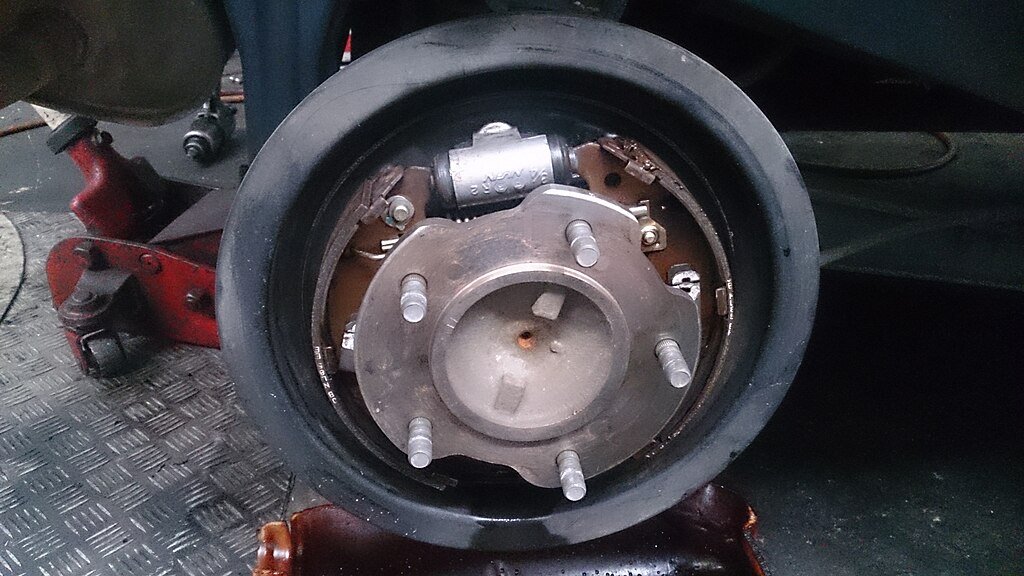
Drum brakes were mainstays for older off-road machines, cars,and motorcycles. Photo from Wikimedia.
Drum brakes generally require more frequent and thorough maintenance to keep them working at their best. In order to maintain tension, spring adjustments need to be made often. The enclosed housings do offer some protection, but they also trap moisture and the heat that is generated by the friction of braking. This moisture and heat will lead to extra wear on the brake pads—a process that is further accelerated if you ride hard or through the mud. Removing the enclosure is necessary to do any maintenance, including adjustments and cleaning, increasing the length of maintenance tasks.
One of the most attractive features of drum brakes is the cheaper sticker price—this is also one of the reasons that some entry-level and utility machines still use drum brakes for the rear wheels. But while the lower price is great, you should consider the long-term costs of frequent maintenance and brake pad replacements. If you plan to do any high-performance, tough riding, these costs can add up quickly and your braking won’t be to the level of your buddies with disc brakes.
Disc brakes use a caliper and piston system to hold brake pads and compress them against the rotor when the brakes are engaged. The brake pads use friction to stop the rotor, which stops the wheels and your rig. Disc brakes are the most common types of brakes you’ll find in ATVs and UTVs, especially at the front wheels. Machines designed for high-performance off-roading and racing will have disc brakes, as they offer a number of advantages:
Disc brakes aren’t without some drawbacks, though. They cost more than drum brakes and are more exposed to mud and debris. However, they can save you money in the long run, especially if you’re hard on brake pads. Since they are easier to clean and maintain, the increased exposure generally isn’t much of an issue.
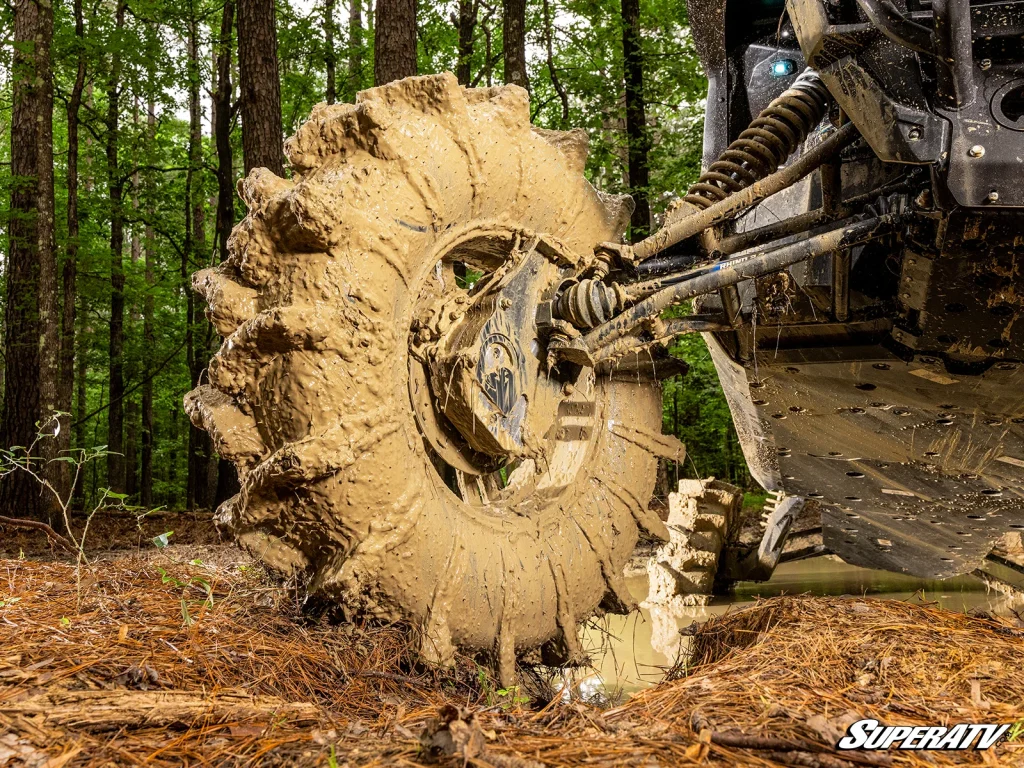
While you’ll need to give them a good cleaning, disc brakes can handle the gnarliest conditions you ride in. Photo by SuperATV.
Disc brakes are less protected than drum brakes, making them easier to clean and maintain. Inspecting and changing out brake pads is also simple and quick since there is no drum enclosure. The lack of enclosure also plays a role in the increased longevity of disc brakes and brake pads—heat dissipates faster, reducing wear and tear, especially in demanding riding conditions.
As with any part, your rotors can warp and your calipers and pistons can be damaged if you ride them hard and don’t do any maintenance. But if you keep up with maintenance, a disc brake system will generally outlast similarly maintained drum brakes.
Cost is the big hurdle for many considering drum brakes—especially if you’re upgrading a drum system to a disc system. There’s no denying that disc brake systems cost more upfront than their drum counterparts, but it wouldn’t be a stretch to consider disc brakes an investment. Enhanced durability and lower maintenance requirements will lead to cost savings and less downtime in the long run, while improved safety and performance are significant upgrades over drum options.
After all this, it might seem like we’re telling you to choose disc brakes no matter what—but that’s not true! Drum brakes still provide real value in various situations. If you don’t ride that often and tend to stick to less demanding terrain, drum brakes are a great option. Ditto if you are looking for a budget option and are willing to put in the time and effort to keep drum brakes working at their best.
In general, though, disc brakes are the right choice for most riders who are going to be racing or are serious about conquering tough terrain. It’s hard to beat the enhanced performance, longer lifespan, and greater confidence discs provide. If you’re looking for more information on getting the best out of your brakes, check out our article on choosing the best brake pads for your rig.
When it comes down to choosing between disc vs. drum brakes, it pays to take the long view. For most riders, the performance, longevity, reliability, and peace of mind provided by disc brakes easily make them worth a higher initial investment. If you’re looking for even more upgrades to your brake system, SuperATV’s high-quality brake pads and parts can take your performance to the next level. If you have more questions about drum and disc brakes, drop us a comment below or reach out to our team—we’re always happy to get you the answers you need!

