Shopping for new ATV or UTV tires sounds pretty easy—that is until you realize just how many options there are. You’ve got mud tires, all-terrain tires, rock tires, and a lot of different tread patterns and sizes. So, how do you know which tires you actually need?
It really all comes down to where you ride and what you expect your tires to handle. A tire that’s great in deep mud might not be the best for cruising down a hardpacked trail.
We’re breaking down the different types of ATV and UTV tires and what makes them different, and which SuperATV tires might be the best fit for your riding style.
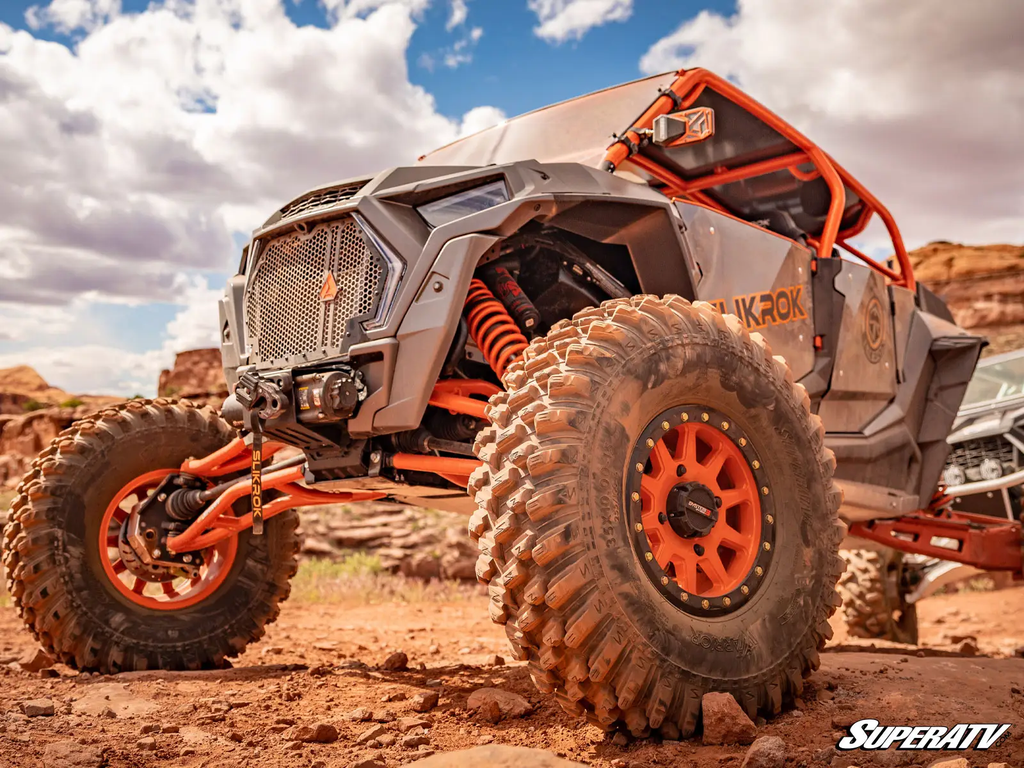
Before you start comparing tires, ask yourself one question—where do I spend most of my time riding?
If you’re usually cruising down dirt trails, you’re going to need something different than the rider who spends every weekend buried in mud. If you’re constantly climbing over rocks, you’ll want tires that can grip uneven surfaces without getting torn up.
Here’s the thing. You don’t necessarily need a tire that’s designed for the toughest obstacle you’ve ever encountered. You need one that works for the terrain you ride on the most.
For example, let’s say you spend most of your weekends exploring wooded trails, but you occasionally hit a few mud holes. You don’t need a dedicated mud tire with massive lugs. An aggressive all-terrain tire could give you the traction you need.
The same goes for work. If you’re using your rig to haul equipment around the property, durability, load capacity, and traction on different surfaces should be at the top of your list.
Once you know where you’re riding, narrowing down your options gets much easier.
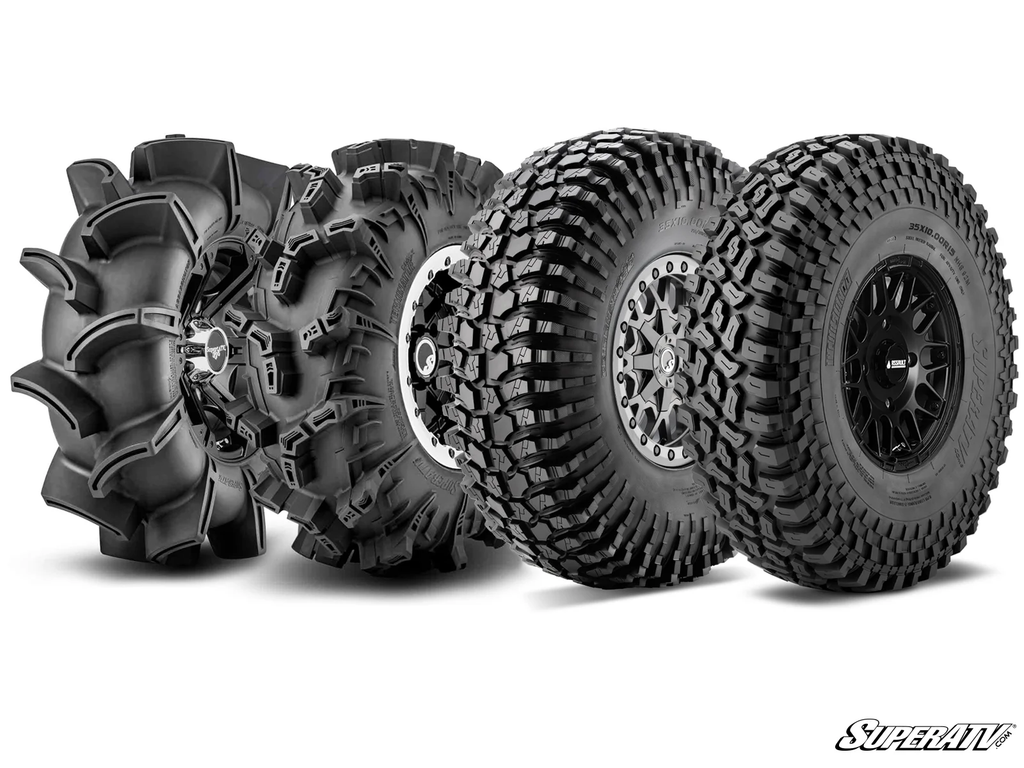
Now it’s time to pick your tread. If you don’t know what that means, basically tire tread has a huge impact on how your machine handles different terrain. Some patterns are designed to dig deep into mud, while others focus on maintaining traction over rocks or giving you a comfortable ride on packed dirt.
Let’s look at what works best for different riding styles.
Trail riding is all about variety. You might start on hardpacked dirt, hit some loose gravel, and end up trudging through a muddy area. That’s why all-terrain tires are such a popular choice.
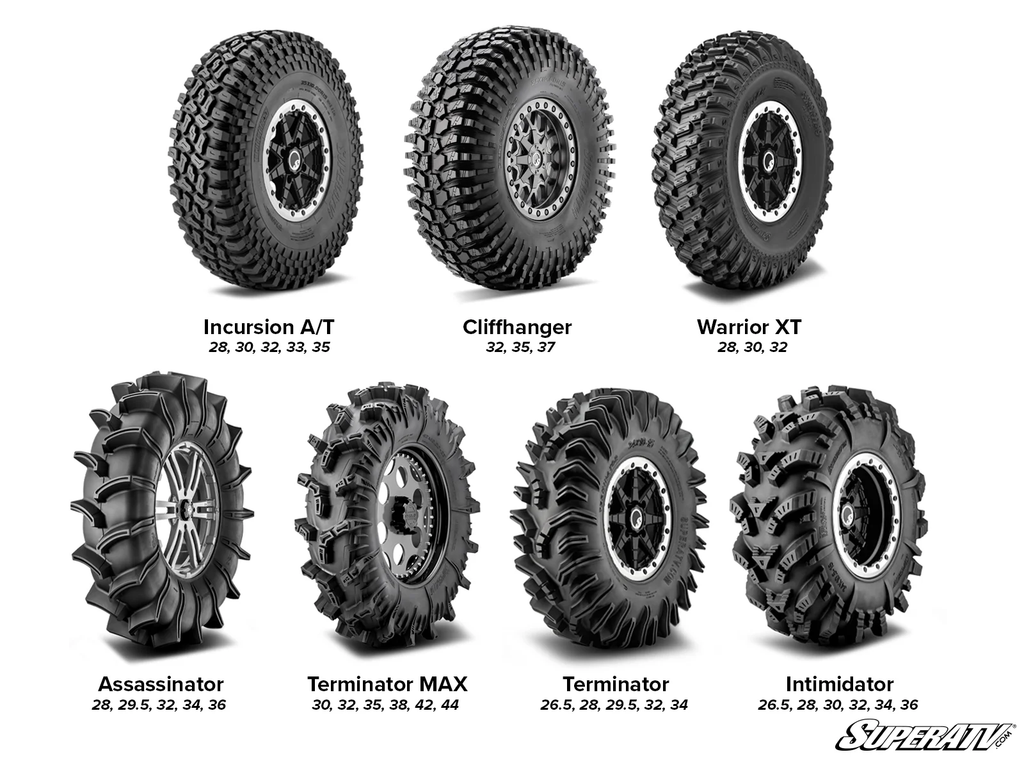
SuperATV’s Intimidator Tires are a great option for riders who want aggressive traction without committing to a mud tire. They’re designed to take on a variety of conditions which makes them a solid choice for everyday adventures. You can also check out Incursion A/T Tires. They’re another all-terrain option worth considering if your weekends involve a little bit of everything.
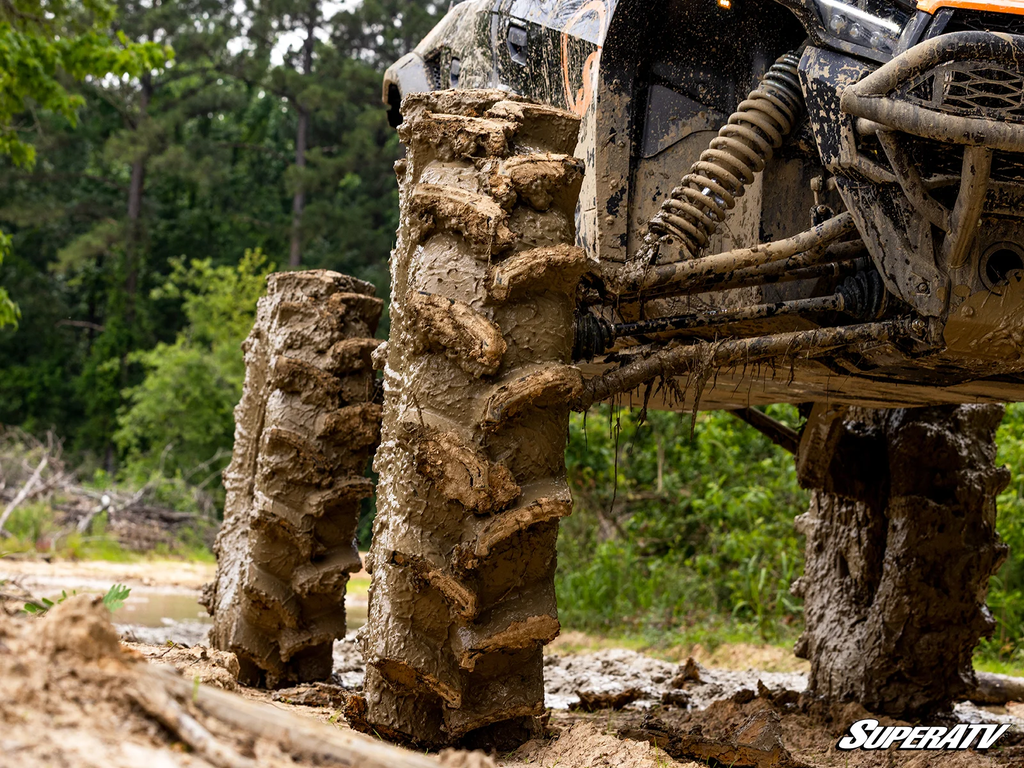
Some people avoid mud holes. But others see one and immediately put the pedal to the metal. If you’re part of the latter, you’re going to want some serious mud tires.
Mud tires use deep, widely spaced lugs to dig into soft ground and help clear out thick mud. Without that spacing, mud can pack between the lugs and make it harder for your tires to find traction.
Assassinator Tires are made for riders who take mudding seriously. They come with up to 3″ of tread depth and widely spaced lugs that are built to dig into deep muck. You can also choose Terminator and Terminator MAX Tires if you’re looking for super aggressive mud traction.
Just remember that those giant lugs aren’t ideal for every situation. Mud-specific tires can feel rougher on hardpacked trails, so make sure you’re actually going to use all that tread.
Rock crawling calls for a completely different approach. Instead of digging into soft ground, your tires need to grip rocks, maintain contact with uneven surfaces, and stand up to sharp obstacles.
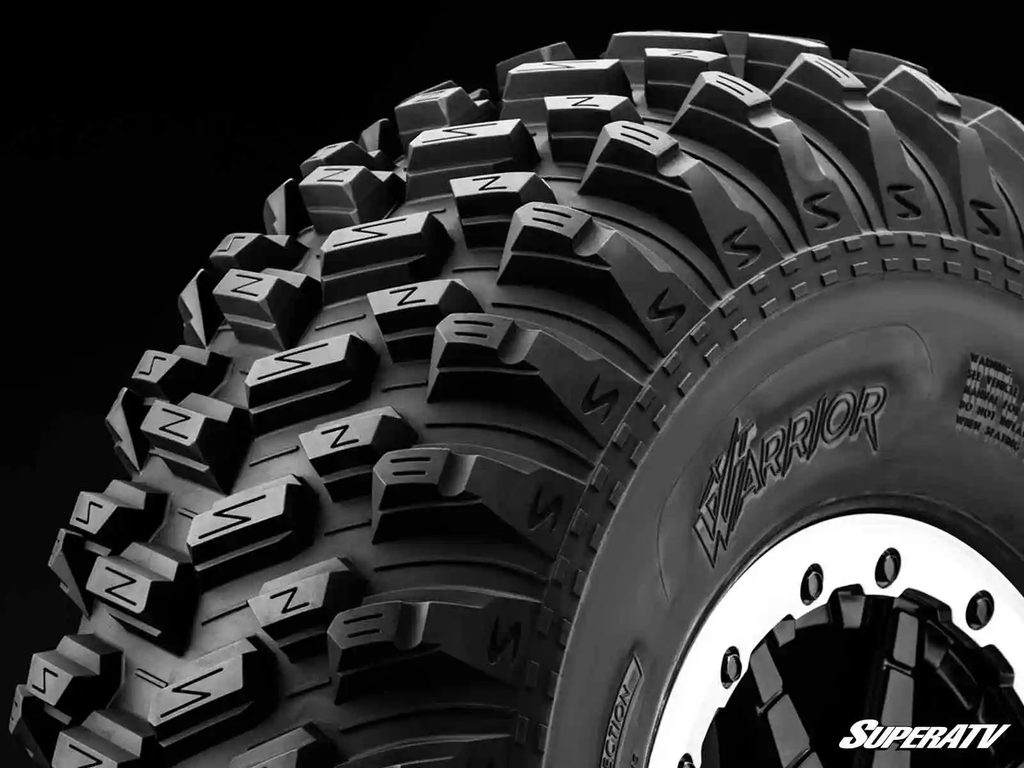
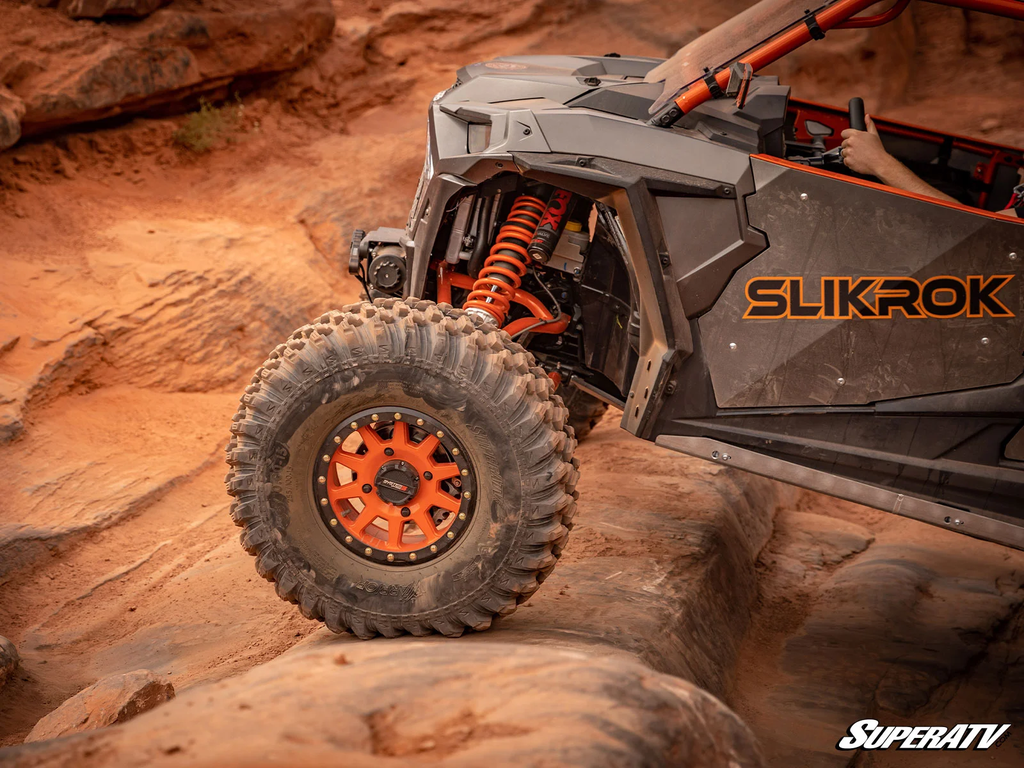
That’s why Cliffhanger Tires are perfect for it. They’re designed specifically for rock crawling, with aggressive sidewall lugs, tread siping, and an 8-ply-rated radial construction. Our XT Warrior SlikRok Edition Tires are another option for riders who love tackling technical terrain.
When you’re shopping for rock tires, don’t just look at tread depth. Rubber compound, sidewall protection, and tread design are all very important.
Now, what if you like a little bit of everything? Maybe you’re riding dirt trails one weekend, climbing over rocks the next, and occasionally getting into some mud. That’s why all-terrain tires exist.
Our XT Warrior Tires are designed for versatile traction. They’re definitely worth checking out if you want an aggressive tread that can handle different riding conditions without being dedicated to just one type of terrain. Intimidator Tires or Incursion Tires are also great option for riders who regularly switch between trails, dirt, and mud.
Sand is a whole different ball game from everything else we’ve talked about. When you’re riding through dunes, you want tires that help your machine float over loose sand instead of digging straight down into it.
That’s why sand setups typically use paddle tires in the rear. Those paddles help push your machine forward, while specially designed front tires help with steering. They’re great for dunes, but you wouldn’t want to run them on rocky trails.
If you’re unsure what “radial vs. bias-ply” tires means, you’re not alone. Let’s go through the difference, and does it really matter? The answer is yes, it does matter.
Radial tires have reinforcement cords that run across the tire from bead to bead. The way they’re built allows the sidewalls to flex more independently from the tread, which can help provide a comfortable ride and consistent contact with the ground. If you’re spending hours cruising down trails, that flexibility can be a nice benefit.
Whereas bias-ply tires use overlapping layers of reinforcement that run diagonally across the tire. This creates a stiffer construction that can be useful in demanding conditions. For more information, head over to this article What Are Radial and Bias-Ply UTV and ATV Tires?
So which one is better?
That all depends on how you ride. Neither one is automatically tougher or better than the other. You’ll want to compare the specific tires you’re considering instead of making your decision based on construction alone.
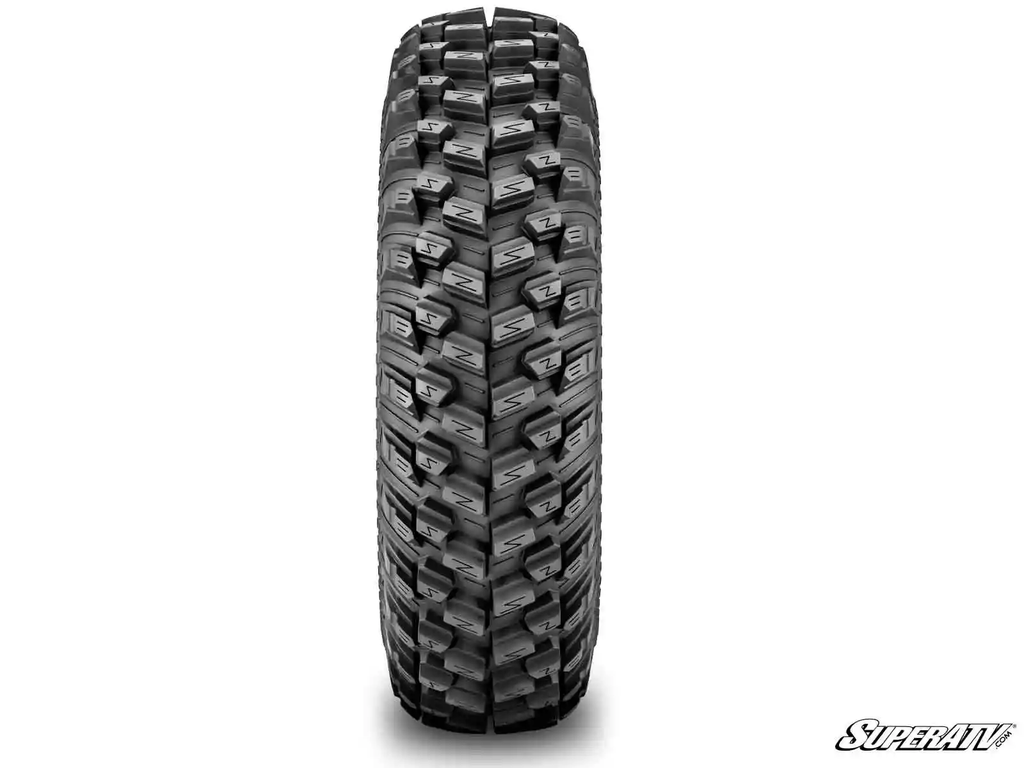
When you’re shopping, you’ll probably notice tires labeled as 6-ply or 8-ply rated.
You might assume that an 8-ply-rated tire has eight physical layers of material inside it, but that’s not necessarily true. Modern ply ratings are strength classifications rather than actual layer counts.
You’re probably thinking “why should I care? Why does that matter?” Well, it’s because your tires take a beating on every ride. Sharp rocks, exposed roots, and rough trails can all put serious stress on the tread and sidewalls.
A higher ply rating can indicate a tire designed for more demanding conditions, but it doesn’t automatically mean it’s puncture-proof. Pay attention to the tire’s sidewall construction, load rating, and intended use.
We get it. Bigger tires look awesome on your rig. Most of the time, there’s a practical reason to want them. Larger tires can increase ground clearance to help your machine roll over rocks, ruts, and other obstacles.
But before you start shopping for the biggest set you can squeeze on, you need to understand tire sizing.
Let’s say you’re looking at a tire labeled 30×10-14. Here’s what those numbers mean.
See, it’s pretty simple. If you’re looking for more information to clarify it better, checkout our ATV Tire Size Explained: A Comprehensive Guide. The tricky part is making sure the tires you choose actually fit your machine. Going bigger can change your steering, acceleration, and handling. Larger, heavier tires can also put additional demands on your clutch and drivetrain.
Depending on your machine, you might need additional clearance from suspension modifications or other upgrades like lift kits and high-clearance A-arms. Don’t assume that just because a tire fits your wheel, it’ll fit under your fenders.
Before ordering your tires, check your machine’s specifications, wheel compatibility, and clearance. Tire fitment can vary depending on your model, year, suspension setup, and wheel offset.
The hard part is finally over. You finally picked out the perfect tires. You’re ready to hit the trails, right? Not quite. Even the best tires won’t perform the way they’re supposed to if you’re running the wrong tire pressure.
Tire pressure affects traction, handling, and how your tires respond to obstacles. Some riders adjust their pressure depending on the terrain, but there’s no single PSI that works for every machine and tire setup.
Going too low isn’t always a good idea. Extremely low pressure can increase the risk of losing a tire bead, especially if your wheels aren’t designed for it. Always follow the appropriate tire and machine manufacturer’s recommendations.
If you’re planning on running lower tire pressure, check out our Beadlock Wheels. They help keep your tire bead securely in place, even when you’re airing down for extra traction. That means you can tackle tougher terrain with more confidence and less worry about popping a bead.
While you’re at it, give your tires a quick inspection before every ride. Look for cuts, punctures, uneven wear, or anything else that might cause trouble. A few minutes in the garage beats changing a tire in the middle of nowhere.
There’s a lot to think about when choosing new ATV or UTV tires, but it really comes down to how you ride. Whether you’re tearing through mud, crawling over rocks, or cruising down your favorite trails, having the right tires makes a difference.
And now that you know what to look for, finding your next set should be a whole lot easier.
Check out SuperATV’s wide variety of ATV and UTV tires and find a set that’s ready for whatever you throw at it.
Disclaimer: This article was written by an employee of SuperATV. The views, opinions, and recommendations expressed in this blog are the writer’s own and do not necessarily reflect those of SuperATV. This content is provided for informational purposes only and is not intended as safety advice or official technical guidance. Modifying vehicles and using aftermarket parts can impact performance and safety. Readers are responsible for ensuring proper installation, compatibility, and safe operation. SuperATV makes no representations or warranties regarding the accuracy or completeness of this information and assumes no liability for any actions taken based on it.

