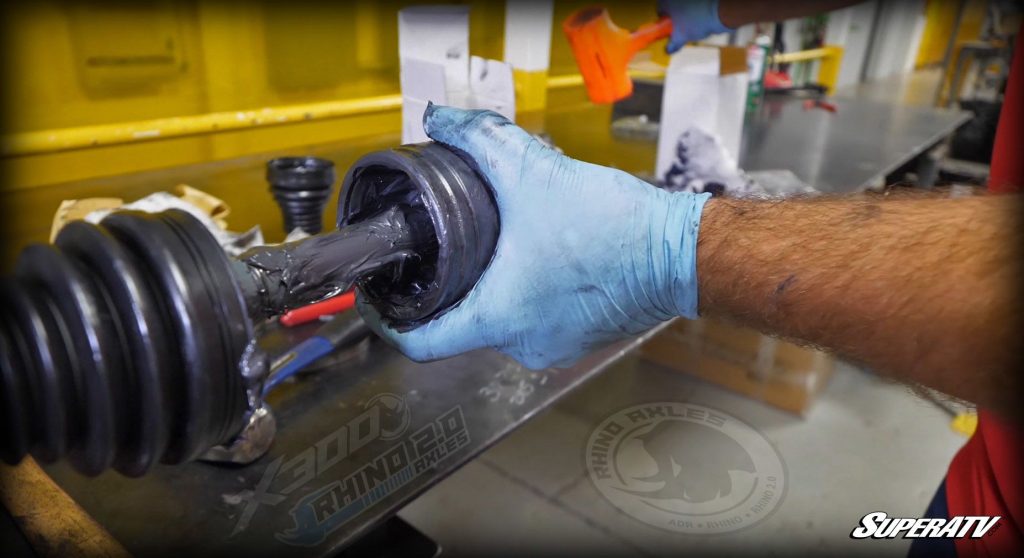
Axles work harder than you do. To be fair, they work harder than just about every other part of your ATV or UTV too.
They hang out at the end of your drive train, charged with transferring all your machine’s power to the wheels, all while exposed to obstacles, elements, and abuse on the trail.
With that in mind, how do you maintain your UTV and ATV axles?
Read on and you’ll find out.
You need to know how long your quad or side-by-side’s axles should last in order to tell how well your maintenance is going. So that’s where we’re starting.
For most riders using stock axles, you should expect to get between 3,000 and 5,000 miles.
But if you’re not “most riders,” you’ll probably get less longevity out of your axles.
Here are the main ride styles that dramatically reduce axle life:
These riding styles tend to put more torque through axles at more extreme angles or extreme speeds. The result is more heat through the CVs and more wear and tear. And that’s when you’re not banging them on rocks or drowning them in gritty mud that can cause even more problems.
It’s not just riding style that can beat the hell out of your axles. Upgrades can shorten their lifespan too:
These both have the same effect—they increase the angles your CVs operate at, which produces more heat and wears them out faster.
And finally, if you let a small problem (like a slit in a CV boot) turn into a big problem (by continuing to use it without fixing it), you’ll end up with a blown axle faster than you can say, “why aren’t we moving?”

Modern CV axles generally don’t need preventative maintenance to continue running well.
What they do need is for you to keep a close eye on them and to be quick to address any issues that crop up.
Here’s what you need to do:
If you keep your axles in good shape, you can expect to get the full 5,000 miles out of them. If you neglect them and ride hard, you could get a few thousand miles or a few dozen. You’re playing the odds when you ignore them.
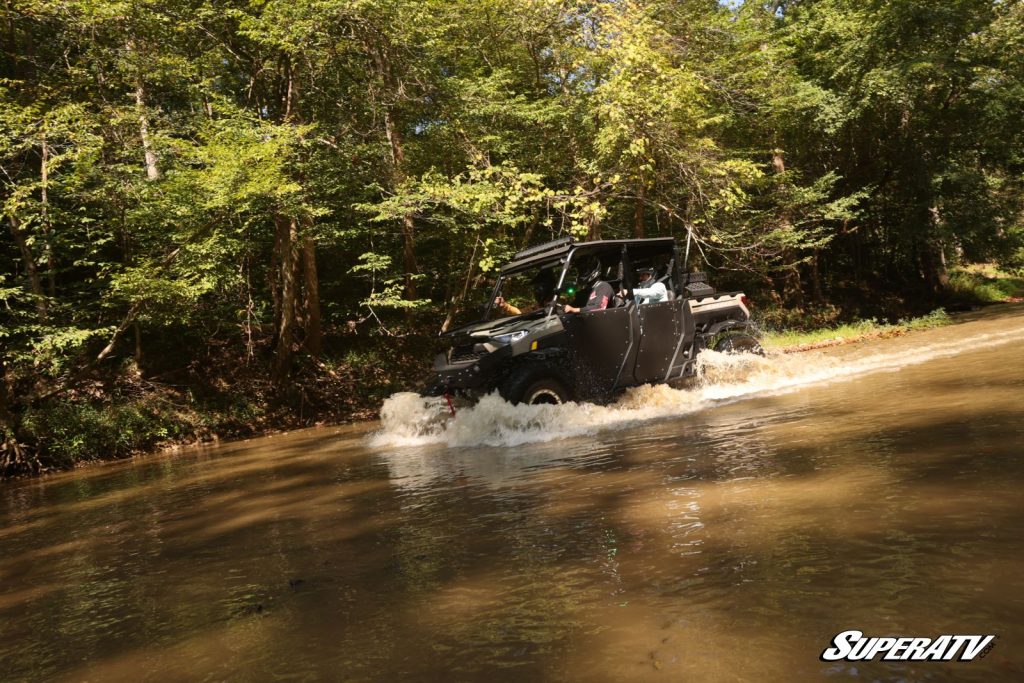
Sometimes, all your close observation and care aren’t enough to save an axle. And at the end of the day, every axle has a limited lifetime.
There’s a range of different axle problems that need your immediate attention, but they’re not all created equal.
The least of these problems is a torn or leaking boot. If you ride on it, it could destroy your axle. But if you stop and replace your CV boot, you’ll have a like-new axle in no time.
The biggest clue that your ATV or UTV axles need to be replaced is the sound they make. If they vibrate roughly or if you hear popping when you’re turning, it tells you that the CV joints are about to fall apart.
Popping sounds are a critical issue that you should fix ASAP. Some people swear that you can ride on them for miles after they start popping, but you’re putting yourself and your machine at huge risk if you do.
A popping axle can break at any time, and the best-case scenario is that it only ruins your ride. The worst-case scenario is that it snaps when you’re moving fast and causes a serious accident, or it snaps when you’re 20 miles from the trailer and you get stranded.
If you want to dig in more, check out how to tell if your axle is broken.

When it is time to replace your axles, SuperATV has you covered.
We have all kinds of axles for any kind of rider:
And we have to mention Assault Industries’ axle too:
So which axle do you need?
If you’ve read all that and you’re still a bit unsure about which axle you need, go with Rhino 2.0 Axles. That is by far our most popular axle for its perfect combination of quality, warranty, and price. It performs well almost anywhere.
And if you want even more info, check out our heavy-duty axles guide.

Now that you know how to maintain your axles and what to look out for, there’s no reason not to do it. When you keep your axles in great shape, you avoid ruining rides and causing big damage.
When you decide it’s time for a replacement or an upgrade, make sure you check out our guide on how to replace an axle. It’ll get you back on the trail quick.


1 Comment
I believe my axles are still in good shape, I think it’s a venting issue with the seals in the rear ends causing the seals to go out, this unit has 2 inch taller tires and it only has 1400 miles on the machine and still under warranty. But this is the second seal I’ve had to replace