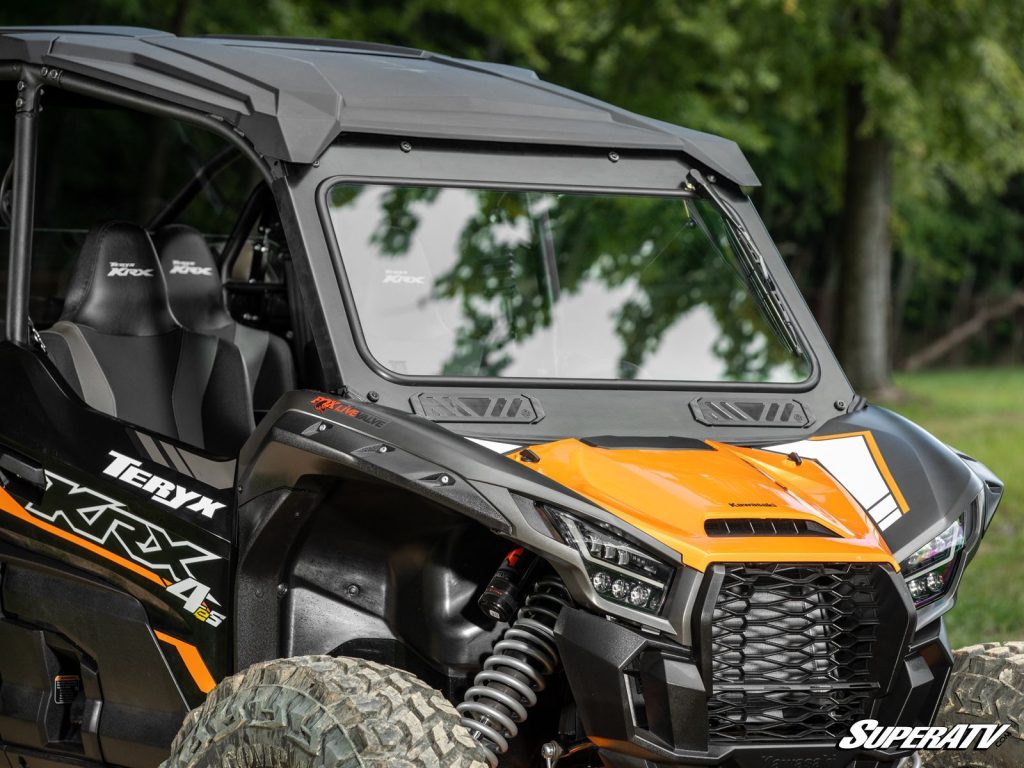
Dang, that’s a shiny windshield—wouldn’t it be great if you could keep it that way? Read on for tips and tricks to keep your windshield looking new. Image by SuperATV.
Wondering how to keep your UTV windshield from fogging up? Or maybe you don’t know how to prevent scratching on a UTV windshield?
You’re in the right place. We’re here to explain why your windshield fogs up and gets scratched and how you can prevent these problems and maintain a clear view. Let’s get started!
What Causes Fogging?
UTV windshields fog up because of differences between interior and exterior temperature and humidity. If it’s colder outside your machine than inside or vice-versa and there’s enough moisture in the air, you’re likely to see condensation on the windshield.
For most people, you’ll never run into a fogged-up UTV windshield because your machine isn’t enclosed on all sides. If you use a full cab enclosure with a roof, rear windshield, and full doors, you’re more likely to experience fogging since your machine’s interior could actually be a different temperature than the outside.
What Causes Scratches?
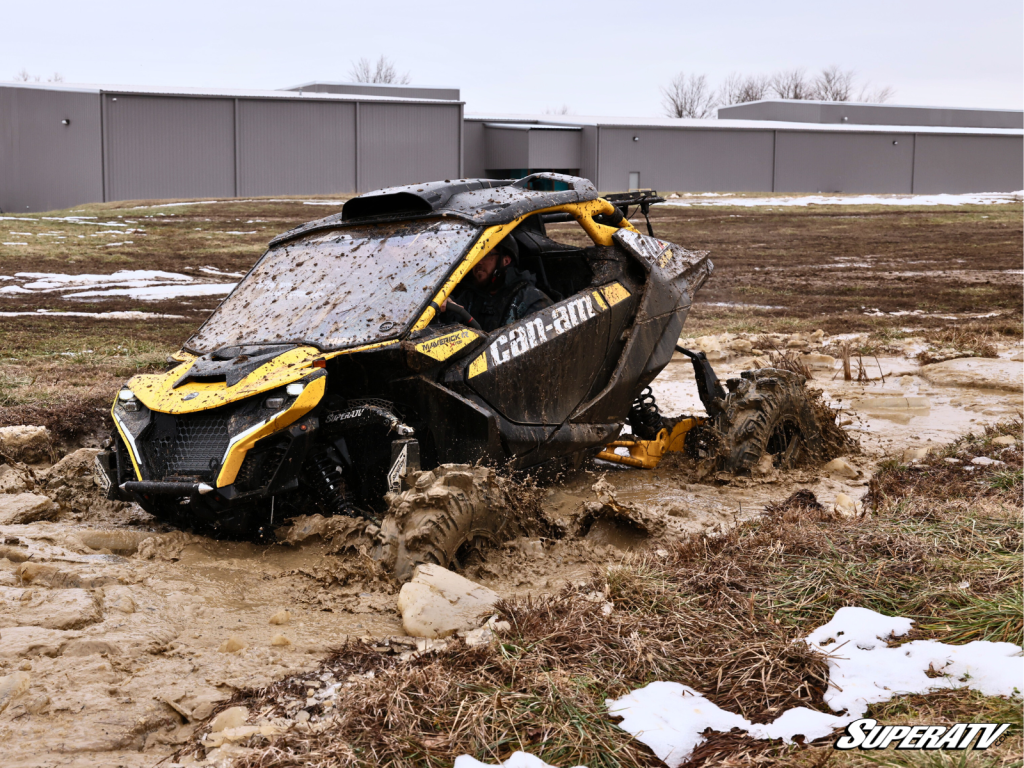
Think twice before you plunge headfirst into dense brush. You might ruin your windshield! Image by SuperATV.
Hard riding can do a number on your windshield. Brush and branches can leave marks, especially on uncoated polycarbonate windshields (more on that later). Glass, on the other hand, is naturally more scratch resistant than polycarbonate.
In fact, the type of windshield you use has a big impact on why your windshield fogs and why it scratches.
Polycarbonate is less likely to fog than glass, but it’s easier to scratch (if it doesn’t have our XR Optic Hard Coating, that is). Glass is naturally more resistant to scratches than polycarbonate, but it’s more likely to fog up.
Are You Cleaning Your Windshield Correctly?
Cleaning your windshield is easier than you might think. And keeping it clean will help prevent scratches. Image by SuperATV.
Unfortunately, one of the biggest causes of scratched windshields is improper cleaning.
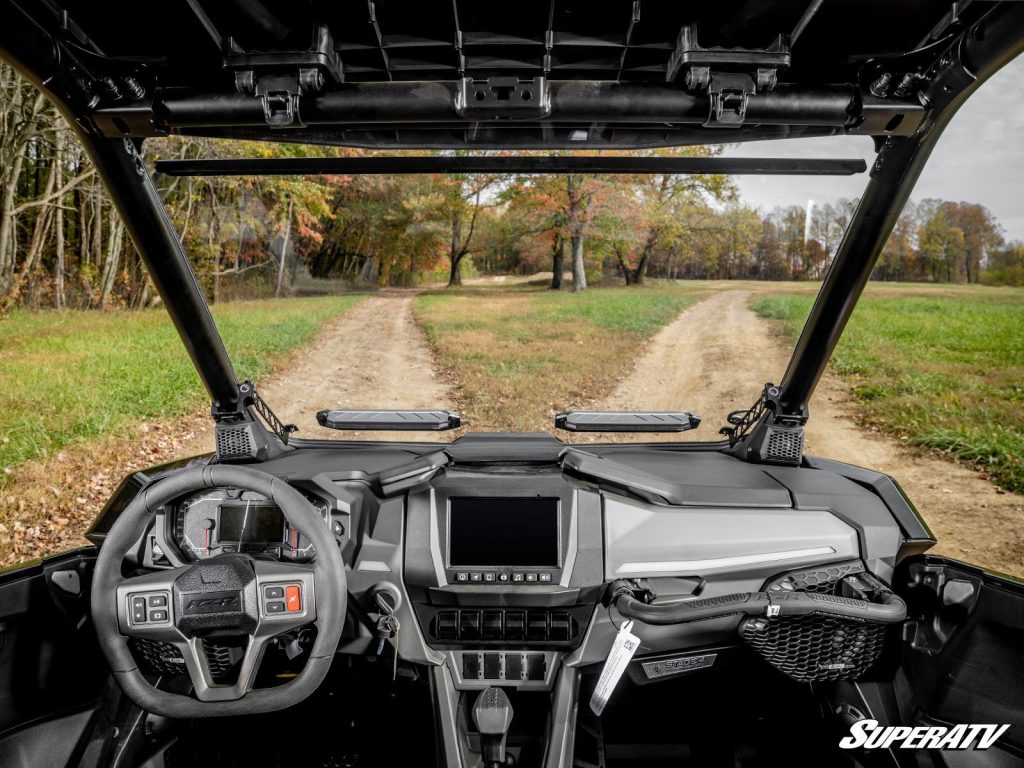
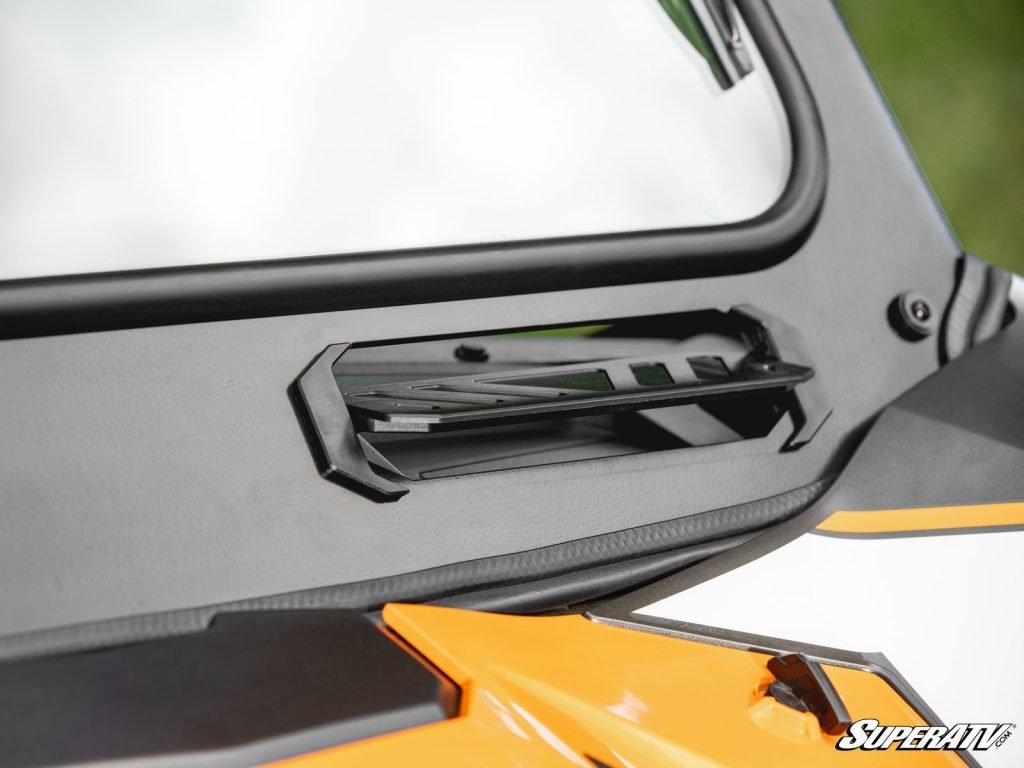
Our BreezeRite vents help to control airflow and clear up foggy windshields. Image by SuperATV.
So how can you prevent fogging on a UTV windshield? Here’s a few tips.
Create airflow. If you’re using a full cab enclosure, open a window to get the air moving inside your machine’s cab. Air circulation will remove some of the moisture, helping to clear up your windshield. SuperATV carries a variety of UTV windshields to help you get control of in-cab airflow and prevent window fogging.
Keep your windshield clean. Dirt, oil, dust, mud, bird poop—anything that’s stuck to your windshield can attract moisture and make an otherwise tolerably foggy windshield even worse.
Use a windshield cover to insulate your windshield and reduce the difference between your windshield’s temperature and the outside air. Just don’t forget to remove the cover before you head down the trail!
Try a windshield treatment. There are tons of treatment options available across the internet from home remedies to more serious chemical formulations. However, always spot-test any windshield treatment you choose. And don’t forget to confirm that it’s compatible with your windshield type, especially if you’re using polycarbonate.
Try a moisture absorber. Moisture is the main cause of fogging. If you’re having major issues, try placing a moisture absorber inside your machine to remove excess water from the air. There are a variety of options for automotive use, and they’ll work just fine for your UTV. Remember to always follow the package directions for proper installation and safety.
If you can’t prevent fogging, try defrosting your windshield with a SuperATV In-Dash Cab Heater. Our cab heaters include defrost hoses and vents, making it easy to get rid of frost or fog on your UTV windshield.
Tips for Preventing Scratches on UTV Windshields
Depending on the type of windshield you have, scratches will be more or less of a problem, but the basics to prevent scratches are the same regardless of windshield material.
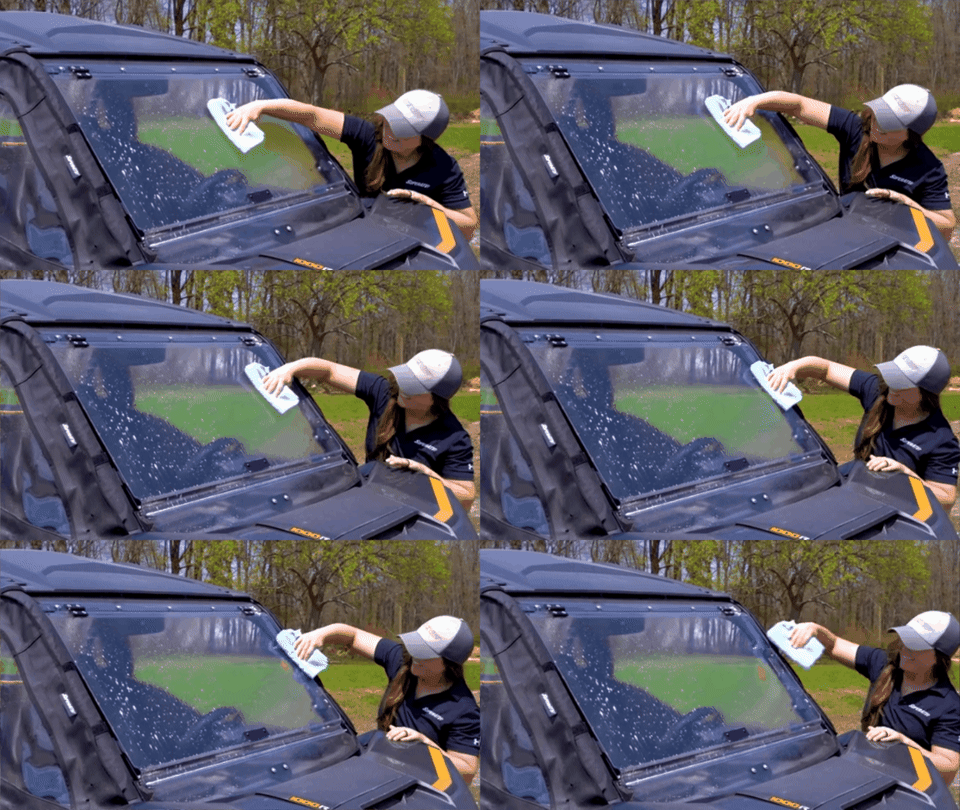
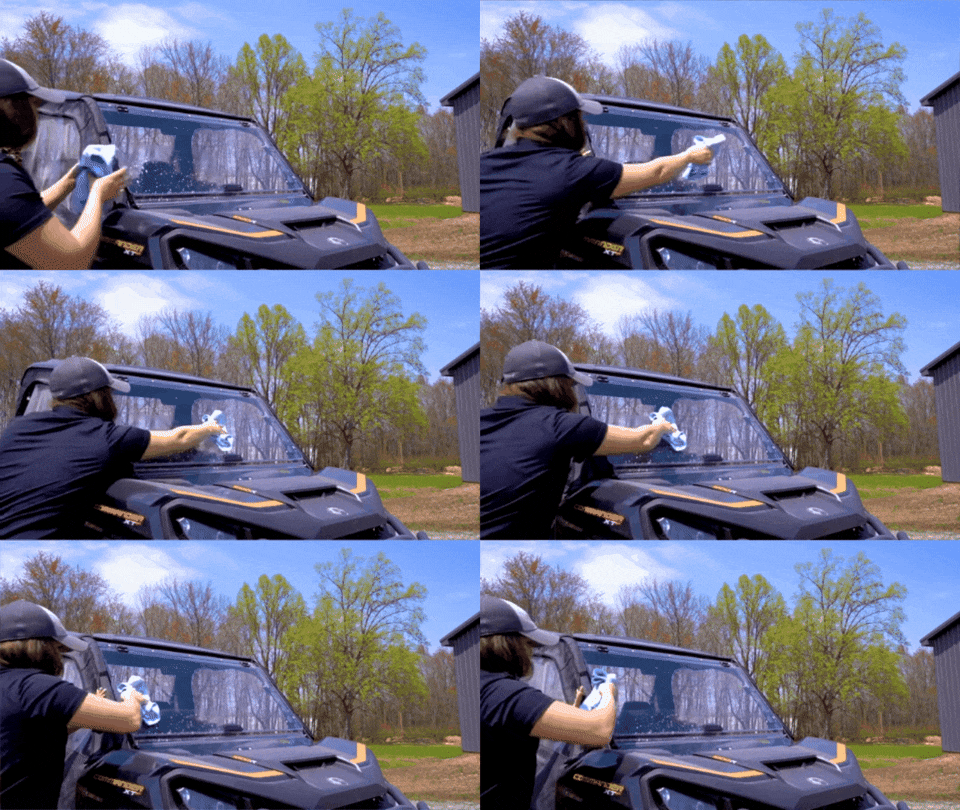
Cleaning your windshield in smooth, straight lines helps prevent scratches. Scrubbing might scuff up your windshield! Image by SuperATV.
Clean your windshield regularly. Clinging crud can easily get scraped across the windshield’s surface, leading to micro scratches or worse. Regular inspections and cleaning help to prevent scratches and other damage to your windshield.
Avoid harsh cleaning methods. Harsh chemicals (including glass cleaner!), paper towels, and sponges can actually damage your UTV windshield—even a glass one. Stick to gentle cleansers and clean microfiber cloths.
Use caution when removing ice, frost, or snow. Whether your windshield is glass or poly, it’s easy to get overzealous when you’re scraping snow. Never use a metal scraper on a windshield of any kind and never scrape a polycarbonate windshield. Your best bet is to wait for the ice to melt, add our in-dash cab heater, or cover the windshield or park your machine in the garage whenever possible so it doesn’t get snowed on to begin with.
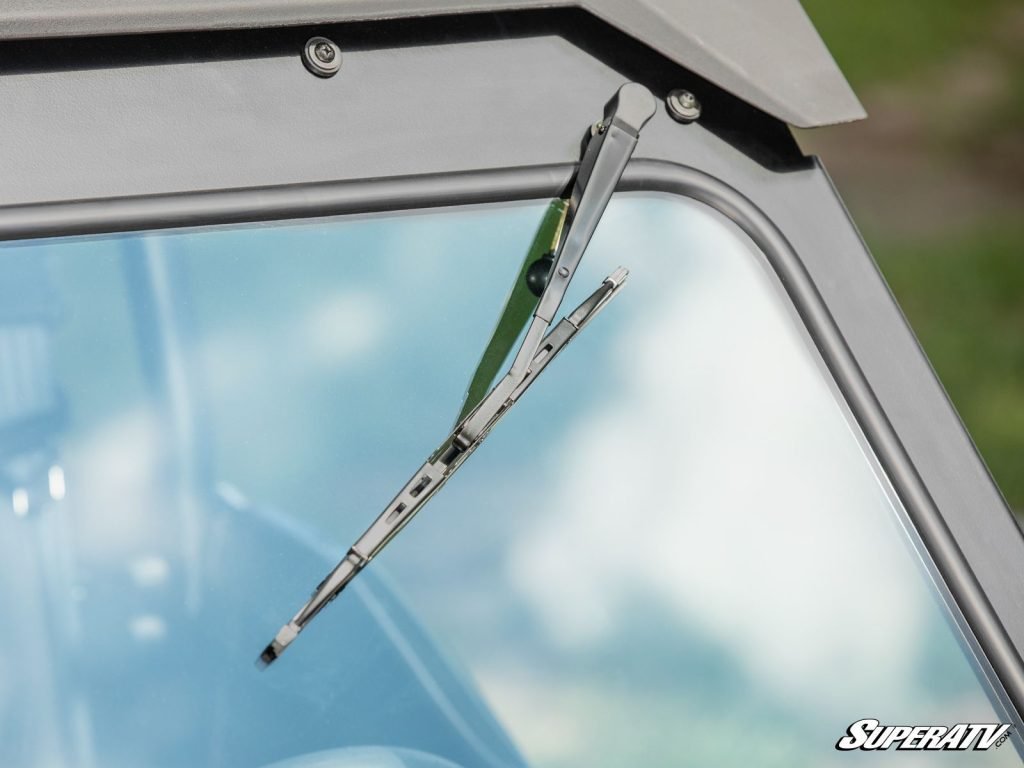
Inspect your wiper blades often. If your windshield came with a windshield wiper or you added one later, you need to keep an eye on the blade. Over time, it’ll wear out and you’ll need a replacement UTV windshield wiper. The last thing you want is the metal blade scraping across your windshield. Plus, they can collect debris even if they aren’t worn out.
Drive carefully. The best protection is prevention, and a little caution goes a long way. Don’t follow too closely to other riders. You don’t want their rooster tail raining down on your windshield! And try to avoid going full send into dense brush or a heavily wooded area—that’s just asking for trouble.
Keep an eye on your windshield wiper blade so you’re not surprised with a big scratch when it wears out. Image by SuperATV.
Cleaning and Maintaining Your UTV Windshield
Keeping your windshield clean is the first step to preventing scratches and fog. But what is the right way to clean your UTV windshield? Here’s basics you need to know to keep your windshield crystal clear.
Make sure you use a clean cloth, otherwise you’re just spreading dirt around. Image by SuperATV.
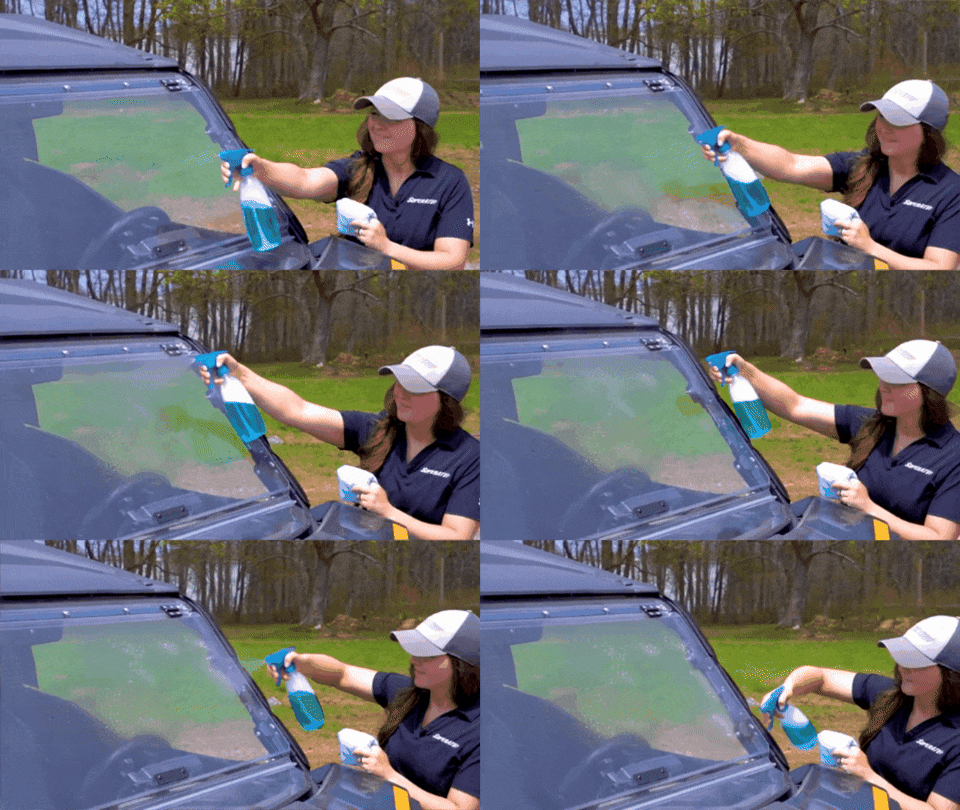
Gently rinse off dirt and debris with warm, soapy water.If your windshield is really caked, consider rinsing most of the dirt off with a low-pressure hose before starting. And don’t be afraid to let that baby soak!
Wipe with a microfiber cloth—no scrubbing! For polycarbonate windshields, wipe in a straight line and never use circular motions, otherwise you could damage the polycarbonate or the scratch-resistant coating. This technique pulls dirt to the side instead of pushing it around in circles. The straight-line method works for glass too. It’s great for tinted or otherwise treated glass.
Use a clean section of microfiber cloth on each pass. This helps to prevent you from accidentally dragging dirt or debris back onto the windshield and potentially scratching it.
Rinse with clean water to remove the soap and any leftover debris.
Dry the windshield gently with a microfiber cloth or shammy. We’ve seen the best results with blotting the windshield. Blotting prevents water spots and reduces the likelihood of scratches.
Pro Tip: Keep a small spray bottle with water and soap, a microfiber towel, and a bottle of clean water with you to clean your windshield while you’re on the trail.
Avoid scrapers, squeegees, pressure washers, windshield cleaners (unless they’re specifically made for your windshield by the manufacturer), Windex, abrasive materials, scratch pads, and anything containing alcohol or ammonia. The key is to be gentle with your windshield!
If you use a squeegee on your poly windshield after a ride like this, you might as well head to SuperATV.com to order a new one. Image by SuperATV.
What you CAN use to clean your windshield:
Warm water
Gentle dish soap or baby shampoo
Microfiber cloths (clean!)
Chamois/shammies
Spray bottles
Choosing the Right Windshield to Minimize Fogging and Scratching
If your windshield is getting foggy, just pop open a BreezeRite vent and get the air circulating in your cab. Image by SuperATV.
Any windshield can get scratched or fog up. There’s no way to 100% prevent these problems (unless you choose to never ride your machine again). But you can choose the best windshield type for your needs to get the results you want.
Glass windshields are naturally scratch resistant. However, glass is highly insulating, so it holds its temperature longer. Basically, that means it will fog up easier than polycarbonate.
Polycarbonate is stronger than glass and less likely to fog up. However, it is easier to scratch. That’s why we use our proprietary XR Optic Hard Coating on our polycarbonate windshields.
XR Optic improves scratch resistance and prevents yellowing and fading from sun exposure. Even with XR Optic, it’s still easier to scratch polycarbonate than glass. But XR Optic is so scratch resistant that most riders can’t tell a difference.
Glass Windshields
Polycarbonate Windshields
Highest scratch resistance
Low scratch resistance*
More likely to fog
Less likely to fog
Higher price tag
More affordable
Can use a windshield wiper
25 times more impact resistant than glass
Heaviest option
Lightweight
Full, vented, and flip-down options
Full, vented, flip-up, and flip-down options
*Add SuperATV’s XR Optic Hard Coating to add resistance to yellowing, fading, and scratches