Meta Description:
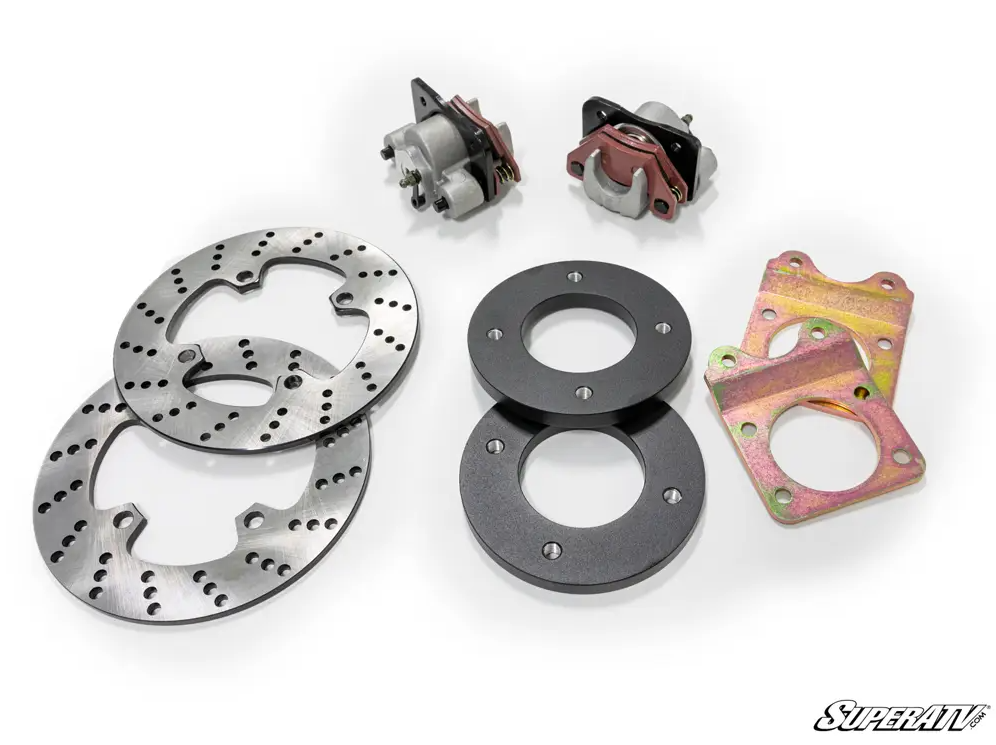
If you want to have a good time, you need to be able to stop when you want to. And that’s especially true when you’re behind the wheel of a UTV. Whether you’re navigating a tricky washout or racing your buddies on a short track, braking at the right time is more important than hitting the gas.
If your brakes are worn or damaged, that washout becomes a death pit, and that turn-one divebomb turns into quick trip off the track.
Make sure you pay attention to your brake health! We’re going through the 7 most common signs that you have a brake issue. If you spot these problems early and fix them, you could save your next ride—and save yourself some damage.
Have you ever ridden on a trail where you’ve calculated your speed so precisely that you’ve never had to tap your brakes—not even once? It’s nearly impossible. You’ll have to tap your brakes at some point to maximize speed.
Your brake system is a simple concept: When the rider squeezes the hand lever or puts their foot on the pedal, brake fluid is pushed through the brake lines, activating the caliper’s piston. Then the brake pad pushes against the brake disc or drum, causing friction and stopping your machine.
The big difference between UTVs and road cars, though, is the extreme elements UTV brakes get subjected to. From mud and sand to snow and water, off-road vehicles bury it where road vehicles stay home.
If your UTV doesn’t stop when you hit the brakes, you’re on the fast track to a hefty repair bill—or worse.
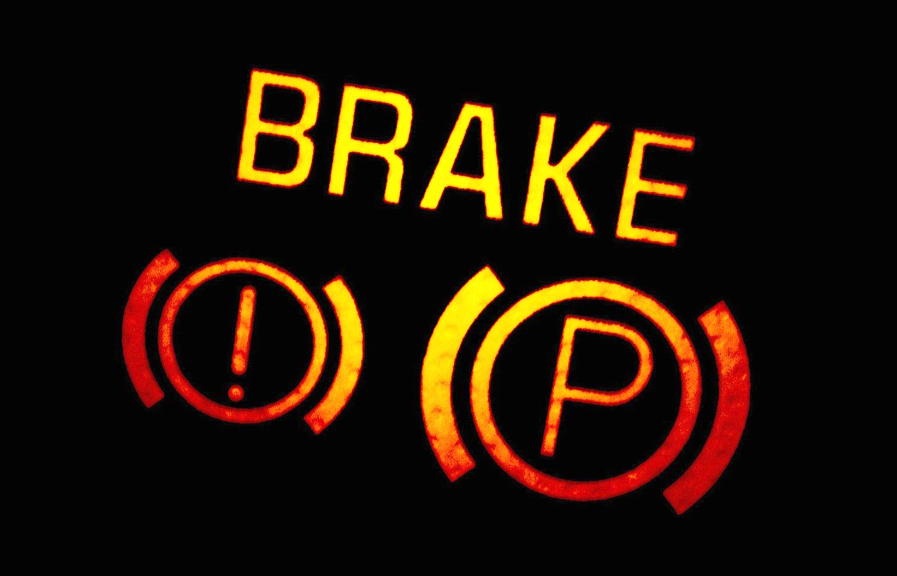
The clearest sign you’ll get is the brake light indicator on your dashboard. This light can mean one of two things: either your pads are worn or you have low fluid.
Not all machines use this indicator—some are different. The best way to figure this out is to refer to your machine’s owner’s manual.
Either way, be sure to check for leaks and check your pads. If you can’t figure out and correct the source of the indicator, take it to a trained technician to diagnose and repair.
You don’t need to sound the alarm at every noise you hear. If you hear your brakes grinding, there could be a foreign object lodged in the brakes, like rocks or mulch.
Squealing, on the other hand, is your brake pad’s wear indicators. When the tiny pieces of metal in your brake pads come into contact with the rotor, they emit a high-pitched noise every time you hit the brakes.

If it takes longer to bring your vehicle to a complete stop, that can indicate worn brake pads or rotors. You can test for this brake fade on flat, open areas to confirm changes in responsiveness. It’s better to test in an open gravel parking lot than at speed on a trail.
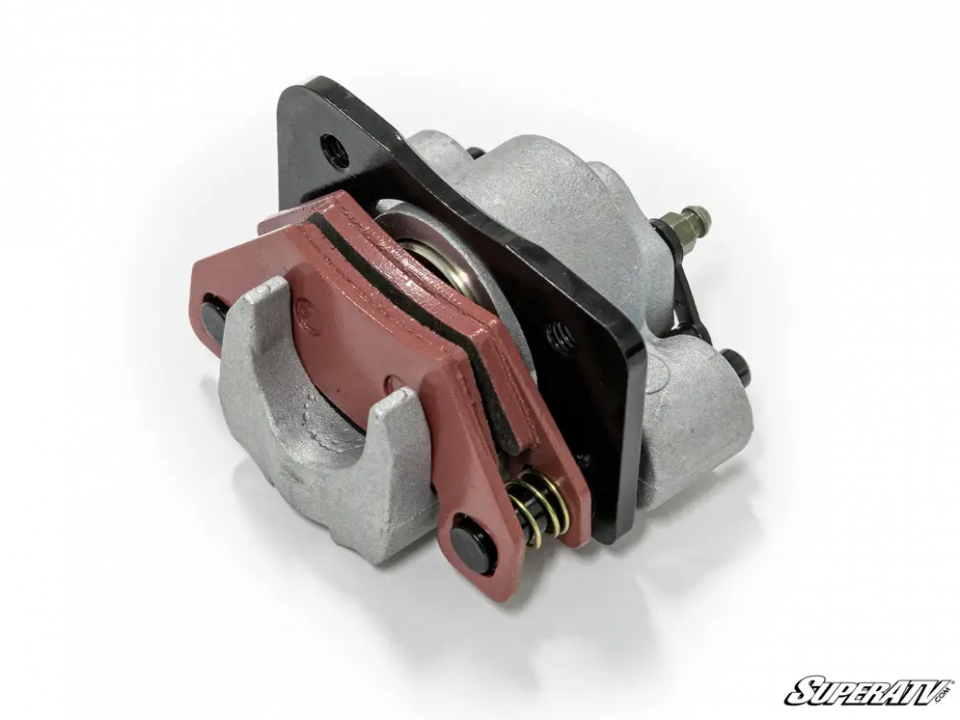
It’s very common that your UTV’s brake pads won’t wear the same on both sides. Sometimes one side will get thinner faster, pulling your machine to one side more when you hit the brakes.
This can be normal uneven wear, or it could indicate caliper or brake fluid issues.
Uneven braking is worse than standard wear because it makes your braking more unpredictable. It can cause you to roll when you descend a hill or cause fishtailing when you’re towing. Get it taken care of fast.

When you push on the brake pedal, does it vibrate or pulse? If yes, then you’ve probably got warped rotors. Usually, a warped rotor gets worse over time and can greatly affect your stopping power.
Replace the affected rotors and pads ASAP to clear that up and keep your brakes predictable.

Brake fluid leaks aren’t just a staple of corny sabotage scenes in movies—they can happen to you too. Leaking brake fluid is a serious emergency. Don’t ride with one!
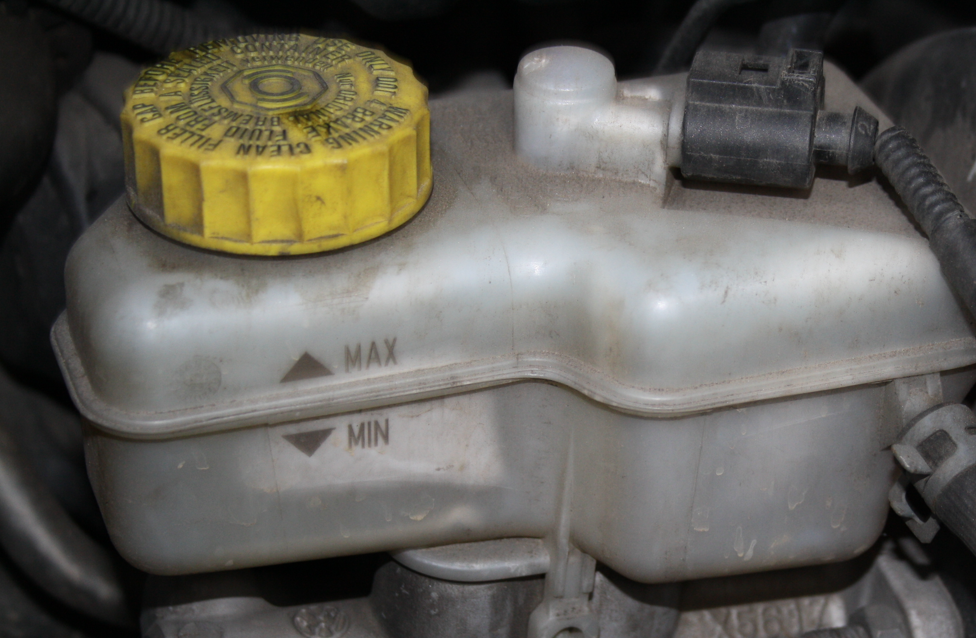
If your brake fluid is low, you’ll notice a softer brake pedal. If you’re progressively losing fluid, the pedal will get softer over time. Stop riding as soon as you notice this. Don’t mess around at all. Get it on the trailer and get it repaired ASAP.
If you notice a burning smell after braking, it could indicate a serious brake problem. Your caliper could be broken and forcing a pad onto the rotor, or you could be riding extremely hard and overheating your brake components.
Either way, your brakes aren’t designed to operate under extreme heat. Stop riding, let them cool down, and inspect them for damage. If you don’t, you could end up with a catastrophic failure and total loss of brake power.
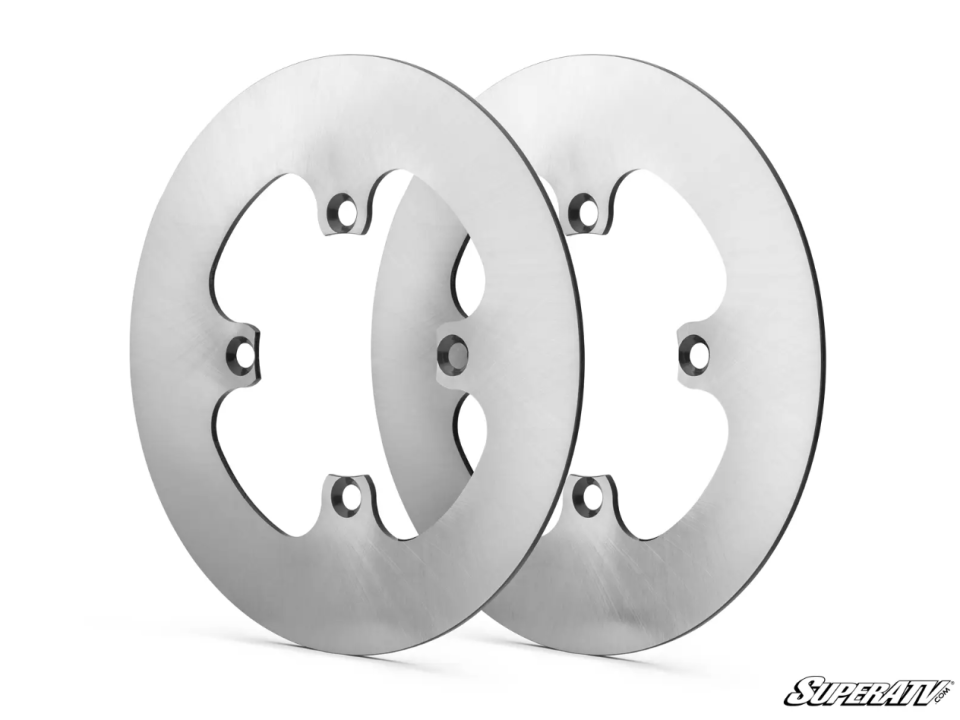
You can keep your brakes happy and running long with some basic maintenance and attention.
Make sure you spray down your wheels and rotors after a dirty ride. You don’t want to make your brake pads scrub all that grit and grime off.
Check your pads regularly to see how worn they are. Your manual should have guidelines for the minimum safe thickness, but a general rule of thumb is to replace them before the pad gets to 1 mm. You should also check for other damage and grooves.
And finally, check and replace brake fluid on a schedule. Follow your manual or check out our simplified Can-Am and Polaris maintenance schedules to know when to check your brake system.
When you do inevitably wear out your brake pads, you need to get yourself fixed up with parts you can count on.
Our brake pads won’t blow a hole in your wallet and use high-quality sintered copper material. They’re built for all the hard rides and muck you can throw at them.
If you have any bigger brake problems than just pads, check out our calipers, master cylinders, rotors, disc brake kits, and more. We’ll give you more reliable stopping power for better, safer rides.
Remember, spot brake problems early and fix them up fast. It’s more than just a safe decision—it’ll give you more performance and confidence.
And when you do need a fix, check out all our brakes and brake accessories at SuperATV.

