Picture this: you’re hiking in the iconic Black Hills, taking in the gorgeous scenery and making memories that will last a lifetime. Suddenly, your hiking buddy falls and breaks an ankle—and now you’re stranded miles from help and unable to get out of the woods. You can’t leave your buddy, but you can’t stay in the wilderness. What do you do?
When it comes to sticky situations (especially in the Black Hills), we know a guy: search and rescue expert Romeo Barrera. He’s active in the side-by-side community, and you can find him giving out expert advice (and some pretty hot takes!) on all the most popular industry forums under the username MassiveOverkill.
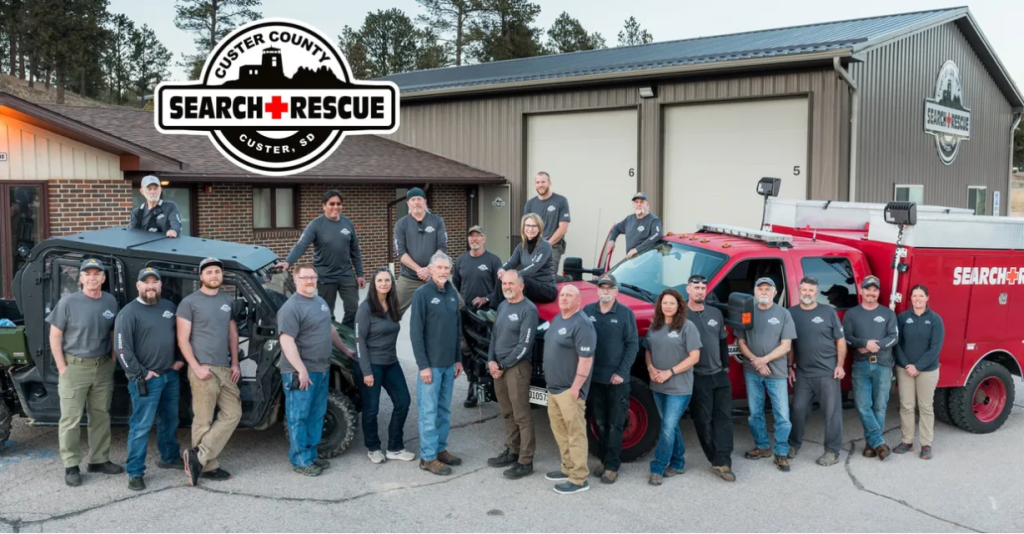
Besides his active role online, for five years and counting Barrera has used side-by-sides to assist in search and rescue (SAR) missions in Custer County, SD.
Side-by-sides are more maneuverable than standard vehicles. They can access places trucks and other four-wheel-drive vehicles are too large to reach. They also have larger carrying capacities than ATVs, making them ideal for SAR uses. That’s right—UTVs aren’t just for utility or powersports.
I was able to catch Barrera for a chat about search and rescue, his efforts to equip his community for worst-case scenarios, and his love for Yamaha’s durable machines.
To start, I asked Barrera to share a story from his experience in the field. He explained the Custer County SAR team’s first-ever deployment of a Yamaha RMAX 4 1000 equipped with a litter hauler. A litter hauler holds a litter, which is similar to a stretcher. They’re used for search and rescue when patients can’t (or shouldn’t) walk.

The patient was hiking Trail 4 (Little Devil’s Tower Trail) to Black Elk Peak. It’s a very popular trail in the summer months. The patient broke her foot and couldn’t hike down the trail on her own. She needed evacuation and medical assistance. Trail 4 is narrow, steep, and highly technical. Most OHV’s can’t manage trails like this—but the RMAX 4 can!
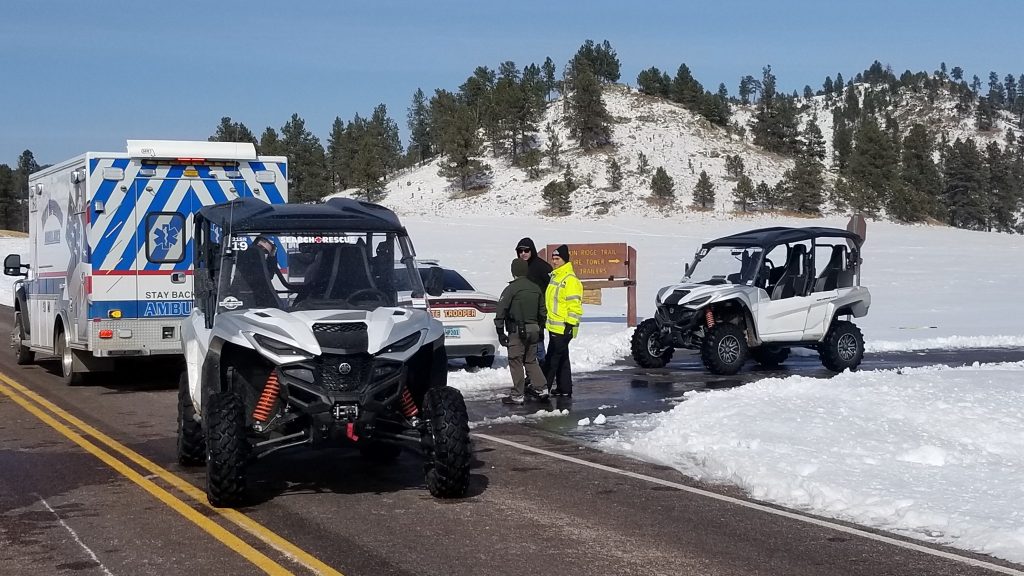
“The RMAX works like a taxi service to and from the ambulance. We use the UTVs to move EMTs and patients up and down the trail. It’s much faster than they could walk or be carried,” Barrera explained.
Barrera also shared this interesting tidbit: “After a certain point, absolutely no motorized vehicles are allowed on the trail—even for rescue missions! SAR takes medical staff as far as they can, then they deploy the litter. We have an RMAX that’s outfitted with a litter hauler. It’s custom made to load patients into the bed to get them back to the trailhead as quickly as possible.”

How did Custer County Search and Rescue get these machines in the first place? Something definitely needed rescuing. But this time, it was the city budget that needed saving, not an injured hiker.
Like many other midsize municipalities across the United States, Custer County’s budget isn’t luxurious. So a single side-by-side (let alone two brand new, top-of-the-line models) would normally be out of the question. Luckily, Barrera was able to partner with a local dealer, Black Hills Powersports, to take advantage of Yamaha’s Public Safety Law Loan program.
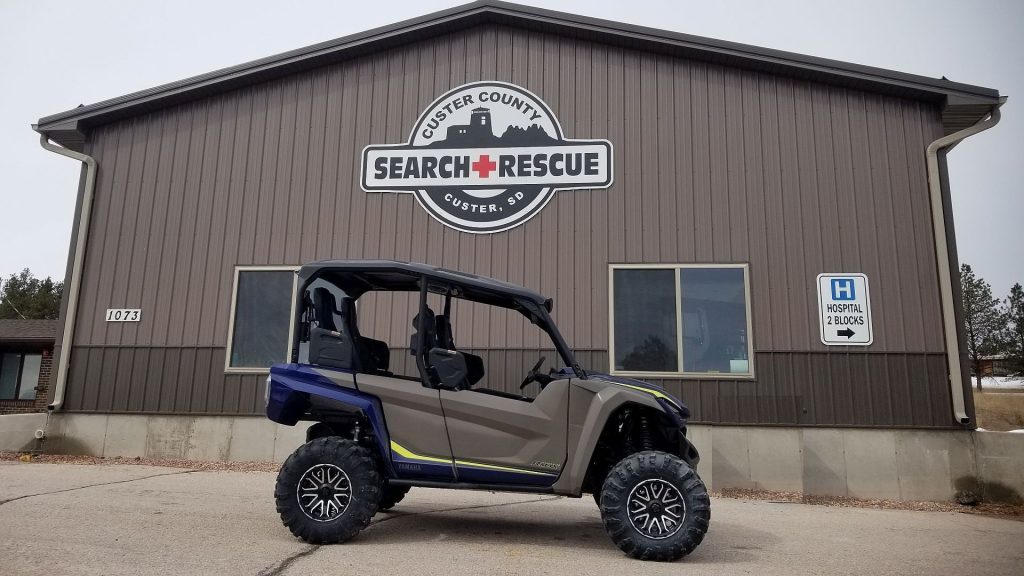
The program provides law enforcement with Yamaha machines, like UTVs or jet skis, at no cost. They partner with a local Yamaha dealer that services the machines. At the end of a year, the machines in the program are replaced. The used machines are returned to the dealer, then they’re sold as high-quality used rigs. It’s a win for law enforcement, the Yamaha dealer, and the local community.
It was important to Barrera that the SAR team used Yamaha vehicles. “SAR can’t afford breakdowns in the work we do,” he informed me. Yamaha vehicles are known for being reliable, making them a perfect choice for search and rescue.
Barrera predicts that as more Americans venture to remote areas for recreation, UTVs will become increasingly important for search and rescue missions.
“Drones and other technology can be incredibly helpful locating missing persons. But in the end, a ground crew will have to recover them,” he said confidently. “Often, drones can’t find the target in dense forestry either. Ground crews will remain important, and UTVs are the best option to support them.”
The data proves Barrera’s point. Since 2020, the Black Hills and other National and State Parks have seen a massive increase in the number of visitors they see annually. More visitors means more accidents, and more accidents require more rescues. Barrera and the other volunteers on the SAR team have seen this firsthand. And in 2020, Custer County had a record number of calls. Luckily, the Custer County SAR team has more than doubled its total number of volunteers in the past few years. More volunteers and better equipment made for more successful rescues.
UTVs will play an increasingly important role in search and rescue as Americans explore more remote areas and National Parks than ever before. But you can enjoy the outdoors with confidence knowing you’re backed up by search and rescue volunteers like Barrera—and great machines like Yamaha’s side-by-sides.