If your ATV or UTV is losing power, jerking during acceleration, or emitting a nasty burning rubber smell, you might be dealing with a slipping drive belt. This issue isn’t just annoying—it can leave you stranded on the trail or cause long-term damage to your machine’s drivetrain. Understanding what causes belt slip and how to prevent it can save you time, money, and a ton of headaches.
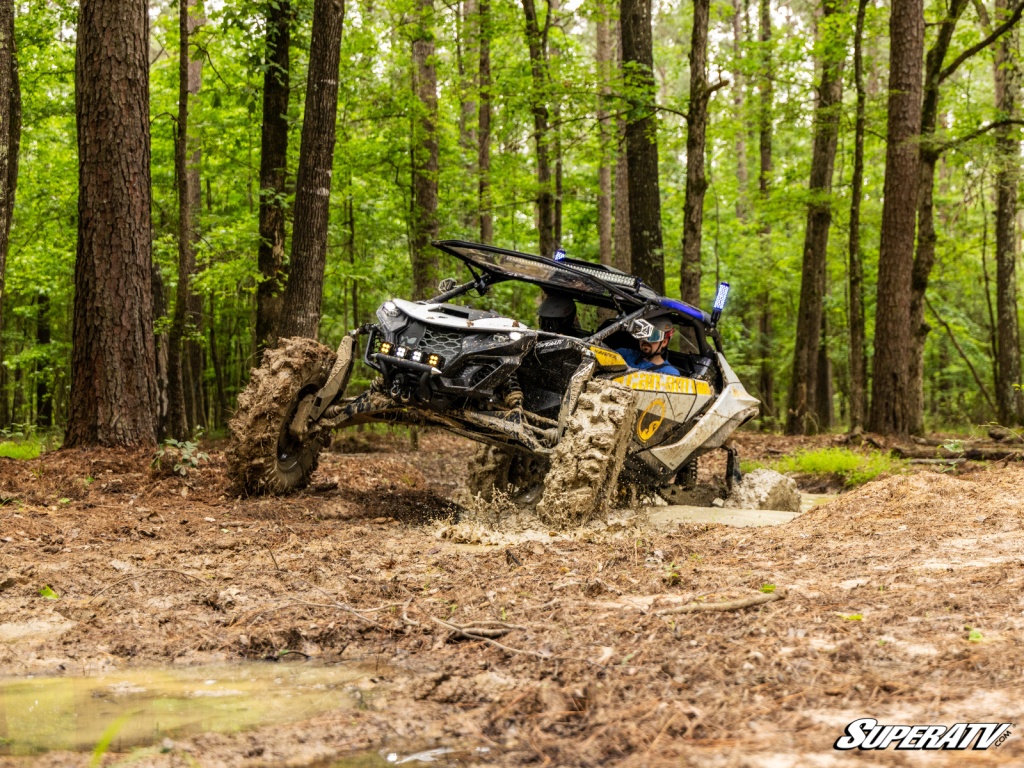
The drive belt is a critical component of your ATV or UTV’s continuously variable transmission (CVT). It connects the engine’s output shaft to the clutch system, which then transfers power to the transmission and ultimately to the wheels. When it’s functioning correctly, the drive belt provides smooth, consistent acceleration and responsive performance.
While the basic function of a drive belt is the same for both ATVs and UTVs, the setups can differ slightly. UTVs are generally larger and heavier because they’re built for power, hauling, or carrying passengers. Many UTV drive belts are designed to handle greater loads.
However, ATV and UTV drive belts are more similar than they are different. They’re both made with advanced rubber compounds and reinforced with aramid fiber cords to improve strength and durability. And some aren’t any different at all—you’ll find that some models of the Can-Am Maverick and Renegade share belts and so do some models of the Kawasaki Teryx and Brute Force. The type of belt you need depends on the make, model, and year of your machine.

Recognizing the signs of a slipping drive belt early can prevent more serious breakdowns later. Here are some common symptoms to watch for:
Basically, if something feels wrong with your ride, it never hurts to check the drive belt (unless it’s something obvious like a flat tire or a broken axle). Faulty drive belts can cause all kinds of problems—even issues you may not expect, like an overheating engine.
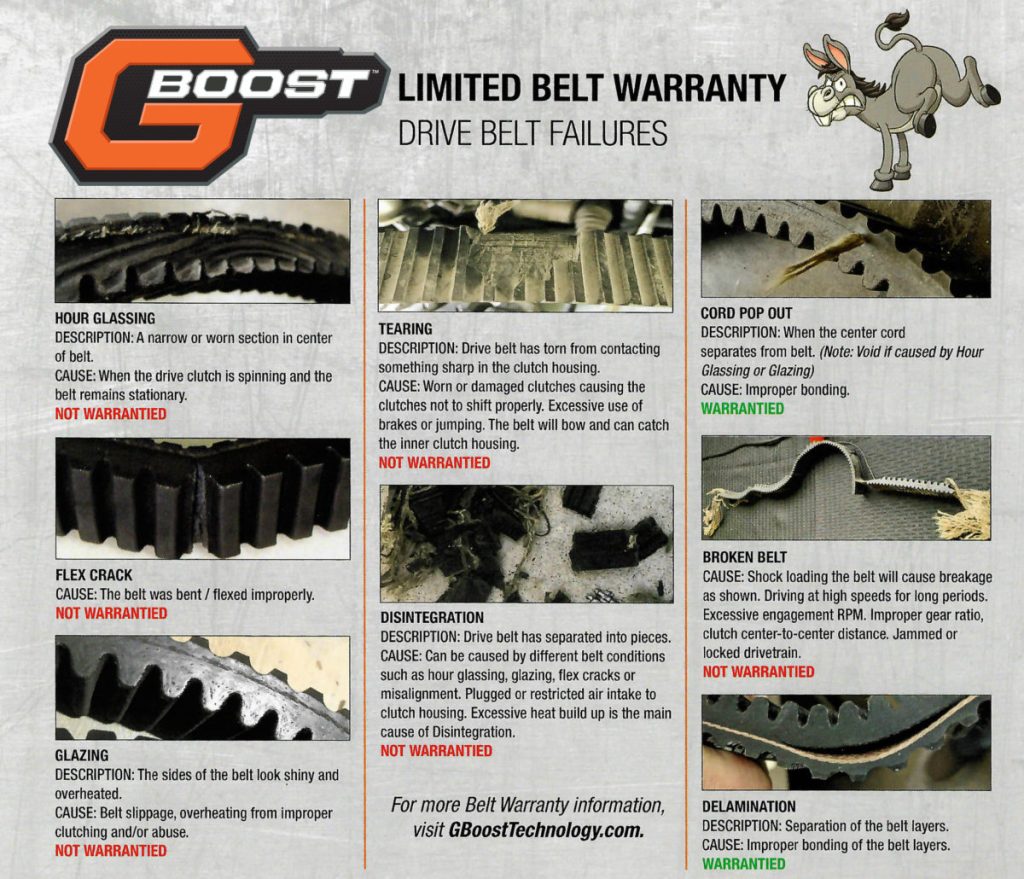
One of the most common causes of belt slippage is heat. Continuous or aggressive riding can generate excess heat within the CVT, causing the drive belt to glaze. A glazed belt has a shiny, hardened, smooth surface that reduces the friction that’s needed to maintain proper grip. Once glazed, a belt becomes increasingly prone to slipping under load.
Over time, drive belts naturally wear out. A worn belt may lose its flexibility or develop cracks and other flaws, once again reducing the belt’s ability to grip.
Additionally, using the wrong belt—whether it’s too short, too long, or not designed for your specific model—can prevent proper engagement and lead to slippage. And it can even damage other clutch components! Always use an OEM-spec or trusted aftermarket belt—like GBoost high-performance drive belts—and be sure to check the size before you install it.
When you replace it, you need to know how to break in your ATV or UTV drive belt. If you don’t break it in, the belt may not seat well, which can lead to misalignment within the clutch.
The belt needs time to adjust to the clutch surfaces and create a proper grip. Without properly breaking the belt in, you’re more likely experience reduced lifespan, slippage, overheating, and other problems with your belt.

Where and how you ride plays a big role in the health of your drive belt. Certain kinds of riding can be harder on your drive belt than others.
Riders who frequently engage in these types of riding should inspect their belts more often and consider upgrading to a GBoost drive belt designed for extreme conditions.
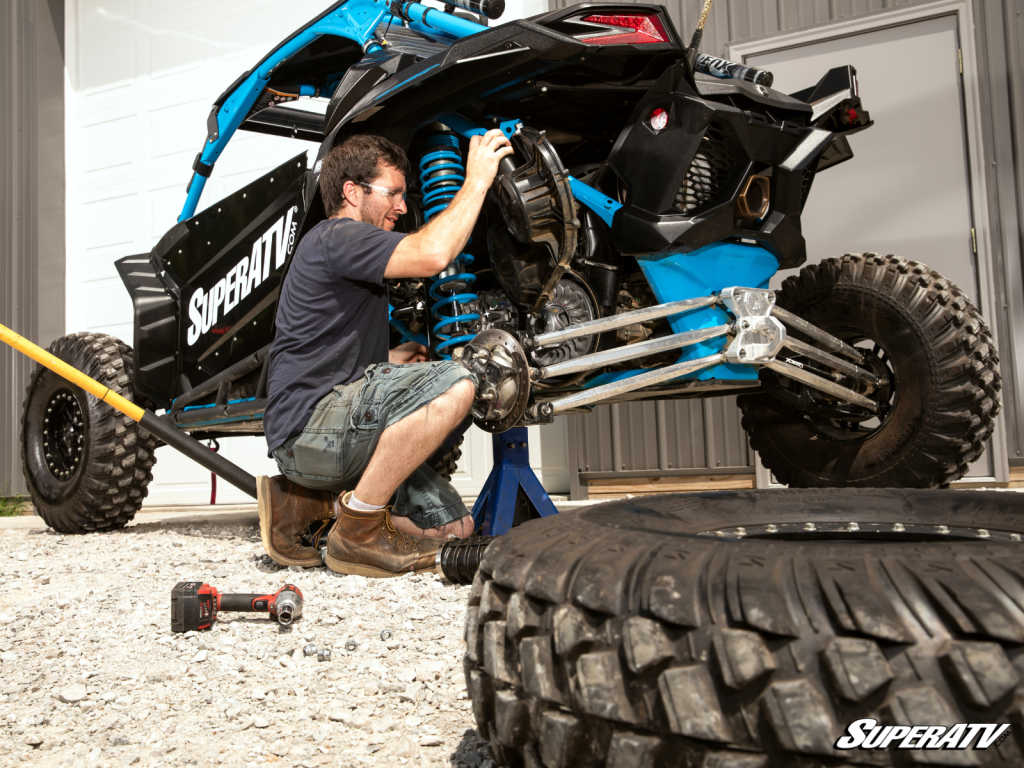
Underlying mechanical problems can also cause belt slippage. If there’s something wrong with your clutch, no number of drive belt replacements will fix the problem.
If your machine is tearing up belts left and right, it’s time to check your clutch. Carefully inspect the housing, sheaves, and other components for debris and damage.

Avoiding belt slip starts with regular maintenance and good riding habits. Maintenance recommendations will differ based on your machine and ride style, but there’s a few solid universal rules everyone should follow.
Proactive maintenance will keep your machine running smoothly and maximize drive belt lifespan.
Even with proper maintenance, belts don’t last forever. Here’s how to know when it’s time for a new drive belt.

When replacement time comes, invest in a high-quality drive belt. GBoost drive belts from SuperATV are designed for extreme durability and high performance, with options for riding styles—from everyday use to racing and heavy-duty applications. With reinforced materials and precision engineering, they offer a significant upgrade over stock belts.