At SuperATV, we’re surrounded by top talent across multiple fields, from sales and customer support to engineering and product development. Great talent is a requirement to make the best parts in the industry!
One of our powerhouse teams is Continuous Improvement, a sub-team within Product Quality. Recently, the team announced a major breakthrough—a new ultra-tough version of our XR Optic Hard Coating, named XR Optic D10.
XR Optic is SuperATV’s proprietary hard coating. We use it on almost all of our polycarbonate products, especially windshields and doors. We’ve been using the original XR Optic Hard Coating formula for years.
To make a long story short (we’ve got a deep dive into the back story of XR Optic D10 ready for your hungry minds), we knew we could do better for our customers. So we put some of the best minds in the industry to the problem of creating a super tough, durable, scratch-resistant, flexible polycarbonate hard coating.
And they actually pulled it off! Now all SuperATV hard coated polycarbonate windshields (and lots of other products) will be treated with the reformulated XR Optic Hard Coating—XR Optic D10.
But how did they do it? We grabbed some time with one of SuperATV’s Continuous Improvement Engineers, chemist Natalie Green, to talk shop and get exclusive insights into this ground-breaking improvement.
Here’s how our conversation went—you can also watch Natalie’s interview on YouTube.
Q: Can you explain in simple terms what the upgraded XR Optic scratch-resistant coating does, and why it matters?
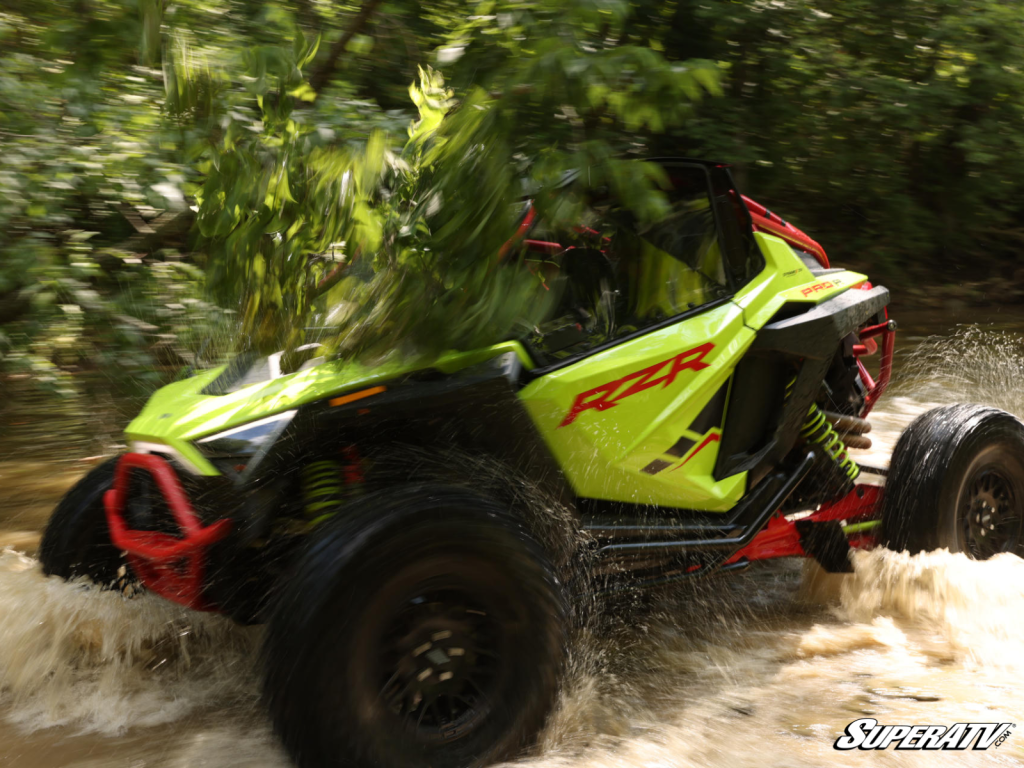
A: Sure! Basically, it’s like an extra layer of armor for polycarbonate. Polycarbonate itself is already lightweight and fairly durable, but by applying a specialized coating to it, we can significantly improve its scratch resistance. That means the material can hold up better under extreme conditions.
Q: How long did the entire project take from start to finish?
A: The work on this coating started in late 2021—so, about four years ago now.
Q: How does the new XR Optic formula perform compared to the original?
A: The new version provides better scratch resistance while still maintaining the key characteristics we need: it’s lightweight, clear, and easy to form into various shapes for different windshields.
Q: What does a typical day look like for your team when developing a product like this?
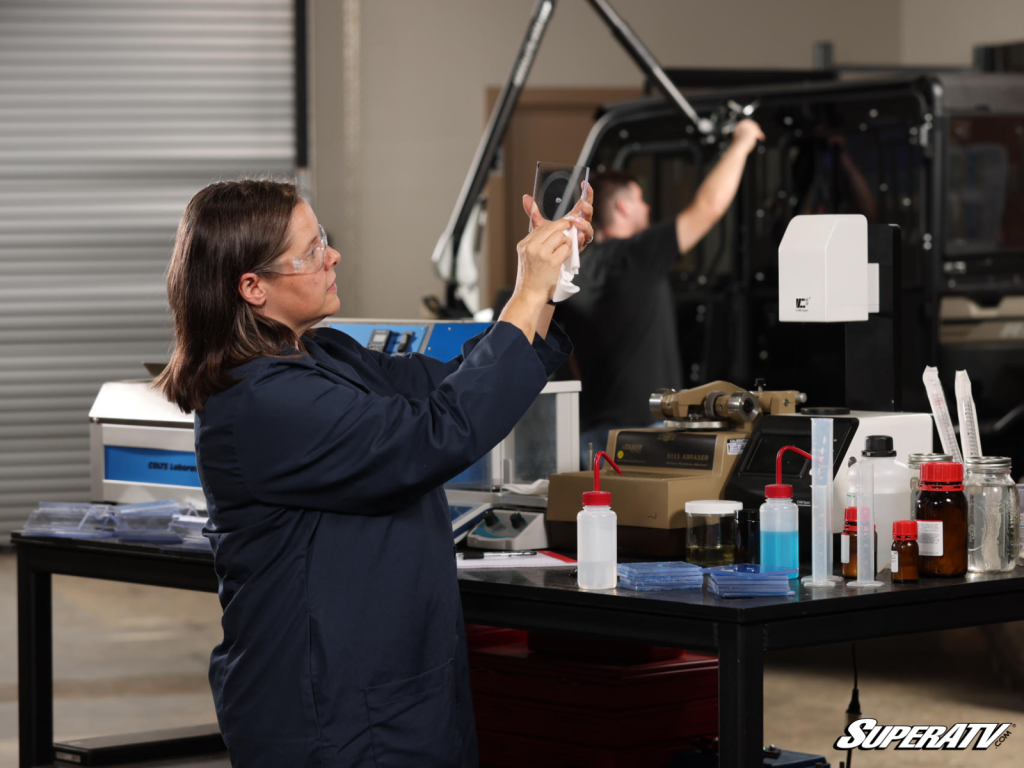
A: It’s definitely not a “typical” lab environment and no two days are really the same. Much of our work is driven by what’s happening on the production line. We spend a lot of time supporting that line and understanding the details of the process. The people running the line are crucial—they’re out there 10 hours a day applying the coating and doing quality checks. Their feedback helps us make meaningful improvements.
Q: Was there any feedback from the line team that proved especially vital during development?
A: Absolutely. Like I said, the line team has hands-on experience with the coating every day. They’re loading the polycarbonate, observing the process, and conducting quality tests. Their insights are essential. While I bring the scientific, lab-based perspective, they understand how the coating behaves in real-world production.
Q: For those of us who aren’t scientists, how would you describe the challenge of making something that’s both clear and tough?
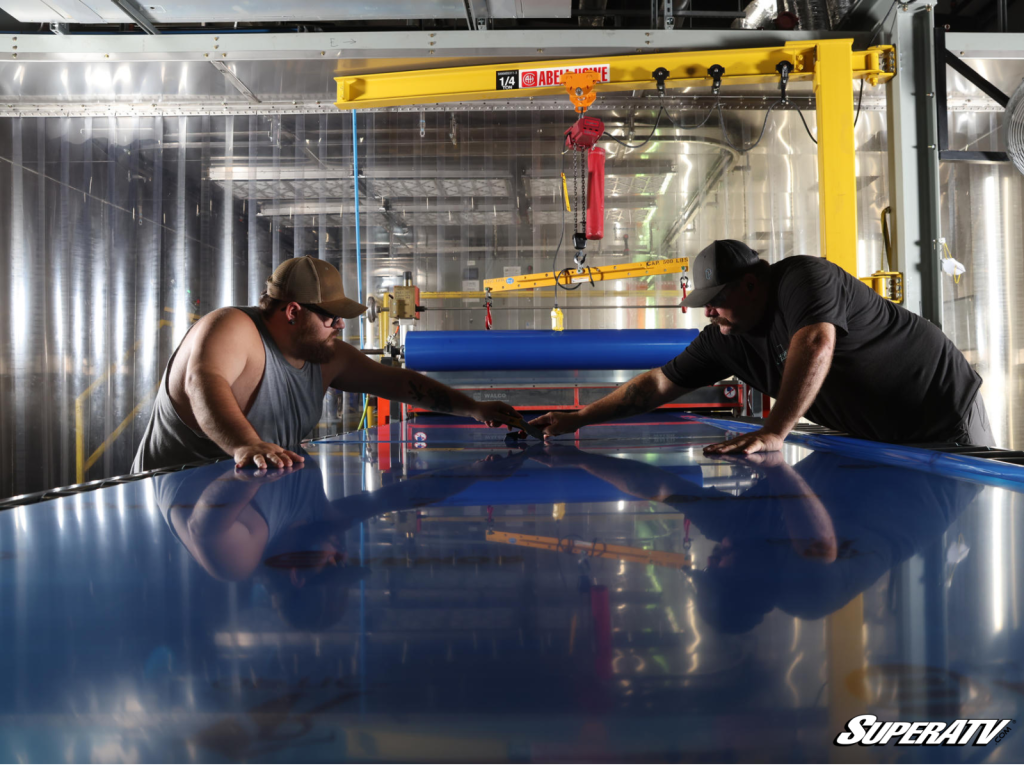
A: Great question. The challenge lies in making sure all the raw materials interact properly. You can mix a bunch of chemicals together, but that doesn’t guarantee you’ll end up with a durable coating—it might turn out too soft, for instance. We want the coating to be both tough and optically clear. Polycarbonate has excellent clarity, so if you add a coating, you risk affecting that. Balancing durability, clarity, and formability is critical.
We also need to ensure the coated polycarbonate is “formable,” meaning we can shape it at room temperature to fit the various windshields for different vehicles. Custom fit is very important, so full formability is essential.
Q: The coating is applied before the polycarbonate is formed, correct?
A: Correct. We start with general-purpose polycarbonate sheets, apply the coating, and then cure it using UV lamps. This transforms the coating from a tacky liquid into a hard, dry surface. After curing, the sheets are cut to shape and pressed into their final forms.
Q: Why did your team choose this specific formulation and process?
A: Years ago, with our original coating, we decided to go with a UV-curable resin because it was cost-effective and suited our capabilities and space constraints. The new improved coating is still UV-curable and continues to perform well in testing, so it made sense to build on that foundation.
Q: What kind of testing do you do to evaluate the coating?
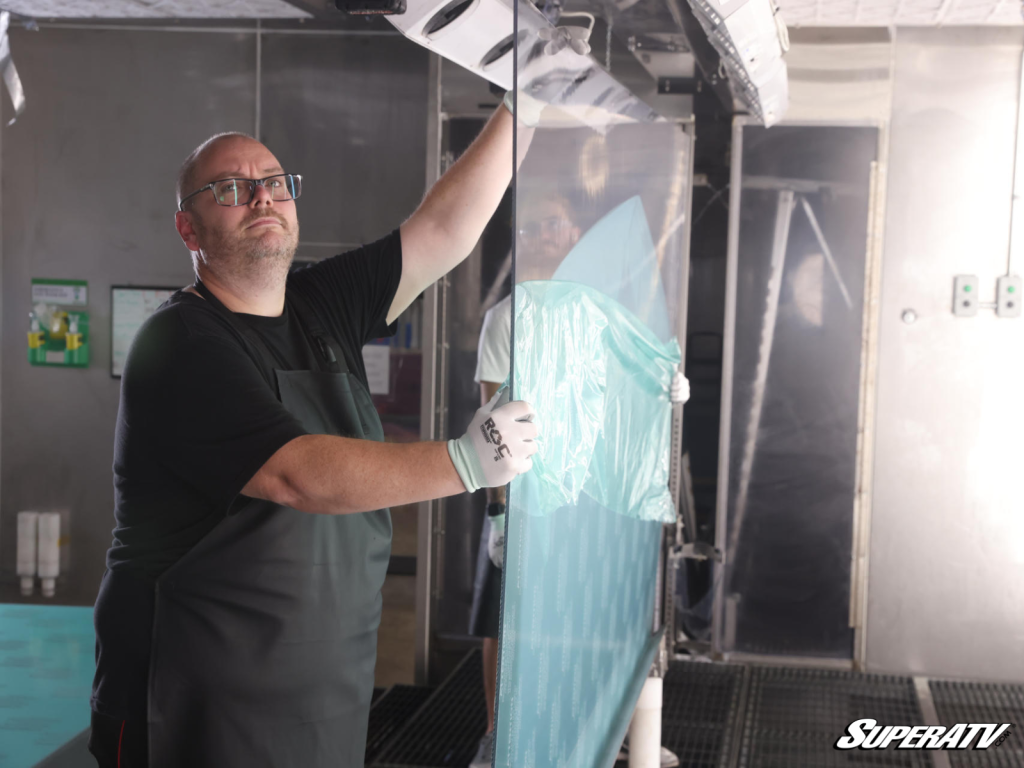
A: We follow ASTM standards, which are recognized industry wide. These tests are specific to materials like polycarbonate—not glass—so they’re highly relevant. The tests give us quantifiable results that others in the industry can interpret using the same reference methods.
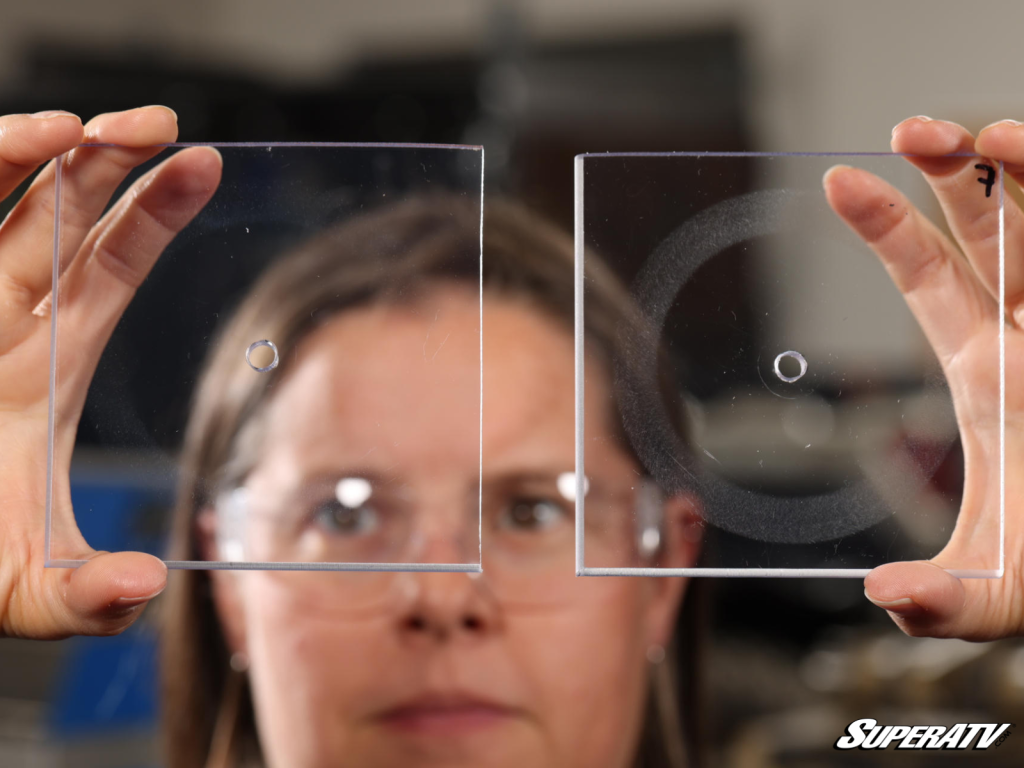
Q: How do you test whether the coating is truly scratch-resistant?
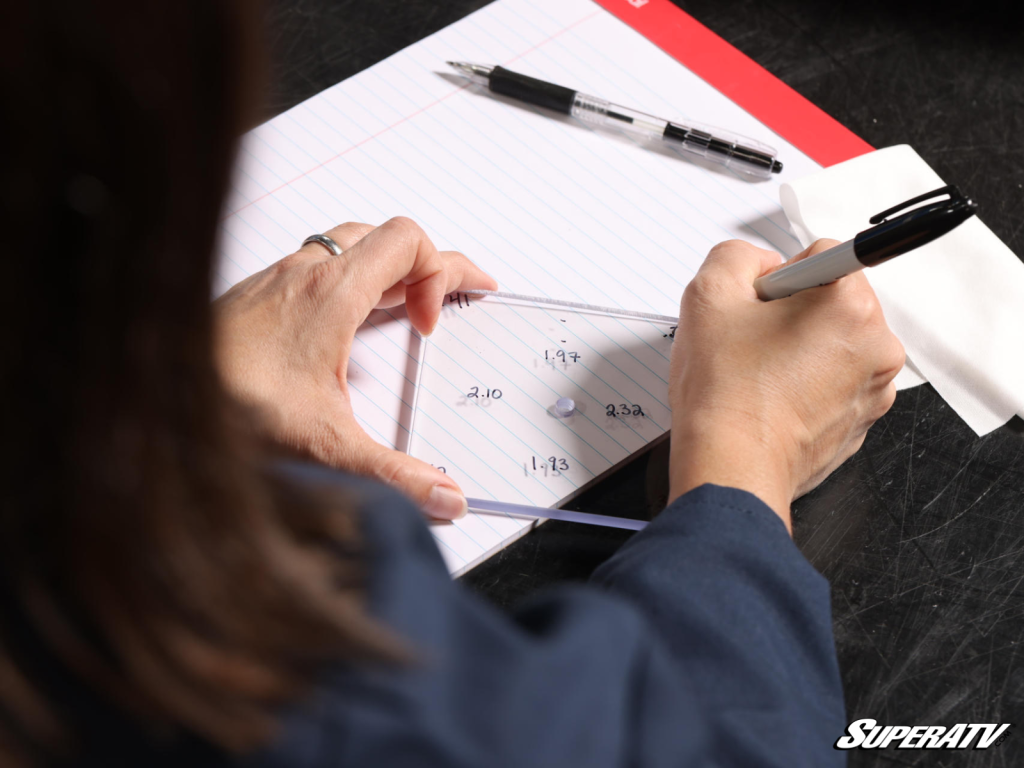
A: One test we use is called a Taber test, which evaluates how the coating holds up to abrasion. We also perform an adhesion test, where we use a crosshatch blade to score the surface in two directions, then apply and peel tape to check how well the coating adheres. We may also use steel wool to simulate scratching and confirm that the coating stays intact.
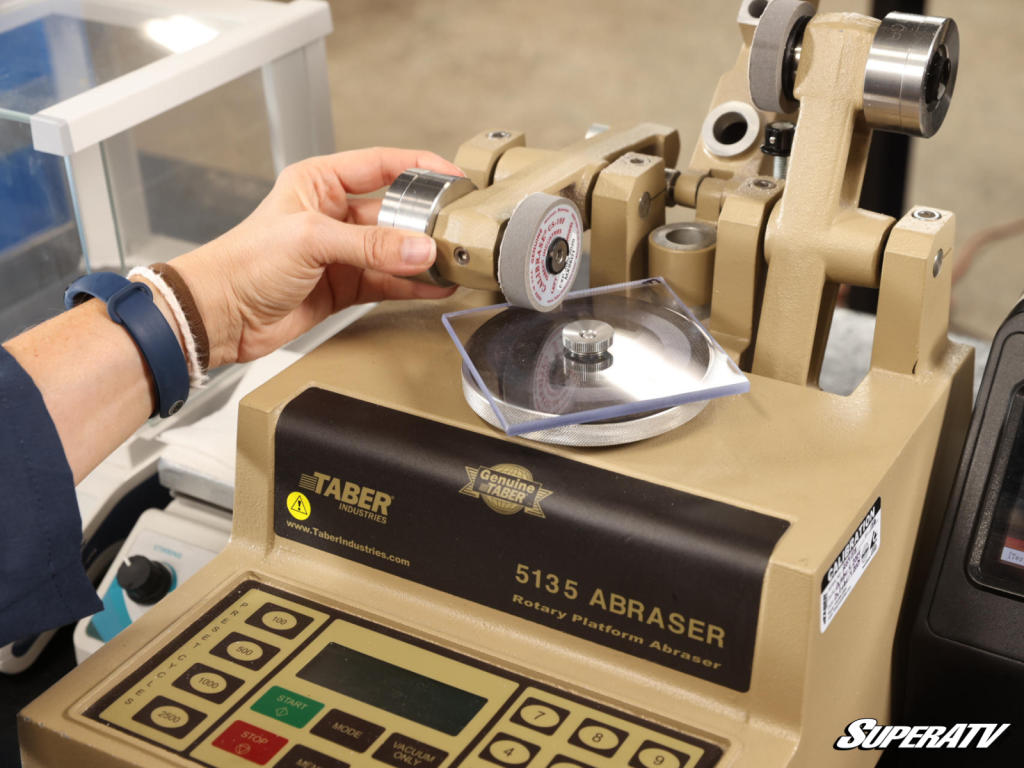
Q: Did you or the team encounter any unexpected challenges during development?
A: Definitely. In science, you’re always learning. We had some chemical compatibility issues early on and even accidentally created sheets that looked like frosted shower glass! But every issue taught us something valuable, and we kept improving.
Q: Can you describe a situation where the test results exceeded expectations?
A: Early on, we had great abrasion resistance, but the coated polycarbonate couldn’t be formed to the angles we needed. That was a major hurdle. We adjusted the chemical composition slightly and adapted the process. Eventually, we got the coating to retain its scratch resistance and meet our formability requirements.
Q: What was the most difficult technical hurdle, and what was the biggest breakthrough?
A: The biggest challenge was fitting a new coating into an existing process. Originally, we created the coating first and then built the process around it. This time, we had to develop a new formulation that worked within a fixed production system. Achieving that—while improving performance—was a major breakthrough.
Q: Who else did you work with on this project? Engineers, designers?
A: Oh, so many people were involved—I couldn’t possibly name them all without forgetting someone! I joined about a year and a half into the project. People helped with everything from concept development to execution. We ran a lot of small-scale trials and got great feedback from team members who interact with the polycarbonate daily.
Q: What do you see as the future of transparent protective coatings like XR Optic?
A: There’s always demand for harder, clearer coatings that perform closer to glass but retain the benefits of polycarbonate—like low weight and high flexibility. Nanotechnology is an exciting space, especially for enhancing gloss, scratch resistance, and UV protection without compromising clarity. Graphene-infused coatings are also emerging due to their ultra-durability.
Q: What’s your next big goal at SuperATV?
A: Honestly, it’s to improve the improved coating! We’re proud of what we’ve launched, but we’re not done. There’s always room to get better, and that’s what we’re working toward.
Q: What first got you interested in chemistry and material science?
A: I had amazing science teachers growing up—strong female role models who encouraged me. I fell in love with chemistry in 9th grade and took every class I could in high school. That solid foundation helped me thrive in college. I love that science has clear rules, but also endless possibilities for discovery and growth.
Q: You live and work in Madison, IN. What’s that experience been like?
A: I moved here from a larger city, and raising a family in a smaller community has been great. It’s wonderful to know our neighbors and see familiar faces everywhere. The short commute gives me more time with my family, and the area is beautiful. We love spending time outdoors—on the river or in the woods. It’s a great place to live and work.
Q: What advice would you give to a young person who wants to enter this field?
A: Two things: pursue science and build your network. Take courses and extracurriculars that align with your interests. And network—even in high school! Talk to people about their careers, ask questions, and see what opportunities are out there. Every job I’ve had came from someone recommending me. That personal connection really matters.
Q: Is there anything else you’d like to say about SuperATV or the XR Optic upgrade?
A: Just that it’s a great place to work if you love innovation. We’re never satisfied with the status quo. Everyone here is passionate, and we come from a variety of backgrounds. That diversity of thought really helps when you run into roadblocks. We’re always pushing to do better, and that makes it exciting to be a part of the team.
Q: Thanks for representing your team and spending time with us today.
A: You’re welcome! Thanks for having me.


2 Comments
hi. i have a front and rear poly windshield i bought in 2021 for my new talon. how do i remove the small scratches?. all else is good. ty.
Hey Norm,
Unfortunately, there is no way to remove scratches on a windshield. Give us a call if you have any further questions!